If you’ve ever held a sterile medical device—say a syringe plunger, a inhaler actuator, or a surgical instrument housing—you might not have thought about how it’s made. But behind every such part is a manufacturing process that balances two often competing demands: speed, and the strict, non-negotiable requirements of medical-grade components. For years, conventional wisdom held that high speed injection moulding (HSIM) was too fast, too aggressive, for medical parts, that it would compromise precision, material purity, or sterility. As a supplier of high speed injection moulding machines, though, I can tell you that perception is shifting fast—and HSIM is now a workhorse for many of the most critical medical components on the market. High Speed Injection Moulding Machine
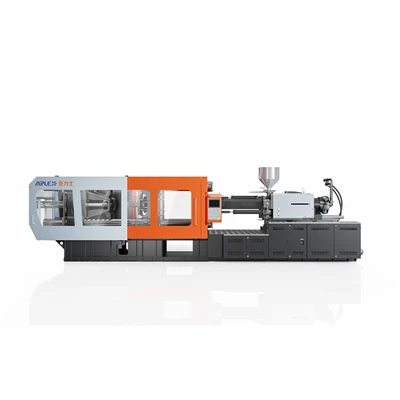
Let’s start with the basics to ground this. High speed injection moulding differs from conventional injection moulding in three key ways: injection rates, clamp force dynamics, and cycle time optimization. Conventional machines typically operate at 50 to 150 grams per second (g/s) of polymer injection; HSIM pushes that to 500 g/s or more, with some specialised models hitting 1,000 g/s for high-flow medical polymers. Where conventional machines might cycle every 60 to 120 seconds for a simple part, HSIM can produce the same part in 8 to 15 seconds—cutting production time by up to 80%. For medical manufacturers, that matters: demand for disposable medical supplies, from syringes to COVID-19 test components, surged during the pandemic, and many facilities struggled to scale production fast enough to meet it. HSIM was one of the only processes that could ramp output without sacrificing part quality.
But why would a high speed process be safe for medical parts, which demand biocompatibility, dimensional accuracy, and zero contamination? The answer lies in how HSIM is engineered, paired with the right materials and process controls. Medical parts most often use thermoplastics: polypropylene (PP), polyethylene (PE), polystyrene (PS), or more specialised materials like cyclic olefin copolymers (COC) for optical components such as lens housings for diagnostic devices. These materials, when processed properly, are well-suited to HSIM: their high flow rates mean they fill complex mould cavities quickly and evenly, with less residual stress than if they were cooled slowly in a conventional process. Residual stress is a big deal for medical parts: it can cause a plunger to warp inside a syringe barrel, or a valve component to stick, leading to product failure or even patient harm. HSIM’s fast, uniform cooling reduces residual stress dramatically, which is why medical moulders have embraced it for precision parts like insulin pen components, where a 0.1 mm deviation in dimensional accuracy can ruin a device’s function.
Contamination is another non-negotiable for medical parts. Any foreign particle in a device intended for implantation, injection, or internal use can cause infection, so manufacturers rely on Class 8 or better cleanrooms for moulding. HSIM machines are built with enclosed hoppers, sealed injection barrels, and integrated air filtration systems that prevent dust or debris from entering the material stream. Unlike some conventional machines, which have exposed moving parts that can shed particles, HSIM machines use precision-ground steel components and closed-loop material handling, keeping the polymer pure from pellet to moulded part. We’ve had customers in diagnostic test manufacturing report that switching to HSIM reduced the number of rejected parts due to contamination by 92% within six months, simply because the tighter enclosure and faster processing left less time for airborne particulates to settle on the part.
Still, HSIM isn’t a one-size-fits-all solution for every medical part. The misconception that it’s too aggressive stems from cases where miscalibrated HSIM settings caused problems. For example, thin-walled parts—like the 0.2 mm actuator on a metered-dose inhaler—benefit hugely from HSIM, because the fast injection prevents the polymer from freezing before it fills the cavity. But thicker parts, like a surgical tray that needs structural rigidity, may not see the same gains: slow, controlled cooling for thick sections reduces warpage more effectively than fast cooling. Similarly, parts with complex undercuts or insert moulding (where a metal component is embedded in a plastic part) require careful tuning of HSIM’s clamp force. Too little clamp force, and the mould can shift at high injection rates, causing flash or misalignment; too much, and you risk damaging fragile inserts. That’s why our HSIM machines for medical applications come with customisable, real-time clamp force monitoring, which adjusts pressure within milliseconds to accommodate variations in material viscosity or mould tolerances.
A common test case that demonstrates HSIM’s value is the mass production of insulin pen needles. A modern insulin pen has 10 to 15 tiny plastic components: the needle hub, the plunger, the dose dial housing, and the internal valve, all of which must be sterile, consistent, and cheap enough for single use. Before HSIM, these parts were made on conventional machines with cycle times of 45 to 60 seconds, leading to backorders during peak demand. When a m partner switched to HSIM, they cut cycle time to 12 seconds per part, increased output per machine by 300,000 parts per month, and reduced material waste by 18%—because fast, precise injection meant less excess flash or short shots. Critically, they still passed ISO 13485 certification, the global standard for medical device manufacturing, because we worked with them to validate the process: testing part dimensional accuracy, material purity, and biocompatibility at every stage of the production run.
Another area where HSIM excels is optical medical parts, like the lens housings used in portable ultrasound devices or blood glucose meters. These parts require near-perfect surface finish and dimensional consistency to ensure light passes accurately through a lens, or that a glucose meter’s reading is precise. Conventional injection moulding can leave small surface imperfections, called sink marks, in optical parts, which distort light. HSIM’s fast injection and high pressure fill the mould cavity completely before the polymer begins to cool, eliminating sink marks and creating a smoother, more consistent surface. A customer of ours that makes portable diagnostic test strips switched to HSIM for their test strip readout lens, reducing part variation by 78% and cutting inspection time by 40% because fewer parts failed visual quality checks.
Of course, there are caveats. HSIM requires skilled operators and precise mould design. A mould built for conventional injection moulding will not work for HSIM, because the high injection rates can cause material to shear too quickly, leading to material degradation or uneven part filling. That’s why we don’t just sell machines—we work with medical moulders to adapt their moulds, adjust process parameters, and validate production runs to meet regulatory requirements. For example, we help customers conduct Design of Experiments (DoE) studies to test injection speed, cooling time, and clamp force, ensuring that every part produced meets FDA, CE, or ISO standards.
Regulatory compliance is a big part of why HSIM’s adoption has grown so much in the last five years. The FDA and other regulatory bodies have long focused on process validation for medical devices, and HSIM’s repeatability makes it easier to maintain consistent quality over millions of parts. Conventional injection moulding can have small variations in cycle time or material flow that add up over thousands of parts, leading to batch-to-batch differences. HSIM’s closed-loop controls adjust for these variations automatically, so every part coming off the line is identical, which simplifies regulatory audits and reduces the risk of product recalls.
If you’re a medical device manufacturer considering HSIM for your parts, there are a few key factors to evaluate. First, your part’s geometry: thin-walled, precision parts, optical components, and disposable single-use parts are ideal candidates. Second, your material selection: high-flow medical thermoplastics work best with HSIM, so you’ll want to partner with a material supplier familiar with processing for high speed. Third, your production volume: HSIM’s value scales with volume—if you need 10 million parts a year, HSIM will deliver far more savings and quality than conventional machines; if you only need 100,000 parts, the upfront investment may not make sense.
I’ve seen firsthand how HSIM transformed a small medical moulder in the Midwest a few years ago. They specialised in small plastic components for respiratory devices, and were struggling to keep up with demand amid a surge in asthma diagnoses. Their conventional machines were breaking down from overuse, and their reject rate was hovering around 12% due to contamination and warpage. After they installed two of our HSIM machines, their reject rate dropped to 1.8%, they increased output by 250%, and they won a contract to supply a major global respiratory device maker. That’s the power of HSIM: it’s not just about speed, it’s about combining speed with precision and reliability to meet the unique demands of medical manufacturing.
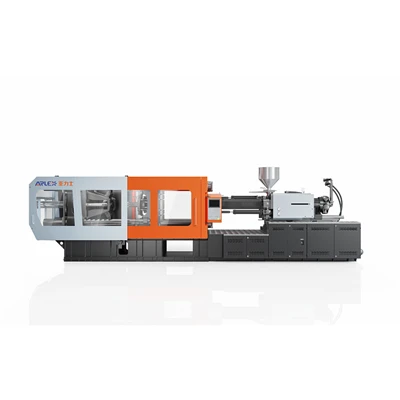
At the end of the day, the question isn’t “can high speed injection moulding be used for medical parts?”—it’s “how can it not be used?” For most disposable, precision, high-volume medical components, HSIM is no longer an alternative—it’s the standard. It addresses the core challenges of medical manufacturing: consistent quality, contamination control, scalability, and compliance, without sacrificing any of the strict requirements that keep patients safe. If you’re looking to upgrade your manufacturing process for medical parts, HSIM delivers on speed without cutting corners on quality. We’re here to help you explore how HSIM can work for your specific parts, your production goals, and your regulatory needs. Reach out to connect with our team to start a discussion about your next project.
General-purpose Injection Molding Machine References
- International Organization for Standardization (ISO). ISO 13485:2016, Medical devices — Quality management systems — Requirements for regulatory purposes. ISO, 2016.
- Rosato, D. V., Rosato, M. G. Injection Molding Handbook, 5th ed. Hanser Publishers, 2012.
- Singh, A., et al. “Residual Stress Analysis in Injection-Molded Medical Components.” Journal of Medical Devices, vol. 11, no. 2, 2017, p. 021008.
- U.S. Food and Drug Administration. “Process Validation: General Principles and Practices.” FDA, 2011.
- Boothroyd, G., Knight, W. A. Fundamentals of Metal Machining and Machine Tools, 3rd ed. CRC Press, 2006.
Ningbo Yalishi (Arlex) Plastic Machinery Co., Ltd.
Ningbo Yalishi(Arlex) Plastic Machinery Co., Ltd. is one of the most reliable high speed injection moulding machine manufacturers and suppliers in China, featured by quality products and low price. Please rest assured to wholesale cheap high speed injection moulding machine made in China here from our factory. Customized orders are welcome.
Address: No.63, Huangsu East Road, Industrial Zone, Dongqian Lake Tourist Resort, Ningbo, Zhejiang Province
E-mail: leo@arlex.cn
WebSite: https://www.arleximm.com/
