If you’ve ever turned on a gas stove and felt the steady hum of heat, or relied on a commercial building’s gas furnace to keep operations running smoothly, you’ve interacted with a carefully designed gas line system—one that depends entirely on the right fittings to work safely and reliably. As a fittings supplier with 12 years in the industry, I’ve seen first-hand how choosing the wrong component can turn a routine installation into a safety hazard, or how the right fittings can extend a system’s lifespan by decades. In this post, I’ll break down the most common fittings used for gas lines, their specific use cases, and why partnering with a trusted supplier matters for every installation, whether it’s a residential water heater, a restaurant’s commercial kitchen, or a large industrial plant. Fittings
First, it’s critical to start with context: gas lines carry pressurized, often flammable gas (natural gas, propane, or butane), so every fitting must meet strict industry standards—like ASTM International specifications or local codes set by the National Fuel Gas Code (NFGC) in the U.S. or similar regulations globally. Unlike water line fittings, which might prioritize corrosion resistance, gas line fittings need to handle both pressure and the unique properties of gas, which can seep through gaps if not sealed properly. That’s why there’s no one-size-fits-all when it comes to gas line fittings; each component serves a specific purpose in routing, connecting, or controlling gas flow.
Let’s start with the most basic yet essential fitting: the pipe coupling. If you’re extending a gas line or repairing a broken segment without cutting the entire line out, a coupling is your go-to. Couplings are designed to join two straight pipe ends together, creating a leak-proof, permanent connection. For gas lines, most couplings are either threaded or slip-on (for soldered or welded connections). Threaded couplings are popular in residential installations because they’re easy to install with just a pipe wrench, no specialized welding gear required. But here’s a tip I share with every installer: always use a thread sealant (like Teflon tape rated for gas lines) on threaded couplings—water-rated sealants won’t stand up to gas pressure, leading to potential leaks. I’ve seen too many installers skip this step to save time, only to return to a service call a month later for a gas smell; that’s a mistake we work hard to help customers avoid.
Next up: the elbow fitting. Elbows are exactly what they sound like—they turn a gas line 90 degrees (street elbow) or 45 degrees (long elbow) to route around obstacles like walls, beams, or other pipes. In gas systems, elbows are not just convenience items; they’re engineered to maintain the line’s pressure rating, which drops sharply if you use a generic elbow meant for water lines. For residential gas lines leading to a water heater, you’ll almost always find 90-degree street elbows at the point where the line turns up from the floor. Commercial kitchens, on the other hand, use larger 45-degree elbows to route gas lines around stainless steel counter tops and exhaust hoods, where tight turns would restrict gas flow and reduce appliance efficiency. A common mistake here is using a “short radius” elbow for high-pressure industrial lines—those can crack under sustained pressure, so we always recommend long-radius elbows for any system running above 100 psi.
If you need to branch a gas line to serve multiple appliances—like a stove, a dryer, and a fireplace in a single home—a tee fitting is what you’ll need. Tees have three openings: two for the main line, and one for the branch that carries gas to a secondary appliance. Like elbows, tees come in 90-degree configurations and are sized to match the pipe’s diameter. For example, a 1-inch tee might be used for a main gas line feeding multiple small appliances, while a 3-inch tee is reserved for industrial lines powering heavy machinery. Here’s a key detail: tees for gas lines are often made from brass or black steel, which are more durable than PVC (PVC is never allowed in gas lines, by the way—its plastic can melt under heat, causing leaks or fires). I once had a customer who tried to use a PVC tee for a propane line to a outdoor grill; within a week, the heat from the grill caused the plastic to warp, and they had a gas leak that only a quick repair prevented. That’s why we emphasize material compatibility for every tee we supply.
Now, for controlling gas flow: the valve fitting. Valves are non-negotiable in any gas line system, because they let you shut off gas for repairs, appliance replacement, or emergencies. There are two main types of valves used in gas lines: ball valves and gate valves. Ball valves are the most common today—they have a lever handle that turns 90 degrees to open or close the line, making them easy to operate even in tight spaces. Gate valves, which use a sliding metal gate to block flow, are sometimes used in large industrial lines, but they’re less common in residential settings because they’re slower to open and close. Another type is the gas cock, a small valve used for individual appliances like a gas stove or dryer, where you need a dedicated shut-off for that specific unit. A pro tip for installers: always mount gas cocks within easy reach of the appliance, and never hide them behind cabinetry or drywall—during an emergency, you need to be able to shut off gas quickly without tearing out walls.
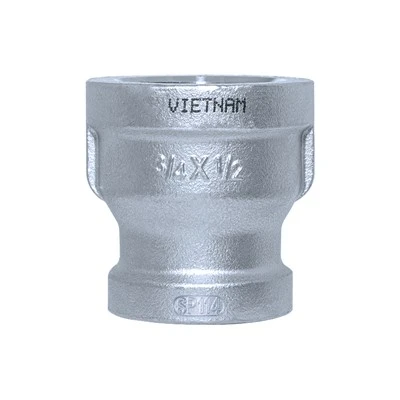
No gas line system is complete without adapters, especially when connecting pipes made of different materials. For example, if you’re connecting a copper pipe (common in residential gas lines) to a black steel pipe (used in commercial systems), you’ll need an adapter with a copper end and a steel end. Adapters also help when transitioning from a smaller pipe to a larger one, like going from a ½-inch pipe to a ¾-inch line to handle higher gas flow. The key here is to make sure the adapter is rated for gas use—using a water line adapter here can lead to leaks, as water line adapters often use rubber gaskets that break down when exposed to propane or natural gas over time. We carry a full line of gas-rated adapters, so our customers never have to worry about compatibility issues.
Now, let’s talk about less common but equally critical fittings: caps and plugs. Caps are used to seal the end of a pipe that’s not yet connected, like when you’re running a gas line through a wall and need to protect the open end from dirt or debris during construction. Plugs, on the other hand, are used to seal a threaded opening in a fitting—like when you’re testing a gas line for leaks and need to cap off a test port. Both caps and plugs must be rated for gas pressure; cheap, unrated plastic caps can blow off under pressure, creating a hazard. We only supply metal caps and plugs for gas systems, because they’re durable and can handle the pressure fluctuations that come with gas flow.
A lot of new installers overlook one thing: the importance of using the right sealant and gaskets with every fitting. As a fittings supplier, we don’t just sell parts—we educate customers on how to use them correctly. For threaded connections (like on couplings, tees, and valves), we recommend a gas-rated Teflon tape, not the general-purpose tape you’d use for a water line. General-purpose tape has a thinner coating and can leave gaps that gas seeps through. For flanged connections (used in large industrial gas lines), gaskets made of rubber or synthetic material designed for gas are non-negotiable; without a proper gasket, even the most well-made flange will leak. I once had a customer who skipped a gasket on a flanged tee for an industrial plant; within a month, the leak caused a 2-hour shutdown, costing the plant $10,000 in lost production. That’s the kind of cost that comes from cutting corners on fittings and installation details.
Now, you might be wondering: does the type of gas (natural vs. propane) change the fittings you need? The short answer is yes, but only slightly. Propane is heavier than air, so fittings for propane lines need to handle higher pressure than natural gas lines—propane is usually stored at 100-200 psi, while natural gas is often at ½ psi to 5 psi in residential lines. That means propane fittings are thicker, made from higher-strength steel, and rated for higher pressure. We have a separate product line for propane-specific fittings, so we can help customers choose the right parts no matter which gas they’re working with.
Another thing to consider: corrosion. Gas lines, especially outdoor ones or those in humid environments, can corrode over time, which weakens fittings and leads to leaks. That’s why most gas line fittings are made from materials that resist corrosion—black steel, brass, or copper. PVC and plastic fittings, which are cheaper, are not recommended for gas lines because they degrade when exposed to UV light (for outdoor lines) or gas fumes. We rarely stock plastic gas fittings, because we know they don’t stand up to the long-term demands of gas systems.
Let’s wrap this up with a few real-world examples to make it concrete. Last year, I worked with a residential installer who was putting in a new gas line for a customer’s new gas fireplace. They used a 90-degree elbow, a tee to branch from the main line, and a ball valve at the fireplace—all from our stock. A year later, the customer called us to say there was a small gas smell; when our service team came out, they found a loose thread on the elbow, which the installer had sealed with general-purpose Teflon tape. We provided a new gas-rated thread sealant, and the elbow was retightened, no cost to the customer. That’s why we don’t just sell fittings—we stand behind them, and we’re always available to help with troubleshooting. For a local restaurant, we supplied a full set of tees, valves, and adapters for their new commercial kitchen gas line. They were running three stoves and a fryer, so we used a 2-inch main line with tees sized to match each appliance, and ball valves at every branch. The restaurant has had no leaks in three years, and their gas bills are lower because the fittings are sized correctly, reducing flow restrictions.
At the end of the day, gas line fittings are the unsung heroes of every gas system. They’re the parts that keep gas flowing where it needs to go, while preventing leaks that can cause fires, explosions, or costly service calls. As a supplier, my job is to make sure our customers have access to the right fittings for every job, backed by the expertise to help them use them correctly. If you’re a contractor, a building manager, or a homeowner working on a gas line project, don’t cut corners on fittings—choosing the wrong part could put lives and property at risk.
If you’re in need of gas line fittings, or have questions about which parts are right for your project, reach out to our team to discuss your requirements. We’re here to help you make the right choice for safety and reliability.
Other Valves References
National Fuel Gas Code. (2021). American National Standard for Gas Piping Systems and Appliances. National Fire Protection Association.
ASTM International. (2022). Standard Specification for Steel Pipe, Black and Hot-Dipped, Zinc-Coated (Galvanized) Welded and Seamless for Ordinary Use. ASTM International.
Propane Education & Research Council. (2020). Propane Installation Standards for Residential and Commercial Systems. Propane Education & Research Council.
United Brothers Metal Products Co., Ltd.
United Brothers Metal Products Co., Ltd. is one of the most professional fittings manufacturers and suppliers in Vietnam. We are committed to providing high quality customized products with competitive price. Please feel free to buy bulk durable fittings in stock here from our factory. Also, pricelist is available.
Address: Lot 61c2, 99a, 99b Long Giang Industrial Park, Tan Phuoc 3 Commune, Dong Thap Province, Vietnam
E-mail: sales@ubfittings.com
WebSite: https://www.ubvalves.com/
