If you’ve ever worked in electronics manufacturing, attended a trade show for circuit components, or even shopped for a custom remote control for your home theater, you’ve almost certainly heard the acronym PCB thrown around. It’s one of the most ubiquitous terms in tech, but like many industry shorthands, it’s easy to take for granted—until you stop to wonder: What does PCB actually stand for? PCB

Let me cut right to the chase, because this is a question I get at least a dozen times a week from first-time buyers, engineering students just starting out, and even other suppliers who specialize in more niche components. PCB stands for Printed Circuit Board. It’s the flat, rigid (or sometimes flexible) board that acts as the “backbone” of nearly every electronic device you use: your smartphone, your laptop, the kitchen coffee maker that runs on a timer, the medical monitor that checks your blood pressure, even the industrial sensor on a factory assembly line.
But here’s the part that most people don’t realize about PCBs: they aren’t just generic boards. Every PCB is custom-designed to carry electrical signals between specific components—resistors, capacitors, microchips, LEDs—exactly where they need to go. That’s why, when someone reaches out to our team as a PCB supplier, their project details matter more than just the word “PCB.” A small wearable fitness tracker needs a different layout than a 5G base station, and a flexible PCB for a foldable phone isn’t the same as a thick, high-temperature PCB for a aerospace radar system.
Let’s break down what “printed” and “circuit board” actually mean, because that’s where the science of what a PCB is gets concrete. A circuit board, at its core, is a platform made of a base material (usually fiberglass, resin, or copper-clad laminate) that holds interconnected circuits. The “printed” part refers to how those circuits are applied to the base layer—unlike old-school circuit boards, which were wired by hand one connection at a time, modern PCBs use photographic printing techniques to etch thin layers of conductive copper into precise, repeatable patterns. That’s why they’re fast, consistent, and affordable for mass production—something that’s non-negotiable for electronics that sell in millions, or even billions, of units.
As a PCB supplier, I’ve seen firsthand how PCBs have evolved over the past 20 years. When I started in this business, most PCBs were single-layer: one side with copper traces, the other with a mask to insulate. Now we make multi-layer PCBs—boards with up to 20 or more layers of copper and insulation stacked together, which lets us pack far more circuits into a tiny space. That’s exactly the tech that makes smartphones thin enough to slip into a pocket. We also make flexible PCBs, which bend and twist, for devices like smartwatches that move, and rigid-flex PCBs, which combine rigid sections for microchips and flexible sections for wiring, for products like drones that need durability.
A common mistake I see first-time buyers make is assuming all PCBs are the same. If you’re building a prototype, a low-volume prototype PCB might use a less expensive base material to keep costs down, but if you’re building a medical device that has to pass FDA testing, you need a PCB made with biocompatible materials and strict quality controls. Same goes for automotive PCBs: they have to withstand extreme temperatures, vibration, and moisture, so they use thicker copper layers and specialized coatings. As a supplier, it’s my job to ask those questions upfront to make sure the PCB we deliver fits the exact needs of the project—not just the acronym on the spec sheet.
Let’s talk about why PCBs matter beyond just being a “board.” Without a properly designed PCB, even the best microchip is useless. If you’ve ever had a device that stopped working because a component was misaligned, that’s often a PCB error. Or if a product overheats, that might be a PCB with poor heat dissipation design, which a good supplier would catch before production. For us, being a PCB supplier isn’t just about cutting and shipping a board—it’s about partnering with clients to troubleshoot design issues, adjust for cost, and make sure the final product works as intended.
I get a lot of inquiries from people who say, “I need a PCB for my project, just send me a quote.” But here’s the thing: a quote for a 10-unit prototype is way different than a quote for 100,000 high-volume automotive PCBs. That’s why when you reach out to our team, we’ll ask about things like your application, the number of layers you need, the tolerance for your traces, your required lead time, and your certification needs (ISO 9001, IPC, etc.). Those details turn a vague request for “PCB” into a custom solution that works.
It’s also important to address a common confusion: PCB is sometimes mixed up with PCBs as a pollutant. Polychlorinated biphenyls (PCBs) are man-made chemicals that were used in industrial equipment before being banned in most countries due to environmental and health risks. But that’s a completely different acronym and product—unless you’re in industrial waste management, when someone mentions PCB, they’re almost always talking about Printed Circuit Boards, not the chemical compounds. As a supplier, I always make that clear early on to avoid confusion, especially when working with cross-functional teams who might touch multiple parts of a project.
Another point that comes up regularly: how PCBs are tested. Before a PCB leaves our facility, we do a series of tests to make sure it works. That includes electrical testing to check for open or short circuits, thermal testing to make sure it can handle the operating temperature of the device it’s going into, and reliability testing to ensure it will last for years. For high-reliability applications, like aerospace or medical devices, we even do environmental testing, like humidity and vibration testing, to simulate real-world use. That’s the quality standard that comes with being a reputable PCB supplier—we don’t just ship boards; we ship boards that perform.
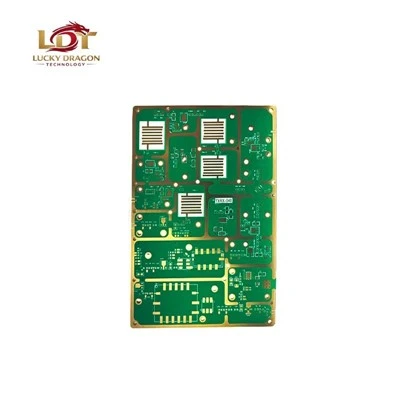
So, if you’re reading this and you’re at the stage where you need a PCB for your next project, whether it’s a prototype for a startup, a production run for a consumer product, or a custom design for an industrial application, know that your choice of PCB supplier matters. A good supplier doesn’t just give you a price; they guide you through the design process, help you avoid common mistakes that can delay production, and deliver a high-quality product on time. If you’re ready to talk through your PCB needs, feel free to reach out to our team to start a conversation. No project is too small, and no detail is too minor—we’re here to help.
Electronic PCB Design References
- IPC Association Connecting Electronics Industries. (2023). IPC Standards for Printed Circuit Boards.
- National Electrical Manufacturers Association (NEMA). (2022). Printed Circuit Board Design and Manufacturing Guidelines.
- U.S. Environmental Protection Agency (EPA). (2021). Polychlorinated Biphenyls (PCBs) Background Information.
- Electronics Weekly. (2023). The Evolution of Printed Circuit Boards: From Prototype to Mass Production.
- Institute of Electrical and Electronics Engineers (IEEE). (2022). Standards for Printed Circuit Board Reliability Testing.
Lucky Dragon Technology Shenzhen Co., Ltd.
With abundant experience, we are one of the most professional PCB manufacturers and suppliers in China. We warmly welcome you to buy bulk high quality PCB for sale here from our factory. If you have any enquiry about cooperation, please feel free to email us.
Address: 5th Floor, Building 1, Jinshan Industrial Park, 375, Xixiang Section, Guangshen Road, Xixiang Street, Baoan District, Shenzhen City, Guangdong Province, China
E-mail: sales@Ldtac.com
WebSite: https://www.ldtac.com/
