If you’ve ever wondered how those perfectly smooth, consistent mixes happen in everything from your morning toothpaste to the chemicals used in water treatment, the odds are a static mixing system is behind it. As a mixing system supplier, I get asked all the time: how do these little (or not so little) setups actually work? No moving parts, no messy upkeep, just fluid sloshing through a pipe and coming out exactly right. Let’s break this down like I’d explain it to a plant manager who’s tired of their old mechanical mixers breaking down. Mixing System
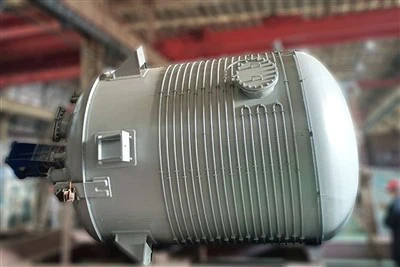
First, let’s get the basics out of the way. A static mixer isn’t like a big industrial mixer with spinning blades, gears, or motors that need oil changes and repairs every six months. It’s just a pipe — usually metal, sometimes plastic for food/pharma use — with specially shaped “mixing elements” inside, welded or molded in place. That’s it. No moving parts, hence the name “static” (meaning not moving). So how does mixing happen without anything to spin or agitate the fluids? It’s all about forcing the flow to split, turn, twist, and recombine over and over again, fast, before it exits the mixer.
Let’s walk through a simple example to make this real. Say you’re mixing two liquids: a base solution and a concentrated dye, both flowing into the static mixer at different rates. When they first hit the first element inside the pipe, that element is shaped like a twisted vane — think of a propeller that’s not spinning, just fixed. The flow hits that twist, splits into two streams, and one gets pushed to the top of the pipe while the other goes to the bottom. Then, before those two streams can settle back, they hit the next element, which is twisted the opposite direction. Now those two streams each split again, right? So suddenly you have four streams instead of two. That doubling happens with every single element. Most standard static mixers have between 6 and 12 elements. Let’s do the math: start with 2 streams, after 1 element = 4, after 2 = 8, after 3 = 16… by the time you get to 10 elements, that’s over 1,000,000 individual layers. That’s why you get a perfect mix every time — no streaks of dye, no clumps of undissolved powder, just uniform fluid out the other end.
Wait, that’s not all. Some static mixers have different elements for different jobs, right? Like, if you’re mixing a powder into a liquid (say, sugar into soda for a beverage plant), you might need a more aggressive element with more turns to break up the powder instead of just layer it. Or if you’re mixing two very viscous fluids, like thick grease and a lubricant additive, you might use elements with sharper edges to shear the fluids a little, not just split them. We tailor the element design based on the viscosity, flow rate, and what exactly you’re mixing — that’s why working with a supplier like us matters, not just grabbing a random mixer off the internet.
Let’s talk about what makes static mixers better than old-school methods, because that’s usually the question after “how does it work.” Mechanical mixers take up space, need maintenance, and can introduce contaminants if gears leak oil. Inline static mixers slip right into your existing pipe run — no extra floor space needed. And since there’s nothing moving inside, the only wear is on the pipe’s inner lining, which is way less than the parts of a mechanical mixer that spin. We’ve had clients tell us they cut mixer maintenance costs by 80% after switching, and their product consistency went from 92% acceptable to 99.5% — that’s a game-changer for things like pharmaceutical creams, where even a tiny inconsistency can mean a batch has to be thrown out.
But wait, static mixing isn’t just for two liquids. It works for gases too, right? Ever had a water treatment plant add chlorine to tap water? That’s a common static mixer use case: chlorine gas and water flow into the mixer, split into layers, and in seconds, you’ve got a uniform chlorinated solution ready for distribution. We even do mixers for slurry — like wastewater sludge with polymer flocculant added to it — because the static elements not only mix but also help the polymer coat every particle evenly, so the sludge settles faster in the clarifier. That cuts treatment time and chemical use, which is another big win for clients.
Now, let’s clear up a common misconception: static mixers don’t work if you’re just pouring two fluids into a pipe and expecting them to mix on their own. That’s called “diffusion mixing,” and it’s super slow — you could wait hours for two viscous liquids to mix just by them touching. The static elements accelerate that diffusion exponentially, because they split the fluid into tiny layers so thin that diffusion can happen in milliseconds, not hours. The key is the flow rate too — if the fluid is moving too slow, the layers don’t mix fast enough, and if it’s moving too fast, the elements can cause excess pressure drop. Our team helps calculate exactly the right length and number of elements for your pipe size and flow rate, so you don’t get that problem. We use data from hundreds of past projects — like, last year we worked on a paint plant in Ohio that was struggling with pigment streaks, and we sized a 8-element mixer for their 4-inch pipe, cut their batch rejections by 90% in a week. That’s the kind of practical stuff we bring, not just theory.
Let’s talk about the nitty-gritty of how the elements are made, because that’s where quality matters. We don’t use cheap stamped metal elements that can warp or have sharp edges that trap material. Our elements are CNC-machined from solid 304 or 316 stainless steel (or food-grade HDPE for pharma/food applications) for consistent shape, so every split is uniform. If elements are uneven, you’ll get some streams going faster than others, leading to streaks. Also, we test every mixer before it leaves our warehouse — we run water and dye through it to check the mix quality, so you know it works when you install it. A lot of cheap suppliers skip that step, and their mixers end up being a waste of money.
Another thing: static mixers can be customized for weird pipe sizes or non-standard mixtures. For example, we had a client that was mixing a epoxy resin and hardener for aerospace parts — those need to be perfectly mixed to avoid weak spots in the final part. Their pipe was 2 inches but had a slight bend before the mixer, so we adjusted the first element to compensate for the uneven flow, so the mix was consistent even after the bend. That’s not something you can get from a one-size-fits-all mixer; that’s when a specialized supplier like us earns our keep.
Now, let’s cover when static mixers might not be the best fit, because we’re honest with clients — we don’t want to sell them something they don’t need. If you’re mixing very large batches (like 10,000 gallon tanks) and you don’t need inline mixing, a mechanical mixer might be cheaper. But most of the time, inline static mixing is better for continuous production — which is what most plants run on now, to keep output high. If you’re mixing gases that need to be at a specific ratio, static mixers are ideal for continuous feed, no extra sensors needed (though we can integrate them if you want).
Here’s a real example to make it stick. Last quarter, a small beverage manufacturer reached out to us because their soda had inconsistent citrus flavor — some bottles tasted like more lemon, some like more lime. They were using a mechanical mixer that would leave citrus concentrate undissolved at the bottom of their 500-gallon mix tank. We installed a 6-element static mixer right after the concentrate injection point, inline on their 3-inch transfer pipe. The first batch after installation: every single bottle tested within 0.2% of the flavor target. That’s the kind of result that makes a difference for small brands that can’t afford to lose customers to bad product consistency.
So to recap how it all works, step by step, for anyone who’s skimming:
- Two or more fluids/gases/slurries flow into the static mixer pipe at a controlled rate.
- Fixed, shaped internal elements split the flow into equal layers, twisting each time to redirect streams.
- Each element doubles the number of layers, until you have millions of tiny layers in just a few feet of pipe.
- Thin layers mean fast, complete diffusion — no unmixed material left.
- No moving parts mean no maintenance, consistent performance, and no risk of contamination from moving parts.
Wait, one last point that people often miss: static mixers can also help with heat transfer. If you’re heating or cooling a mixture, the tiny layers mean heat moves faster through the fluid, so you get a uniform temperature too. We had a chemical plant that was heating a reaction mixture, and after installing our mixer, their reaction time dropped by 15% because the heat was distributed evenly, so every molecule reacted at the same rate. That’s a secondary benefit most clients don’t even think about until they see it.
At the end of the day, a static mixing system is simple in concept but powerful in results — but only if it’s designed and sized right for your specific process. A lot of suppliers cut corners on element design or sizing, leading to mixers that don’t work as advertised. That’s where our experience comes in: we’ve worked with everything from food and pharma to water treatment and specialty chemicals, so we know how to adapt static mixing to your needs.

If you’re tired of inconsistent mixes, high mixer maintenance costs, or batch rejections that eat into your profits, let’s chat. We can walk through your process, help you pick the right mixer design, and even offer testing to make sure it fits your pipe and flow rate. No jargon, no pressure, just straight talk on how to get your mixing process running smoothly.
Pressure Vessels References
- Paul, E. L., Atiemo-Obeng, V. A., & Kresta, S. M. (2004). Handbook of Industrial Mixing: Science and Practice. Wiley-Interscience.
- Middleman, S. (1998). Fundamentals of Polymer Processing. McGraw-Hill.
- Tatterson, G. B. (1991). Fluid Mixing in Industry. Noyes Publications.
- Engineering Library. (2022). Static Mixers: Design, Applications, and Performance. University of Michigan Department of Chemical Engineering.
Weihai Chemical Machinery Co., Ltd.
Weihai Chemical Machinery Co., Ltd. is one of the leading mixing system manufacturers and suppliers in China. We warmly welcome you to buy OEM mixing system from our factory. All customized products are with high quality and low price. For quotation, contact us now.
Address: Dongxin Road No.9, Zhangcun Town, Huancui District, Weihai City, China
E-mail: sales@weihaicm.com
WebSite: https://www.weihaicm.com/
