Hey there, if you’ve ever messed with your old space heater, coffee maker, or even your car’s heater core, you’ve probably fumbled with a tiny temperature dial somewhere—chances are, that dial’s hooked up to a bimetal thermostat. These little guys are super common in all kinds of everyday appliances, but I get it—most folks who use them (or sell parts for them) end up asking the same question: Can a bimetal thermostat be adjusted? Bimetal Thermostats
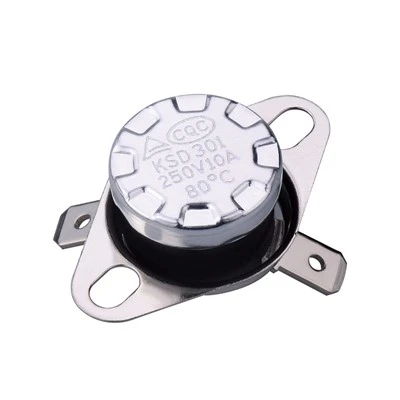
Full transparency here, I’ve been supplying bimetal thermostats to appliance makers, HVAC techs, and even DIY fixers for going on 8 years now. I’ve fielded this question so many times I could answer it in my sleep, but it’s not a straight “yes or no” thing—there’s a lot of nuance, a bunch of myths floating around, and it totally depends on which type of bimetal thermostat we’re talking about. Let’s break this down like I would to a new customer calling my line at 3 p.m. on a Tuesday, no corporate jargon, promise.
First, let’s do a quick crash course on what a bimetal thermostat actually is, ‘cause if you don’t know the basics, the adjustment part won’t make sense. The whole thing’s built around that bimetal strip—two different metals (like steel and copper or brass) bonded together super tight. Each metal expands at a different rate when heated, so when the temperature changes, the strip bends. That bend triggers a switch—turning your heater on or off, your AC compressor, whatever the appliance needs. It’s simple, it’s cheap, it’s reliable, and it’s been the go-to for this exact job for over a century. But that simplicity is why the adjustment works, or why it doesn’t, depending on how the thermostat was built.
Now, the big one: Can you adjust it? Short answer for most standard thermostats? Yeah, you can… but only some of them. Not every bimetal thermostat has an adjustment point, and messing with the wrong one is a quick way to break it, or worse, create a fire hazard. Let’s split this into two main categories: user-adjustable thermostats, and non-adjustable ones. That’s the line in the sand, plain and simple.
User-adjustable ones are the ones you’re used to seeing. Think of the round dial on your old window AC unit, or the temperature slider on a space heater. These have a tiny adjustment screw (usually a flat-head or Phillips, sometimes even a hex key) tucked inside their housing, right where the bimetal strip connects to the switch mechanism. Here’s how that works in practice: the dial or slider you turn is connected to a small cam or lever that shifts the resting position of the bimetal strip. If you turn that screw, you’re tweaking how much the strip has to bend before it trips the switch—so you can set the on/off temperature to be a little higher or lower than the factory default.
But wait—hold up. A lot of people think you can just twist that screw until the temperature’s perfect, and that’s it. Not so fast. Factory settings for bimetal thermostats are calibrated super precisely at the plant, usually to a 1°F or 2°F tolerance. Messing with that adjustment screw isn’t like tuning a guitar—you’ve got to do it slowly, and test it multiple times to make sure you don’t throw the whole thing off. I’ve seen DIYers crank that screw too far, and end up with a space heater that never shuts off—terrible for your energy bill, and a total fire risk if it’s left running near curtains or blankets. I’ve also seen folks adjust it so much that the appliance never turns on, so they’re left with a cold bedroom on a winter night.
Then there are non-adjustable bimetal thermostats. These are the ones that come in smaller, cheaper appliances—like your average toaster, a coffee maker’s brew temperature, or the little thermostats that control a fridge’s defrost cycle. Why no adjustment? Because they’re built for a specific, exact temperature that the appliance was designed to run at. A toaster, for example, needs to get to a specific temperature to melt the butter on your toast and crisp it evenly—there’s no need to adjust that, and if you tried, you’d probably make it burn the bread or not cook it at all. These thermostats are sealed too, usually—you can’t even get to the adjustment screw without breaking the housing, which ruins the whole unit anyway. Some techs will tell you you can “adjust” these by bending the bimetal strip with a tiny pair of pliers, but don’t do that. It’s a garbage fix that’ll last a week, at best, and most of the time, it’s not worth the risk.
Now, let’s talk about a common misconception I hear all the time: “Can I adjust my bimetal thermostat to be more accurate than the factory setting?” No. That’s not how these work. The factory calibrates them to be as close as possible, and when you adjust one, you’re just shifting the trip point—you’re not making it more accurate. If your thermostat is off by 5°F out of the box, an adjustment might get it to within 2°F, but it’s never going to be a digital thermostat-level accurate. That’s not a knock on bimetal thermostats—they’re designed for basic on/off control, not precision. Digital ones use NTC or PT100 sensors for that, which are way more expensive. Bimetal is for when you need cheap, reliable, no-fuss control, not lab-grade precision.
Another thing I get asked all the time: Is there a difference between adjusting a bimetal thermostat for heating vs. cooling? Yep, a little bit, but not much. The adjustment process is the same—you’re tweaking when the switch trips—but heating and cooling thermostats are calibrated for different load ranges. A heating thermostat will trip when it gets too cold, so adjusting it higher means it will turn on when the temperature’s lower, or stay on longer. A cooling thermostat will trip when it’s too hot, so adjusting it lower means it will turn on earlier when the temperature creeps up. But again, don’t overdo it. If you adjust a cooling thermostat to be too low, your AC will run non-stop, jack up your electric bill, and wear out the compressor way faster than it should.
Now, let’s talk about why anyone would need to adjust a bimetal thermostat in the first place. Most of the time, it’s for replacement parts. If your old space heater’s thermostat dies, and you buy a replacement, it might not line up exactly with the original temperature setting. The factory calibration for the replacement might be 5°F off, so you adjust the screw to get it right. Or, if you’re installing a new HVAC system, sometimes you need to tweak the thermostat to match the ductwork’s load. But here’s the big rule I always tell customers: If the original thermostat is working fine, don’t adjust the new one unless you have a reason to. Factory settings are there for a reason—they’re tested to work with the appliance.
Wait, what about after years of use? Can an old bimetal thermostat go out of adjustment on its own? That’s another good question. Over time, the bimetal strip can get fatigued from repeated heating and cooling cycles. It can bend a little, so the trip point shifts. That’s why old appliances sometimes run too hot or too cold out of nowhere. That’s usually when someone reaches for the adjustment screw, or when they need a new thermostat from a supplier like mine. Fatigue is normal, and it’s one of the few times adjusting actually makes sense—instead of buying a whole new appliance, you can adjust the old thermostat back to a usable setting, or just replace it with a new one.
Let’s touch on safety, ‘cause this is non-negotiable. Bimetal thermostats are used in high-heat appliances—ovens, space heaters, water heaters. Adjusting one of these requires disconnecting power first, no exceptions. I can’t tell you how many times a customer has called me saying they got shocked because they started messing with a thermostat that was still plugged in. Also, if you’re adjusting a thermostat for a water heater, don’t crank the setting over 120°F. That’s the EPA’s recommended max to prevent scalding, and adjusting it higher is a huge safety risk. Same with ovens—adjusting the thermostat to run too hot can burn food, but more importantly, it can cause the oven’s insulation to degrade faster, or even start a fire. I’ve seen way too many bad situations from people messing with these without knowing what they’re doing.
Now, for the folks who are buying these from a supplier, like me. When we ship bimetal thermostats, we note if they’re adjustable or not, and what their factory setting is. If a customer needs a replacement that matches the exact temperature of the old one, we can even calibrate it at our warehouse to that specific temperature, so they don’t have to do any adjustment at all. That’s one of the perks of working directly with a supplier—you get custom calibration, not just off-the-shelf parts. For example, if you run a line of commercial coffee makers that brew at 195°F, we can ship thermostats calibrated exactly to that, no adjustment needed.
Another myth I want to bust: “All residential thermostats are bimetal.” No way. The big, wall-mounted thermostats you use to control your whole house HVAC? Those are almost all digital now, with sensors, not bimetal. The bimetal ones are the small ones inside the appliance itself—inside your space heater, toaster, fridge, water heater. That’s a key distinction. If you’re talking about the wall thermostat, you can’t adjust a bimetal one there (most wall ones aren’t bimetal anymore anyway), so don’t waste time digging for screws behind it.
Let me wrap this up, ‘cause I know I’ve covered a lot. So to answer the original question: Can a bimetal thermostat be adjusted? Yes, but only certain ones. User-adjustable models have a tiny screw that lets you tweak the trip temperature, but factory calibration is precise, so adjust slowly and test often. Never mess with a non-adjustable thermostat—those are built for a specific temperature, and tampering with them just leads to problems. Always disconnect power before adjusting, and never adjust thermostats for high-heat appliances beyond safe, recommended limits.
If you’re in the market for bimetal thermostats—whether you’re a DIYer fixing an old space heater, an appliance maker needing bulk parts, or an HVAC tech replacing units for customers—hit my line to chat about what you need. We can go over adjustable vs. non-adjustable, calibrate parts to your exact specs, and make sure you get the right one for your job. No hoops to jump through, no sales fluff—just straight talk about thermostats, like I’ve been doing for 8 years.
Bimetallic Strips References:
- ASHRAE Handbook – HVAC Systems and Equipment, 2020
- “Bimetallic Thermostats: Principles and Applications”, Omega Engineering, 2019
- U.S. Consumer Product Safety Commission (CPSC) Guidelines for Water Heater Thermostat Adjustment, 2022
Yueqing Ganen Electronic Technology Co., Ltd.
As one of the most professional bimetal thermostats manufacturers and suppliers in China, we also support customized service. Please feel free to wholesale advanced bimetal thermostats in stock here from our factory. Welcome to contact us for quotation.
Address: No.6 yonghe 3rd Road, Chengdong Industrial Functional Zone, Chengdong Street, Yueqing City, Wenzhou City, Zhejiang Province, China.
E-mail: daiaohui@163.com
WebSite: https://www.ganensj.com/
