Hey everyone, thanks for swinging by my blog! If you’ve ever worked in metal fabrication, heat treatment, or industrial manufacturing, chances are you’ve come across that big, heavy-duty furnace that moves back and forth like a train bogie (for the new folks, a bogie is that undercarriage part on trains that lets them turn corners—same vibe here). I’m the guy who supplies these things, so let me break down how a bogie furnace actually works, no stuffy textbook jargon, just real talk from someone who’s been installing and fixing these for 12 years. Bogie Furnace

First, let’s get the basics out of the way: a bogie furnace is basically a split-type industrial heat treater. You’ve got two main parts: the stationary furnace chamber (that’s the insulated box where all the heating happens) and the movable bogie cart (the flat, heavy platform that loads your parts). That bogie is the star here—its whole job is to slide right under the chamber, haul the load inside, and seal up tight so you can heat those parts evenly, no hot spots, no cold spots. Way better than a regular batch furnace where you have to lift heavy parts with a crane every time—we built these for efficiency, plain and simple.
Let’s walk through a typical operation step by step, because that’s where most people get confused. First, you prep your load. If I’m talking to a heat treater making aerospace gears or a metal stamping plant hardening car parts, you’re not just tossing stuff in—you space out parts so air can circulate, maybe stack them on racks to keep gaps. You roll the bogie cart out of the chamber (most of these are on heavy-duty steel rails, by the way, rated for thousands of pounds) and load everything up. A lot of shops use forklifts or overhead cranes for this, no big deal—our bogies are designed to fit standard pallet sizes too, so you don’t have to rig up custom stuff.
Once the load’s ready, you hit the “close” button. That’s when the bogie starts rolling back into place, right under the chamber. Here’s the smart part: there’s a heavy heat-resistant seal all around the opening of the furnace chamber, usually made of ceramic fiber or high-temp silicone that can handle 1200°F+ temperatures. When the bogie locks into place, it presses up against that seal like a fridge door—no leaks. Why does that matter? If hot air escapes, your furnace has to work way harder to stay at the set temp, which wastes energy. We’ve had customers cut their energy bills by 20% just from a well-sealed bogie, that’s not hype, that’s actual numbers.
Now, the heating part. Bogie furnaces use a few heat sources depending on what the customer needs: natural gas for big shops doing batch steel heat treat, or electric resistance heaters for smaller operations that want more precise temp control. The heaters are mounted on the walls, ceiling, and sometimes even the floor of the stationary chamber (wait, no, the floor’s on the bogie—those heaters are fixed). Once the chamber is sealed, the heaters kick on, and fans inside the chamber circulate the hot air around the load. That forced air circulation is key—no more cold corners. You can set the temp to within a few degrees, whether you’re annealing aluminum (around 900°F) or tempering tool steel (up to 1800°F).
What about the process cycle? That’s where you tailor it to your part. Let’s say you’re hardening a truck axle: you heat it to 1550°F, hold it there for 2 hours so the whole part reaches that temp, then quench it. With a bogie furnace, once the hold time is done, you can actually roll the bogie partway out (just a little) to pre-cool the surface before quenching, or if you’re doing tempering, you can just cycle the heat down. A lot of older batch furnaces can’t do that—you have to wait for the whole chamber to cool before you move the part, which wastes hours.
Wait, let’s address a common myth I get all the time: “Is this just a big portable furnace?” No, not even close. The bogie isn’t just a cart to move stuff—it’s insulated too. If it wasn’t, when you roll a hot load back out after processing, you’d heat up the whole shop. Our bogies have multiple layers of insulation: inner firebrick, middle ceramic fiber, outer steel shell, so the top surface of the cart stays at a safe temp (usually under 150°F) when it’s loaded with parts at 1800°F. That means you can unload right away without waiting for it to cool, cutting down on turnaround time.
Another thing: controls. Back in the day, bogie furnaces had manual thermostats and guys standing around checking temp gauges every hour. Now, most of the ones I supply have PLC (programmable logic controller) systems. You punch in your cycle: heat rate, hold temp, hold time, cool rate, whatever you need. The system monitors 2-4 temp points inside the chamber in real time, adjusts the heaters and fans automatically. No more guesswork—if a part is at the back of the chamber, the system cranks the heater a little more there to even things out. We even add data logging so customers can keep records for quality control, which is huge for aerospace or medical parts that need to meet strict standards.
Now, why choose a bogie furnace over other types? Let’s say you have really big, heavy parts. A regular chamber furnace has a fixed door and floor, so you have to lift a 10,000 lb part through a 6-foot opening. That’s dangerous, and expensive. With a bogie furnace, the part is sitting on the cart, you just roll it in. I’ve installed bogies for wind turbine manufacturers with parts 20 feet long—wouldn’t dream of trying to lift that. Also, for batch production, if you run different types of parts, you can have multiple bogie carts. Load one cart with steel gears, another with aluminum castings, switch them out in 10 minutes. No need to unload and reload the same cart every time, saves so much time.
Wait, but like any equipment, they have parts that wear out. The bogie’s wheels, for example—since it’s rolling thousands of pounds around on steel rails, the wheels and bearings need regular grease and checks. The seal around the chamber? Over time, ceramic fiber can get compressed or damaged if parts scrape it, so you replace that every few years. Most issues I see aren’t big failures—just regular maintenance, same as your forklift or CNC machine. That’s why I tell new customers: a bogie furnace is an investment, not a toy, but if you keep up with the basics, it’ll run for 20+ years easy.
Let me throw in a real example to make this concrete. Last year, a custom metal stamping shop I work with had been using a small batch furnace for their automotive door hinges. They were doing 500 parts a day, and each load took 4 hours, so they only ran two shifts. They switched to a bogie furnace with two bogie carts. Now they load one cart while the other is processing, and each load takes 3 hours. They cut their production time by 25%, their energy bills went down 18% because of the better seal, and they haven’t had a single temp-related defect in 18 months. That’s the kind of result you don’t get with cheap off-the-shelf furnaces.
Now, if you’re reading this and thinking, “Hey, this sounds like what I need,” let me tell you how to take the next step. Every shop’s needs are different: what’s your max part weight? What temp do you need to reach? Do you run small batches of custom parts or big runs of the same item? I don’t sell one-size-fits-all units—we build each bogie furnace to match your exact process. All you have to do is reach out, tell me a bit about your operation, and we can walk through specs, pricing, and even reference a few customers in your industry so you can see how it works for someone like you.
I know there’s a lot of options out there for heat treat equipment, but a bogie furnace is one of the most versatile, cost-effective investments you can make if you handle large, heavy parts. No more cranes lifting 10k lb loads through small doors, no more wasting hours waiting for chambers to cool, no more inconsistent temp that ruins parts. It’s not magic—it’s a well-built, well-designed piece of equipment that’s been around for decades, and it’s still the go-to for shops that need reliability.
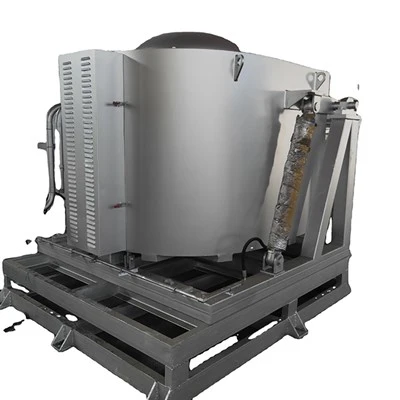
If you’ve got questions, or you’re ready to stop dealing with inefficient heat treat, hit me up to connect for a sourcing chat. I’m here to help, not just sell a furnace—been in this long enough to know the best equipment is the one that works for your shop, not against it.
Oil-Fired Furnace References
- ASM International. (2019). Heat Treater’s Guide: Practices and Procedures for Irons and Steels. ASM International.
- European Furnaces Association. (2021). Industrial Furnace Technology: Design, Operation, and Maintenance. EFA Publications.
- Davis, J. R. (Ed.). (2001). Heat Treating of Carbon and Low-Alloy Steels. ASM International.
- Industrial Heating Magazine. (2022). “Advances in Bogie Furnace Design for Batch Heat Treatment Operations.” Industrial Heating, 89(5), 24–28.
- National Fire Protection Association. (2020). NFPA 86: Standard for Ovens and Furnaces. National Fire Protection Association.
Jiangsu Fangwei Furnace Industry Co., Ltd.
Jiangsu Fangwei Furnace Industry Co., Ltd. is one of the most professional bogie furnace manufacturers and suppliers in China. With abundant experience, we are committed to providing high quality customized products with competitive price. Please feel free to buy advanced bogie furnace made in China here from our factory.
Address: No.168, HuangNian Bridge, DaoShu Town, Danyang City, JiangSu Province, China
E-mail: fangwei@fwfurnaces.com
WebSite: https://www.fwfurnaces.com/
