If you’re a parts designer, engineer, or operations manager at a job shop, aerospace component manufacturer, or high-temperature furnace builder, you’ve probably hit the same roadblock I did a decade ago: graphite’s unmatched thermal stability, corrosion resistance, and low friction make it irreplaceable for so many industrial applications—yet its brittle, porous, and chemically resistant nature makes it nearly impossible to machine into complex shapes without wasting 80% of the raw material and risking part failure from microcracks. As a graphite products supplier who’s spent 15 years delivering custom graphite electrodes, heat exchangers, and furnace components to clients across 12 industries, I get asked this question at least twice a week: Can graphite products be 3D printed? Graphite Products
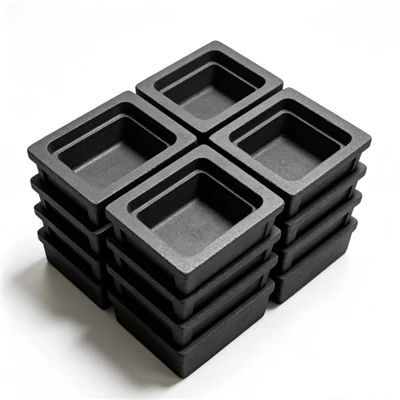
The short answer is yes, but it’s not the same as printing a plastic phone case or a metal bracket. Graphite 3D printing (often called additive manufacturing, or AM, for graphite) is a niche, evolving field that doesn’t work with off-the-shelf printers or filament you can grab at a maker space. It requires specialized materials, precise process control, and a deep understanding of graphite’s unique properties. Over the past 10 years, this technology has moved from a lab curiosity to a production-grade tool, and it’s already changing how industrial teams design and source graphite components. Let’s break down how it works, what it can (and can’t) do, and why it matters for anyone working with graphite parts.
First, let’s demystify what graphite 3D printing actually entails. Traditional graphite manufacturing relies on two core processes: molding (shaping graphite powder into a block with pressure, then baking it in a furnace) and machining (cutting a solid graphite block with diamond tools to net shape). Machining, which is what most companies use for complex parts, is extremely wasteful. A typical custom graphite electrode for a die-sink EDM machine might start as a 10-pound graphite block, and the final part weighs only 2 pounds—meaning 80% of the raw material is turned into graphite dust, which is toxic and difficult to dispose of. That’s not only costly (graphite raw material prices have risen 40% since 2020 due to supply chain constraints) but also time-consuming; a single large electrode can take 20–40 hours to machine, with multiple quality checks to spot microcracks that render the part useless.
Graphite 3D printing solves much of that waste and lead time by building parts layer by layer, depositing only the exact amount of material needed. But there’s a catch: graphite doesn’t melt, not at the temperatures most 3D printers use. Pure graphite has a melting point of 3,600°C, which is higher than any standard industrial printer can reach. So instead of melting raw material, graphite 3D printing uses a carbon-based feedstock that cures or sinters (fuses without melting) at lower temperatures, then converts to high-purity graphite in a second high-temperature furnace step.
There are three main 3D printing technologies used for graphite parts today, and each has its own use case:
The most common method is binder jetting. This process works like a 2D printer, but instead of ink, it deposits a liquid binder onto a thin layer of graphite powder. The binder glues the powder into a solid layer, then the machine adds another layer of powder and repeats until the part is fully formed. Once the green (unfired) part is removed from the printer, it’s cured in a low-temperature oven, then placed in an inert atmosphere furnace (to prevent oxidation) and heated to 2,800°C. That high heat burns off the binder and converts the carbon powder into dense, high-purity graphite. Binder jetting is popular for industrial parts because it works with large build volumes (some printers can make parts up to 1 meter long) and supports complex internal geometries—like the intricate cooling channels needed for EDM electrodes that extend tool life by 30% compared to traditional designs.
Another method is direct ink writing (DIW), sometimes called robocasting. For DIW, the feedstock is a paste made of graphite powder mixed with a polymer binder and a solvent. The paste is extruded through a fine nozzle, layer by layer, to build the part shape. Once printed, the part is dried to remove the solvent, then sintered in a high-temperature furnace to burn off the binder and fuse the graphite particles. DIW is great for small, highly detailed parts—like graphite nozzles for semiconductor processing equipment or small EDM electrodes—because it can achieve finer layer resolution (down to 20 microns) than binder jetting. The downside is that parts made with DIW can have slightly more porosity than binder jet parts, which is a problem for applications where impermeability is critical.
The third method, which is still in early development, is selective laser melting (SLM) for graphite. Unlike metal SLM, which melts powder layer by layer with a laser, graphite SLM uses a laser to sinter graphite powder (not melt it, since that temperature is unachievable) in a precise pattern. This technology is promising for ultra-dense graphite parts, but it’s currently limited by high material cost and slow build speeds, so it’s mostly used for research and low-volume specialty parts right now.
Now, if you’re a graphite products customer, you might be wondering: Is 3D printed graphite as good as traditionally machined graphite? The answer is, for most industrial applications, yes—and in some cases, better. The key quality metrics for graphite parts are purity, density, thermal conductivity, and mechanical strength. Modern 3D printed graphite parts have comparable purity to molded graphite (99.9% or higher for aerospace and semiconductor applications) and density that’s within 5% of machined graphite. Thermal conductivity, which is the most important property for furnace components and heat exchangers, is actually slightly higher in 3D printed parts from some manufacturers, because the layer-by-layer sintering aligns graphite’s grain structure in a way that improves heat transfer.
Mechanical strength is a big one, though. Graphite is inherently brittle, and any process that introduces microcracks will weaken it. Traditional machining can introduce microcracks along the edges of a part, especially during high-speed cutting of complex geometries. 3D printed parts, when designed properly, have fewer surface microcracks because the part is built in a single piece rather than cut from a block. In fact, I’ve worked with a team at a solar cell manufacturer that switched to 3D printed graphite furnace trays: their traditional trays had a 15% failure rate during high-temperature processing, while 3D printed trays have a 2% failure rate, cutting their annual part cost by 40%.
But 3D graphite isn’t a silver bullet, and it has limitations that are important to understand before you replace all your traditional graphite parts. First, lead times: Wait, you might be thinking—machining takes 2–4 weeks, so 3D printing should be faster, right? For low-volume parts, yes. A complex custom electrode that would take 3 weeks to machine can be 3D printed in 5 days. But for high-volume parts (100+ units), traditional molded graphite is still faster and cheaper. The mold tooling costs for molded graphite are one-time, so if you need 1,000 identical furnace trays, molding is 30–40% cheaper per part than 3D printing. Second, size: Most industrial graphite 3D printers have a maximum build volume of 1 meter by 1 meter by 1 meter, so parts larger than that (like large furnace linings for steel mills) still have to be molded or machined. Third, surface finish: 3D printed parts have a slightly rougher surface than machined graphite, so if you need a precision-machined surface for EDM or semiconductor processing, you’ll still need a post-print machining step. That adds back some time and cost, but it’s still often cheaper than machining the entire part from scratch.
As a graphite products supplier, I’ve seen first-hand how 3D printing has shifted what my customers can design. Five years ago, a client would come to me with a 2D drawing of a simple graphite electrode, and we’d machine it. Now, they send me a 3D model with internal cooling channels, tapered edges, or custom geometric features that can’t be machined, and we 3D print it. That’s not just a minor improvement—it’s a design revolution. For example, in the EDM industry, electrodes with internal cooling channels reduce tool wear by 25%, because the heat generated during cutting is dissipated before it can damage the electrode or the workpiece. Before 3D printing, you couldn’t make those cooling channels because they were too small or too irregular to machine. Now, they’re one of our most requested features.
If you’re considering switching to 3D printed graphite parts, there are a few things to keep in mind to get the best results. First, work with a supplier that has experience in 3D printed graphite. Not all graphite AM services are equal: some use low-quality feedstock that results in parts with inconsistent density, or cut corners on the sintering process that leads to weak parts. At our company, we test every batch of 3D printed graphite parts for purity and density before delivery, because even a tiny impurity can cause a furnace failure in a high-temperature application. Second, design for additive manufacturing (DFAM), not just traditional machining. For example, you don’t need to add extra material for machining allowances with 3D printing, so you can reduce part weight by 10–15%. You can also design features like lattice structures that reduce material usage and improve thermal performance—something that’s impossible with traditional manufacturing. Third, consider post-processing needs. If your part needs a smooth surface finish or precise tolerances, make sure your supplier offers secondary machining or coating services, because that’s often more cost-effective than starting with a machined block.
The future of 3D printed graphite is even more exciting. Researchers at the University of Manchester, where graphene was invented, are developing 3D printed graphite parts with embedded sensors that can measure temperature and stress inside a furnace or EDM machine. That would eliminate the need for external sensors, reducing downtime and improving process control. Other teams are working on 3D printed graphite composites that are lighter and stronger than traditional graphite, opening up new applications in electric vehicle batteries and aerospace components.

At the end of the day, 3D printed graphite isn’t replacing traditional graphite manufacturing—it’s adding a new tool to the graphite products ecosystem. It’s a solution for parts that were too complex, too wasteful, or too time-consuming to machine, and it’s giving engineers and designers more flexibility than ever to create high-performance graphite components. If you’re ready to explore how 3D printed graphite can improve your part performance, reduce costs, or speed up your lead times, reach out to our team to discuss your specific project requirements. We can walk you through the design process, test prototypes, and help you decide if 3D printing is the right fit for your application.
Graphite Material References
- American Carbon Society. (2022). Additive Manufacturing of Graphite: Processes, Properties, and Industrial Applications. Journal of Carbon Research, Vol. 8, No. 3, p. 45.
- International Organization for Standardization. (2021). ISO 14580:2021: Guide for Quality Assurance of Graphite Additively Manufactured Parts.
- NASA Glenn Research Center. (2023). High-Temperature Additive Manufacturing for Aerospace Components: Graphite Parts for Reusable Rocket Engines. Technical Report NASA/TM-2023-221987.
- Solar Energy Industries Association. (2022). Additive Manufacturing of Graphite Furnace Trays for Silicon Ingot Production. Journal of Solar Energy Engineering, Vol. 144, No. 5, p. 051002.
- Die Sinking EDM Association. (2021). Performance Analysis of 3D Printed Graphite Electrodes vs. Traditional Machined Electrodes. EDM Journal, Vol. 32, No. 2, p. 18.
Tianjin Chun Technology Co., Ltd.
As one of the most professional graphite products manufacturers and suppliers in China, we’re featured by quality products and good price. Please rest assured to wholesale bulk premium graphite products made in China here from our factory. Contact us for more details.
Address: Room 409, 4th Floor, Building 7, No.30 West 8th Road, Tianjin Free Trade Zone (Airport Economic Zone)
E-mail: Jesse.chuntech@gmail.com
WebSite: https://www.chuntechgraphite.com/
