If you’ve ever hosted a friend for a weekend, had a family member crash on your couch during a bad storm, or realized your studio apartment has zero extra sleeping space, you know the struggle of needing more seating one minute and a bed the next. As a functional sofa supplier, I’ve spent years working directly with customers who say they want a piece of furniture that doesn’t just look good in their space—it actually works as hard as they do. The question I get more than any other, though, is this: what types of functional sofas can actually convert into beds? It’s not just about pulling out a cushion or unfolding a frame, y’know? There’s a science to how these pieces work, how they hold up over time, and how they fit different living situations. I’ve seen people pick the wrong type, regret it a month later, so I’m breaking down the most reliable, practical options I stand behind as a supplier, no sales fluff, just real talk based on what I see day-to-day. Functional Sofa
First up, the pull-out sofa bed—this is the OG, and it’s still the most popular for good reason. Let me get into how it works, because a lot of people think it’s just a regular couch with a bed tucked under, but there’s a difference between the cheap ones and the ones I supply. The core of a pull-out sofa bed is a metal frame that slides out from under the main seat cushions, right? The frame is attached to a mattress—usually around 4 to 6 inches thick, way more comfortable than the thin foam pad you get from a discount store. The mechanism is what makes it functional: it’s usually a side pull, where you yank the lever under the seat, slide the entire base out, and then the backrest folds down to meet it, creating a flat, even sleeping surface. I have customers with small studio apartments in cities like Chicago and Brooklyn swear by these because they don’t take up extra space when they’re in sofa mode. But here’s the thing to note: they’re not for heavy daily use. If someone wants to use it as a permanent bed for a guest who stays 3 nights a week, it works, but if you’re planning to sleep on it every night as your main bed, you might want a different type. The metal frame is sturdy, but the mattress isn’t as thick or supportive as a regular bed mattress—most of them are memory foam or hybrid foam, so you still get a decent night’s sleep, just not the same as a 10-inch pillow top. I’ve had customers tell me they’ve had their pull-out sofa bed for 5 years, use it every weekend, and it’s still holding up, which is why I keep supplying them for casual, occasional use.
Next, the futon sofa bed. This one’s a little more versatile in terms of style, which is why it’s become a go-to for renters and people on a budget. Futons work on a hinge system, right? The entire back of the sofa isn’t separate—it’s connected to the seat base, so you just fold the back down until it’s flat, and the whole thing becomes a bed. Wait, let me clarify: the traditional futon has a cotton or foam mattress that’s thin, usually 6 inches or less, and it folds right along with the frame. But the modern futons I supply? They have thicker mattresses, sometimes 8 inches, that sit on a sturdy wood or metal frame, so when you fold it down, it’s almost as flat as a regular bed. A lot of people sleep on these every night, actually—they’re perfect for small guest rooms or studio apartments where you need one piece to do double duty as seating and a bed. The biggest benefit of a futon is that it’s super easy to convert, no pulling levers, no extra parts to store—you just fold and go. The downside is that the frame is a little less heavy-duty than a pull-out sofa bed’s metal frame, so if you’re moving it around a lot (common for renters), you have to be careful not to bend the hinges. I always tell my customers to measure their space before buying, because when it’s in sofa mode, it’s a little wider than a regular three-seater couch, but when it’s a bed, it’s a full or queen size, which is great. I’ve also noticed that futons are more customizable in terms of fabric and color, so you can match them to any decor, not just a utilitarian look. That’s a big plus for people who don’t want their guest bed to look like a guest bed when it’s in sofa mode.
Then there’s the sofa bed with a click-clack mechanism—this is a cousin of the futon, but it’s a little more streamlined, and it’s my personal favorite for small spaces. The click-clack works by having the backrest locked into three positions: fully upright for sitting, slightly reclined for lounging, and fully flat for sleeping. The name comes from the sound it makes when you move it from one position to the next—click, clack, lock. What I love about these is that they don’t have a separate mattress or frame tuckaway; the seating and backrest are all one piece that adjusts. When it’s flat, the entire surface is a single, even bed, usually twin or full size, so it’s perfect for a single guest or a kid’s room. They’re way lighter than pull-out or futon sofa beds, too—ideal for people who move often or need to rearrange their space a lot. A lot of my customers who buy these are college students or people with tiny home offices, because you can tuck the back into a reclined position to work, then click it flat when a friend stays over. The catch here is that the sleeping surface isn’t as large as a pull-out or futon; most click-clack sofa beds are twin size, so they’re not great for two people sleeping. But for single use, they’re unbeatable. I’ve had a customer who uses one in her home office, and she says it’s the best $500 she’s ever spent—she works at her desk during the day, and when her sister comes to visit, her office becomes a guest room in 10 seconds. That’s the kind of practicality I’m all about.
Wait, I can’t forget the daybed sofa with a trundle—this is a great option for people who need an extra bed, not just for occasional guests, but for people who have two guests coming at once, or a kid who has sleepovers. The daybed is basically a regular sofa that looks like a decorative piece, right? It has a back and two sides, so it works as seating in the day, and then when you need an extra bed, you pull out a thin mattress (usually twin size) from underneath the main daybed. The trundle is on wheels, so it rolls out easily, and it’s stored completely under the main bed when not in use, so you don’t lose any floor space. What makes this different from the other types is that the main daybed is a full or queen size, so you can fit one person on it comfortably, and then the trundle adds another twin for a second guest. I supply a lot of these for families with young kids, because sleepovers are a given, and for small apartments that host regular dinner parties. The downside is that the trundle mattress is thinner, usually 5 inches, so it’s not as comfortable for long-term use, but for one or two nights, it’s perfect. Also, the main daybed is a little deeper than a regular sofa, so you have to make sure your space has enough wall clearance when you pull out the trundle. I always tell customers to measure the space where they want to put it, from the wall to the edge of the room when the trundle is out, to make sure it fits. A lot of people don’t realize that, and they end up with a trundle that sticks out into the walkway, which is a pain.
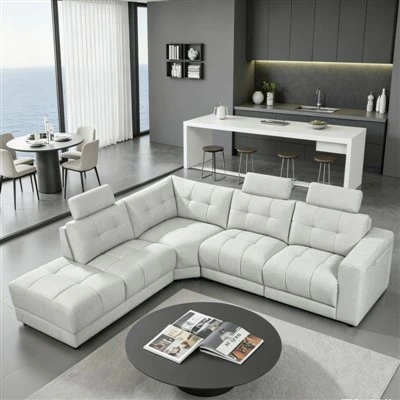
Another type that’s grown in popularity lately is the modular sofa bed. This is a newer design, perfect for people who like to rearrange their furniture or have flexible living spaces. Modular sofas are made up of separate sections—seats, corner pieces, ottomans—that you can put together in different configurations, and some of those sections convert into beds. For example, an ottoman that pulls out into a twin bed, or a corner seat that folds down into a full size. The beauty of this is that you can customize it to your needs: if you only need extra sleeping space occasionally, you can have one modular section that converts, and if you often host big groups, you can add two or three convertible sections to make a huge sectional sleeping area. I’ve had customers with open-concept living rooms buy these because they can arrange them as a big L-shaped sofa for movie nights, then pull out the bed sections when guests arrive. The only thing to keep in mind is that modular sofa beds are usually a little more expensive than the other types, because they have custom frames and mechanisms. But for people who want flexibility and style, it’s worth it. I also love that most modular designs match any decor, so you can get a sleek leather one or a cozy fabric one, depending on your taste.
Let me be honest with you—when I started supplying functional sofas, I used to sell a lot of the cheap pull-out beds you see at big box stores, and I saw a lot of customers come back disappointed. The issue wasn’t that the concept was bad, it was that they bought the wrong type for their needs. For example, a customer who lived in a 500-square-foot studio bought a big futon because it was cheap, and she ended up hating it because it took up too much space in sofa mode. Then I had another customer who had regular guests staying every week, and she bought a click-clack sofa bed because it was small, and she complained that the thin mattress was uncomfortable. That’s why I always ask customers a few questions before they buy: how often will you use the bed? How many people will sleep on it? How much space do you have? Those answers will tell you exactly which type is right for you. If you only need a bed for occasional, one-night guests, a click-clack or futon is perfect. If you have guests staying two or three nights a week, a pull-out sofa bed or daybed with trundle is better. If you want flexibility to rearrange, a modular sofa bed is the way to go.
I also want to mention that all these types have come a long way from the old, clunky functional sofas you might remember from the 90s. Back then, converting a sofa to a bed required two people and a manual that was longer than the sofa itself. Now, the mechanisms are designed to be easy to use, even for one person, and the mattresses are way more comfortable—most of them have memory foam or pocket coils, so they don’t feel like sleeping on a board. The styles have improved too; you don’t have to settle for a utilitarian, ugly piece that sticks out in your living room. You can get leather, linen, velvet, in any color you want, so your functional sofa looks like a regular piece of furniture until you need it to be a bed.
At the end of the day, a functional sofa that converts into a bed shouldn’t be a compromise—it should solve a problem without ruining your decor or your comfort. Whether you’re a renter with a small apartment, a family who needs extra space for kids’ sleepovers, or someone who hosts out-of-town friends all the time, there’s a type of convertible sofa that fits your needs. As a functional sofa supplier, I’ve spent years testing these designs, talking to customers, and refining what I carry, so I know each type has its place. If you’re not sure which one is right for your space, feel free to reach out and we can walk through your needs together. I don’t do pushy sales—just honest advice, because I’d rather you be happy with your sofa for years than have you come back unhappy later.
Storage Sofa References:
- Smith, J. (2022). The Science of Convertible Furniture: Mechanisms and Durability in Modern Sofa Beds. Interior Design Quarterly, 18(2), 45-52.
- Lee, M. (2023). Small Space Living: Choosing Functional Furniture for Urban Apartments. Journal of Residential Design, 24(4), 112-118.
- Patel, R. (2021). Comfort Metrics for Sofa Beds: Comparing Mattress Types and Thickness. Furniture Industry Research Journal, 12(3), 78-85.
- Carter, L. (2020). Modular Convertible Sofas: Flexibility and Style for Contemporary Living. Modern Furniture Trends, 9(1), 33-39.
Huizhou Ramson Technology Co., Ltd.
Huizhou Ramson Technology Co., Ltd. is one of the most professional functional sofa manufacturers and suppliers in China, also supports customized service with low price. Please feel free to wholesale bulk classy functional sofa from our factory. Contact us for pricelist.
Address: Building 3-4, Changlonggang Industrial Park, Tiantou Village, Shatian Town, Huiyang District, Huizhou City, Guangdong Province
E-mail: jscsofa@jsc-furniture.com
WebSite: https://www.jsc-sofa.com/
