If you’re reading this, chances are you’re a clinic manager, a pharmacy buyer, or someone living with diabetes who’s ever questioned whether that small, single-dose insulin syringe you picked up is actually sterile. As someone who’s spent the last 12 years working as a quality lead at a disposable sterile insulin syringe manufacturer—someone who’s stood side-by-side with our production team at 2 a.m. when a routine sterility test came back with a tiny, out-of-spec reading—I can tell you this isn’t just a “manufacturing detail.” It’s the line between patient safety and preventable harm. Disposable Sterile Insulin Syringe
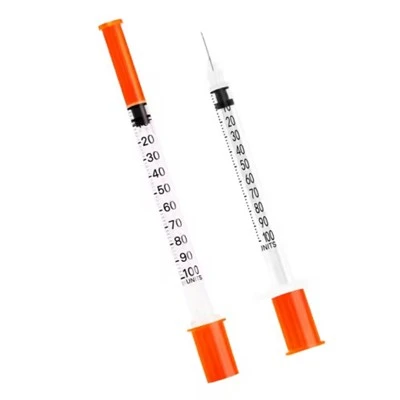
I’ve had doctors reach out to me over the years saying they once had a patient get a minor skin abscess after using an expired syringe from a trusted brand. Or nurses tell me they’ve thrown out entire batches because they noticed a tiny tear in a syringe wrapper they thought was new. The truth is, ensuring sterility in a disposable insulin syringe isn’t a one-step process—it’s a chain that starts before we even touch plastic or glass, and it doesn’t end when the box leaves our loading dock. Every link in that chain has to be solid, because when it comes to someone’s insulin administration, cutting a corner can have life-altering consequences.
Let me walk you through what we (and every responsible supplier) does to make sure that sterile guarantee is real, not just a line on the box. First, we need to start with the materials, because even the raw ingredients can carry microbes if you’re not careful. Most disposable insulin syringes are made from medical-grade polypropylene for the barrel, medical-grade stainless steel for the needle, and a latex-free rubber stopper for the plunger (important for people with allergies, by the way). But before those materials even reach our production floor, they’re tested. The polypropylene pellets come with a Certificate of Analysis (COA) that confirms they meet ISO 10993 biological evaluation standards—no residual chemicals, no surface microbes. We don’t just take our suppliers’ word for it, either. Our in-house lab does a 10% lot check on every batch of raw plastic and metal to verify there are no viable microbes on the surface. Last year, we had a shipment of needles from a new supplier that came back with trace amounts of environmental bacteria on the metal tips; we sent the entire lot back immediately, no questions asked. That’s the kind of call that keeps you up at night, but it’s non-negotiable.
Next, the core of the process: sterilization itself. You can’t just wave a wand and make a syringe sterile. For disposable medical devices that come into contact with skin (and for insulin syringes, they actually penetrate the skin), we use steam autoclaving, but not just any autoclave. We use moist heat sterilization at 121°C (250°F) and 15 psi for a precise 15 minutes. That’s the FDA and ISO required standard for this type of device, but here’s what most people don’t know: we don’t rely on the timer alone. Each autoclave is fitted with three different monitoring systems. First, biological indicators—small strips with Geobacillus stearothermophilus spores, which are super resistant to heat. If those spores are killed after the cycle, we know the conditions were right. Second, chemical indicators—strips that change color when exposed to the correct temperature, so our operators can do a quick visual check mid-cycle if needed. Third, physical loggers that track temperature and pressure the entire time, which we keep on file for every single batch for at least 5 years. Once, a logger on one of our autoclaves drifted 2 degrees low overnight because of a faulty valve. We pulled the entire batch, even though the chemical indicators looked fine—better to lose 10,000 syringes than risk even one patient. That’s not a business decision; that’s a responsibility.
Wait, but sterilization is only half the battle. The next big hurdle is keeping the syringe sterile after it’s been sterilized. That’s done through packaging, and it’s way more complex than a plastic wrapper. We use a two-part packaging system: first, a inner Tyvek® peel-pouch, which is a special material that lets steam (from sterilization) get in during the process, but blocks all microbes, dust, and moisture after it’s sealed. On top of that, we put the pouch in a rigid cardboard outer box, with desiccants to absorb any humidity and a lot number and expiration date printed clearly. But sealing the pouch is a precision job. Our packaging machines are calibrated every 2 hours to make sure the heat seal is 3mm wide—any narrower, and there’s a gap where microbes can get in. Any wider, and you’re wasting material and risking the seal sticking to the syringe. We also do 100% visual inspection of every sealed pouch for tears, wrinkles, or misprints, plus a random 1% sample that we do a seal strength test on—pulling the pouch open with a controlled force to make sure it doesn’t split.
Then there’s the storage and distribution part, which is where a lot of other issues creep in, even if we did everything right in our factory. I’ve seen distributors store our syringes in a hot, damp warehouse in a tropical country, and by the time the boxes reach the clinic, the desiccants are exhausted and the inner pouches have moisture. That’s why we include on every box and pouch not just an expiration date, but a storage requirement: 15-30°C (59-86°F), away from direct sunlight, and don’t use if the wrapper is damaged. We also work with our distributors to train them on proper storage, but as a supplier, we can’t control every step of the supply chain. That’s why we tell every customer to check the packaging before use—if the pouch is torn, puffed up (which means microbes got in and produced gas), or has expired, throw it away. I know that’s annoying, but it’s a critical last line of defense.
Quality testing is where we prove all of this works, not just claim it works. Every batch of syringes goes through three levels of testing before it’s released to market. First, in-process testing: during production, we check the needle size, the plunger’s smoothness, and do a quick visual check for any imperfections. Then, final batch testing: we take 20 samples per batch for sterility testing, following USP <71> guidelines, which means we put the syringes in a sterile growth medium for 14 days and check for any bacterial or fungal growth. Last year, out of 1,200 batches we produced, only 3 failed this test—all minor, and we never released any of those batches. We also do “challenge testing” where we intentionally put small amounts of bacteria on a sealed pouch, leave it in harsh storage conditions, and see if the microbes make it through. It’s a tough test, but it tells us if our packaging is actually doing its job.
Another thing that’s non-negotiable for us is traceability. Every syringe, every batch, every seal, every sterilization cycle has a unique lot number that we can track from raw material to the end user. If a batch ever did have a problem (knock on wood, it’s only happened once in 12 years), we can pull the specific boxes, contact every distributor and clinic that got them, and get them recalled quickly. Last time that happened, it was a batch that had a misprinted expiration date—no safety issue, but we still did a full recall within 72 hours because we wanted to make sure no one used a syringe that was past its safe date. That kind of transparency is something we’ve built our reputation on, because we know that when a clinic trusts us with their patients, that trust has to be earned every day.
I know some people might think all of this is overkill. Insulin syringes are small, cheap, disposable—how hard can it be to make them sterile? But I’ve seen what happens when sterility is skimped on. A patient with type 1 diabetes who got a staph infection because a syringe was not properly sterilized, requiring a week of IV antibiotics. A nurse who had to throw out a full day’s dose of insulin because one syringe in the batch was contaminated. That’s why we don’t cut corners. Every step we take—testing raw materials, monitoring sterilization in real time, inspecting every seal, keeping traceability records—all of it is for that patient, that nurse, that clinic that relies on us to deliver a product they can trust.
If you’re a clinic, a pharmacy, or a buyer looking for a disposable sterile insulin syringe supplier that takes this as seriously as we do, I invite you to reach out to discuss your needs. We can share our COAs, our sterility test results, our storage guidelines, and walk you through our entire quality process. At the end of the day, your patients’ safety is what matters, and that’s the standard we hold ourselves to every single day.
Disposable Sterile Infusion Set References
- ISO 10993-5: Biological evaluation of medical devices – Part 5: Tests for in vitro cytotoxicity
- United States Pharmacopeia (USP) <71>: Sterility Tests
- ISO 11134: Sterilization of health care products – Moist heat – Requirements for development, validation, and routine control of a sterilization process for medical devices
- FDA Guidance for Industry: Sterile Drug Products Produced by Aseptic Processing – Current Good Manufacturing Practice
Shandong Zhushi Pharmaceutical Group Co., Ltd.
Shandong Zhushi Pharmaceutical Group Co., Ltd. is one of the most reliable disposable sterile insulin syringe manufacturers and suppliers in China, featured by quality products and good price. Welcome to wholesale CE approved disposable sterile insulin syringe made in China here from our factory. Contact us for customized service and pricelist.
Address: No 6th food and drug industry park economic and technological development zone, shan county 274300 Heze, Shandong PEOPLE’S REPUBLIC OF CHINA
E-mail: admin@cnzhushigroup.cn
WebSite: https://www.zhushimed.com/
