Yo, what’s up! I’m a supplier of Progressive Dies, and today I wanna chat about the heat treatment processes for progressive die materials. It’s super important stuff if you’re in the business, so let’s dive right in. Progressive Dies
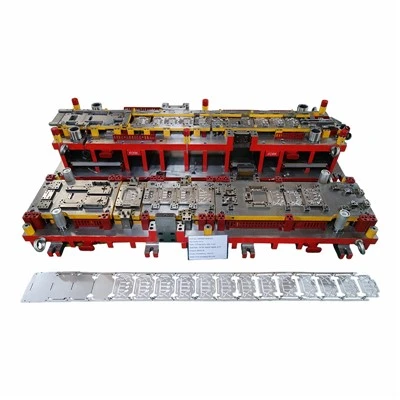
First off, let’s talk about why heat treatment matters for progressive die materials. Progressive dies are used in high – volume stamping operations, and they need to withstand a ton of stress, wear, and fatigue. Heat treatment helps to improve the mechanical properties of the die materials, like hardness, toughness, and wear resistance. This means the dies will last longer, produce better – quality parts, and reduce the need for frequent replacements.
One of the most common heat treatment processes is annealing. Annealing is basically like giving the die material a nice, relaxing spa day. It involves heating the material to a specific temperature and then cooling it slowly. This helps to relieve internal stresses in the material that might’ve built up during machining or forming. There are different types of annealing, too. For example, full annealing is used to soften the material completely, making it easier to machine. You heat it up to a critical temperature and then let it cool in the furnace. This gives the material a uniform grain structure, which is great for reducing brittleness.
Another type is stress – relief annealing. This is more focused on getting rid of those pesky internal stresses without changing the material’s hardness too much. You heat it to a lower temperature than full annealing and then cool it at a controlled rate. It’s a quick and easy way to make sure your dies don’t crack or warp during use.
Next up is quenching. Quenching is like the opposite of annealing in a way. It’s a rapid cooling process that makes the material really hard. You heat the die material to a high temperature and then plunge it into a quenching medium, like oil or water. This rapid cooling causes the material’s crystal structure to change, forming a hard phase called martensite.
But quenching isn’t all sunshine and rainbows. It can cause a lot of internal stresses in the material, which might lead to cracking. That’s why tempering is usually done right after quenching. Tempering involves reheating the quenched material to a lower temperature and then cooling it slowly. This helps to relieve some of the internal stresses and makes the material more tough and ductile, while still keeping a good amount of hardness.
There’s also a process called normalizing. Normalizing is similar to annealing, but the cooling rate is different. You heat the material to a high temperature and then let it cool in air. This gives a finer grain structure compared to annealing, which results in better mechanical properties. Normalized materials are often stronger and more wear – resistant than annealed ones.
Now, let’s talk about some of the specific materials used in progressive dies and how they’re heat – treated. Tool steels are a popular choice for progressive die materials. High – speed steels (HSS) are known for their excellent wear resistance and high – temperature performance. These steels are typically quenched and tempered multiple times to achieve the right balance of hardness and toughness.
Mold steels are another option. They need to be heat – treated to handle the high pressures and repeated impacts in stamping operations. For mold steels, processes like quenching and tempering are also common, but sometimes they might go through specialized heat treatment cycles to optimize their performance for specific applications.
Powder metallurgy steels are becoming more and more popular in progressive die manufacturing. These steels have a very uniform microstructure, which gives them great properties like high hardness, toughness, and wear resistance. The heat treatment for powder metallurgy steels is a bit different, and it often involves a combination of processes to fully realize their potential.
Carbide steels are also used in some high – performance progressive dies. Carbides are extremely hard and wear – resistant. Heat treatment for carbide steels focuses on optimizing the bonding between the carbide particles and the matrix material. This usually involves high – temperature processes to ensure a strong and stable structure.
When it comes to heat treating progressive die materials, getting the process just right is crucial. Even a small mistake in the heat treatment can lead to big problems. If the quenching is too fast, the die might crack. If the tempering isn’t done properly, the die might be too brittle or not hard enough.
That’s where our expertise as a Progressive Dies supplier comes in. We’ve got a team of experts who know all about the different heat treatment processes for progressive die materials. We use state – of – the – art equipment and follow strict quality control measures to make sure every die we make is heat – treated to perfection.
Whether you’re working on a small – scale project or need high – volume production, we can provide you with progressive dies that are made from the best materials and heat – treated to last. Our dies are designed to give you the best performance and the longest service life possible.
If you’re in the market for progressive dies, don’t settle for subpar products. Contact us to discuss your specific needs. We’re here to answer all your questions and help you find the perfect solution for your stamping operations. Whether you need a standard die or a custom – designed one, we’ve got the skills and experience to deliver.
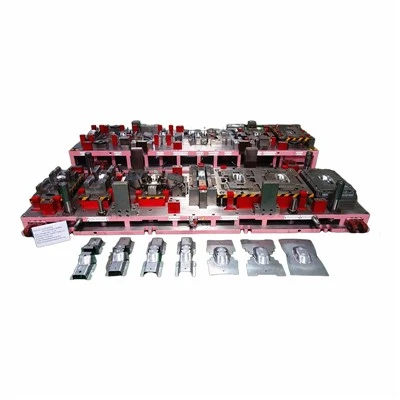
So, if you want to take your stamping game to the next level, get in touch with us. Let’s work together to make your production more efficient and cost – effective.
Single Stage Dies & Gang Dies References:
- "Tool and Die Making Handbook"
- "Heat Treatment of Steels: Principles and Processes"
Dongguan Changdong Tool & Die Co., Ltd.
With abundant experience, we are one of the most reliable progressive dies manufacturers and suppliers in China. Please feel free to buy advanced progressive dies made in China here from our factory. Good service and quality products are available.
Address: No. 56-B, Fumin South Road, Dalang Town, Dongguan City, Guangdong Province, China
E-mail: sales@stamping-die.com
WebSite: https://www.metalstampingdie.com/
