Hey there! I’m a supplier of sintered metal materials and filter elements. Today, I wanna chat about something super important in our industry: the impact of vibration on sintered metal filter elements. Sintered Metal Material and Filter Element
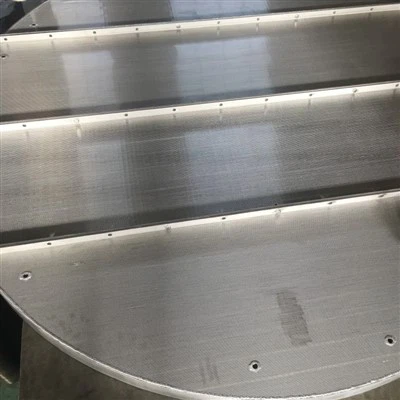
First off, let’s understand what sintered metal filter elements are. They’re made by compacting metal powders and then heating them to a temperature just below their melting point. This process, called sintering, fuses the particles together, creating a porous structure that can trap contaminants while allowing fluids or gases to pass through. These filters are used in a wide range of applications, from automotive engines to chemical processing plants, because of their high strength, corrosion resistance, and excellent filtration efficiency.
Now, let’s dive into how vibration affects these filter elements.
1. Positive Impacts of Vibration
Self – cleaning Effect
One of the biggest advantages of vibration on sintered metal filter elements is the self – cleaning effect. When a filter is in use, contaminants start to accumulate on its surface and within its pores. Over time, this can lead to a decrease in filtration efficiency and an increase in pressure drop across the filter. But when vibration is applied, it causes the trapped particles to loosen and break free from the filter’s surface.
Imagine you’ve got a sintered metal filter in an air purification system. As dust and particles get stuck in the filter, the airflow through it gets restricted. When you introduce a controlled amount of vibration, say from a small motor attached to the filter housing, the dust particles that were clinging to the filter start to shake off. This keeps the filter pores open, allowing the air to flow smoothly again. It’s like giving the filter a little shake – up to keep it working at its best.
Improved Filtration Performance
Vibration can also improve the overall filtration performance. In some cases, when a fluid or gas is flowing through a filter, the particles can form a cake – like layer on the filter surface. This cake layer can slow down the flow and reduce the filter’s ability to capture smaller particles. By applying vibration, the cake layer is disrupted, and the flow of the fluid or gas becomes more uniform.
For example, in a hydraulic filtration system, the vibration can prevent the buildup of large debris on the sintered metal filter. As the hydraulic fluid moves through the filter, the vibration helps the filter to catch more particles effectively, even the tiny ones that might otherwise pass through. This means better protection for the hydraulic system’s components, like pumps and valves.
2. Negative Impacts of Vibration
Structural Damage
While vibration can have some benefits, it can also cause problems. One of the major issues is structural damage. Sintered metal filter elements are made up of interconnected metal particles, and excessive vibration can cause these particles to become detached or break.
Let’s say you’re using a sintered metal filter in a high – vibration environment, like a mining equipment’s engine. The constant shaking can put a lot of stress on the filter structure. Over time, small cracks can form in the filter material. These cracks can expand, and eventually, the filter may lose its integrity. Once the structure is damaged, the filter won’t be able to perform its filtration function properly, and it may even release the trapped contaminants back into the system.
Fatigue Failure
Another negative impact is fatigue failure. Vibration causes cyclic loading on the filter elements. Every time the filter vibrates, it experiences a change in stress. If this happens repeatedly over a long period, it can lead to fatigue.
Think of a sintered metal filter used in an aircraft engine. The engine produces a lot of vibration during flight. The continuous cyclic loading from this vibration can make the filter more vulnerable to breaks. Eventually, the filter may fail completely, which can be extremely dangerous in such a critical application.
Managing the Impact of Vibration
Now that we know the pros and cons of vibration on sintered metal filter elements, the question is: how can we manage it?
Design Considerations
When designing sintered metal filter elements, we need to take vibration into account. We can use stronger metal powders or adjust the sintering process to make the filter more resistant to vibration. For example, using a finer metal powder can result in a more densely sintered structure, which is less likely to be affected by vibration.
Mounting and Installation
Proper mounting and installation are also crucial. Using vibration – absorbing materials, like rubber gaskets, can help reduce the amount of vibration transferred to the filter. Additionally, ensuring that the filter is securely mounted can prevent excessive movement and stress on the filter structure.
Monitoring and Maintenance
Regular monitoring and maintenance are essential to detect any signs of damage or wear caused by vibration. We can use techniques like non – destructive testing to check the integrity of the filter elements. If any issues are detected early, we can replace or repair the filter before it fails completely.
Why Choose Our Sintered Metal Filter Elements?
As a supplier, we’ve got a lot to offer. We understand the importance of vibration management in sintered metal filter elements. Our team of experts uses the latest technologies and materials to design and manufacture filters that can withstand different levels of vibration.
We’ve invested in advanced testing equipment to ensure that our filters meet the highest quality standards. Whether you need a filter for a low – vibration environment or a high – stress, high – vibration application, we’ve got you covered. We offer a wide range of filter sizes and configurations to suit your specific needs.

And if you’re worried about the cost, don’t be! We offer competitive pricing without compromising on quality. Plus, our filters are known for their long service life, which means less frequent replacements and lower overall costs for you.
Sintered Wire Mesh Material and Filter If you’re interested in learning more about our sintered metal filter elements or need a customized solution for your application, don’t hesitate to get in touch. We’re always here to discuss your requirements and help you find the best filter for your needs. Start a conversation with us today and let’s work together to keep your systems running smoothly.
References
- Smith, J. (2018). "Advanced Filtration Technologies in Industrial Applications". Elsevier.
- Johnson, A. (2020). "The Effects of Vibration on Sintered Materials". Journal of Materials Science.
- Brown, L. (2019). "Filtration Design and Optimization for High – Performance Systems". Wiley.
Henan Easy Filter Equipment Co., Ltd.
As one of the leading sintered metal material and filter element manufacturers and suppliers in China, we offer a wide range of products with superior quality. Please rest assured to buy advanced sintered metal material and filter element from our factory. We also accept customized orders.
Address: Apartment No.1, Building No.2, Zhengshang Jinyushijia, Xinzhong Street, Xinxiang, Henan, China.
E-mail: vivian@easyfiltertech.com
WebSite: https://www.easyfilter-china.com/
