Alright, let’s cut to the chase—if you’re reading this, you’re probably staring under your car hood right now, noticing a fresh oil leak that only pops up when you hit the gas. It’s not exactly the “smooth acceleration” flex you were hoping for, and trust me, I get it. I’m on the oil seal game, been supplying these bad boys for over a decade, and this is one of the most common WTF questions I get from mechanics, DIYers, even small shop owners. Let’s break this down like we’re geeking out over car stuff at a garage at 2 a.m.—no stuffy textbooks, just real talk, science, and why your seal’s acting up when you step on that pedal. Oil Seal
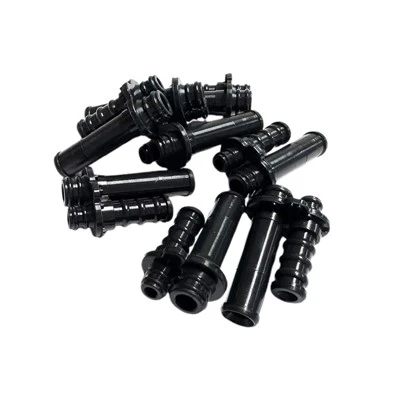
First, let’s make sure we’re on the same page: an oil seal (we call ’em a “rotary seal” around here for the ones on crankshafts, camshafts, transaxles) isn’t just a rubber ring holding oil in. It’s a precision little part made to work under specific pressure, speed, and movement conditions. If it leaks only when accelerating, that’s a red flag the seal isn’t handling those specific operating conditions—something’s off in how the forces change when you hit the gas.
Let’s start with the most obvious culprit: pressure spikes. Wait, not just “pressure” in the engine—dynamic pressure, the kind that happens when things start spinning faster. When your engine’s idling, the crankshaft’s spinning slow, maybe 600-800 RPM, so the oil in the crankcase is just sloshing around. When you accelerate? Bam, RPM shoots up to 3,000, 4,000, even higher, and that crank’s whipping through oil like a blender. Now, the crankcase ventilation system (PCV valve, for the non-mechanics out there) is supposed to siphon those extra vapors and pressure out, right? But if that PCV’s clogged or not sized right, the crankcase pressure skyrockets. It’s like putting your thumb over a running garden hose—pressure builds up, and the only escape is past the oil seal. We’ve seen this all the time: a guy brings in a car that leaks only when accelerating, we check the PCV, it’s caked with gunk from old oil breaks down, replace it, and the leak’s gone like magic. That’s not a bad seal—that’s a seal working against a pressure it was never designed to handle.
Then there’s seal lip deflection. Here’s where the rubber meets the road (pun intended, sorry not sorry). The oil seal has a thin, flexible rubber lip coated with a tiny spring—this spring’s job is to press that lip tight against the shaft, creating a perfect barrier between oil and the outside world. Now, when you’re at idle, the shaft’s moving slow, the lip’s sitting nice and tight. When you accelerate, the shaft’s spinning faster, and two things happen here. First, centrifugal force. Wait, not just on the shaft—on the seal lip. If the spring is too weak, or the seal’s just old and the rubber’s dried out, that fast spin makes the lip bend outward. It pulls away from the shaft a tiny, tiny amount—enough space for oil to seep through when pressure spikes with acceleration. We get this a lot with high-mileage seals: the rubber’s lost its elasticity, so when RPM jumps, the lip can’t keep holding on. Also, if the seal was installed wrong—we see mechanics hammering it in crookedly, or not using the right tool to seat it evenly—the lip’s tilted. When the shaft spins fast, that uneven lip deflects more on one side, creating a gap. That’s a install mistake, not a seal flaw, but it still only shows up under acceleration when forces are higher.
Wait, let’s not forget about shaft wear. The shaft that the seal sits against—say, the crankshaft or transmission input shaft—gets worn over time. Micro-scratches, grooves, that kind of thing. At idle, those grooves are small enough that the seal lip can cover them. But when you accelerate, the oil’s moving faster, and those grooves act like tiny pipes. It’s the same reason why you can’t hold water in a cup with a scratch in it if you tip it up. Fast-moving oil gets forced through those micro-grooves, and with the crankcase pressure spiking on top of that, it’s enough to push oil past the seal. I once had a customer tell me his seal leaked only when accelerating uphill—turns out his crankshaft had a 0.002-inch groove from 150k miles, which is tiny, but under dynamic pressure and fast oil flow, it was enough to let oil escape. Pro tip here: if your shaft’s worn, just replacing the seal won’t fix it—you’ll blow the new one in a month. We sell seal repair kits that cover worn shafts, too, for exactly that reason.
Another one: thermal expansion. Engines get hot when you accelerate, right? The seal’s made of a specific rubber compound—most are Nitrile (NBR) for standard applications, or FKM (Viton) for high-heat stuff. The shaft? Usually steel. Steel expands a lot more than rubber when it heats up. Wait, wait—don’t get that backwards. Let’s say when the engine’s cold, the shaft is narrow, the seal lip’s pressed tight. When you accelerate, combustion heat cranks up, so both parts expand. But steel expands more. So if the seal lip’s not sized to account for that extra shaft expansion at operating temp? When the engine’s hot and spinning fast, the shaft is wider, but the rubber didn’t stretch enough to keep pressing tight. That gap’s enough for a leak. We see this a lot in cars that use the wrong seal for their engine. Like, someone put a cheap NBR seal in a turbocharged car, which runs way hotter than a standard NA engine. NBR can only handle so much heat—Viton is needed for turbo applications, and if you use NBR, when you accelerate hard, the heat kills the rubber’s elasticity, it shrinks, and boom, leak. That’s a material mismatch, plain and simple.
Oh, and let’s not rule out a worn seal spring. Every oil seal has that small metal spring around the lip—usually a 1mm or 2mm thick steel band. Its tension is calibrated to hold the lip tight at all operating speeds and temps. Over time, that spring can rust, or the rubber can eat into it, so it loses tension. At idle, the light pressure works, but when you accelerate, the faster spin and higher pressure need more tension to keep the lip pressed. If the spring’s weak, it can’t do that, so oil gets past. We test springs all the time when a leak comes in—we measure tension with a small gauge, and if it’s below spec, that’s the issue. Sometimes the spring’s replaceable, but most of the time, you swap the whole seal anyway, since the rubber’s probably worn too.
Wait, let’s talk about a less obvious one: vibration. When you accelerate, the whole drivetrain starts vibrating more. If the seal isn’t seated properly, or the housing it’s in has play, that vibration makes the seal lip bounce against the shaft. At idle, that bounce is minimal, so no leak. When you accelerate, the vibration gets worse, and the bouncing creates tiny gaps between the lip and shaft. Oil seeps through those gaps, and with pressure behind it, it turns into a leak. We had a customer a few months back who had a leaking crank seal that only happened when he accelerated over 50 MPH—turns out the seal housing had a hairline crack from a previous repair, so vibration when the car was moving fast made the seal bounce. Fixed the housing, new seal, no more leak. That’s a weird one, but it’s real.
Now, let’s separate the quick fixes from the actual issues here. If your seal leaks only when accelerating, don’t just go buy a new seal and swap it—chances are, that won’t fix it, because the root cause is something else. Let’s run through a quick checklist next time it happens: 1) Check your PCV valve—if it’s clogged, clean or replace it, that’s the cheapest fix. 2) Check the crankcase pressure with a simple gauge—if it’s over 5 PSI when accelerating, that’s a problem. 3) Inspect the shaft for grooves or wear—run your finger along the seal area, if you feel a ridge, that’s wear, replace or repair the shaft. 4) Make sure you used the right seal—size, material, spring tension, all need to match the engine specs. 5) Check the seal installation—did you hammer it in straight? Crooked seats cause all sorts of weird leaks.
As a seal supplier, I’ve seen too many guys throw parts at a problem because they don’t understand why the leak only happens under acceleration. That’s why I always tell them to trace the operating conditions—what changes when you hit the gas? Pressure, speed, temperature, vibration. The leak is tied directly to that change, so the fix is tied to that change too. If you just swap the seal, you’re ignoring the underlying cause, and you’ll be back in a month with the same problem, or worse.
Here’s the thing: oil seals are small, but they’re critical. A leak when accelerating isn’t just a minor annoyance—low oil pressure can lead to engine damage, transmission failure, all sorts of expensive stuff. So don’t brush it off as “just a small leak.” Get it checked out, and if you need replacement seals (or repair kits for worn shafts), hit us up for a conversation. We don’t just sell generic seals—we tailor them to your application, whether it’s a passenger car, a truck, a small engine, whatever. We’ll make sure you get a seal that handles the pressure, speed, and heat when you step on the gas, so you don’t have to stress about leaks.

At the end of the day, that leak when accelerating? It’s not a mystery. It’s a seal doing the best it can, but it’s working against forces it wasn’t built for. Whether it’s pressure spikes, lip deflection, worn shafts, wrong materials, or bad installation, the fix is about addressing that root force, not just slapping a new ring on. If you’re dealing with this, or you need seals that can handle whatever your engine throws at ’em, reach out to us to chat through your specific setup. No jargon, no pushy sales, just real advice for real car problems.
Rubber Bellows References:
- Fluid Sealing Technology: Principles and Applications, 3rd Edition, John Wiley & Sons
- Automotive Engine Design and Repair, SAE International
- Seal Design Handbook, American Society of Mechanical Engineers (ASME)
- PCV System Function and Diagnostic Procedures, Automotive Service Excellence (ASE)
Haining Chaoyue Seals Co., Ltd.
As one of the most professional oil seal manufacturers and suppliers in China, we offer a wide range of products with superior quality. Please feel free to wholesale high quality oil seal made in China here from our factory. Also, custom service is available.
Address: Building 9, 158 Lianhong Road, Yuanhua Town, Jiaxing, Zhejiang, China.
E-mail: chaoyue@cyseals.com
WebSite: https://www.hncyseal.com/
