If you’ve ever walked through a manufacturing plant making power supplies, automotive wiring harnesses, or even household appliances, you’ve probably passed a station where a technician in safety gear stands next to a bulky, boxy device connected to a product under test. That’s a DC Hipot test set—and I’ll tell you, after 12 years as a supplier of these machines, it’s not just another piece of test equipment. It’s the unsung gatekeeper that keeps defective products out of the hands of customers, prevents costly recalls, and upholds the safety standards that make modern technology reliable. Most people outside our industry think quality control is just checking if a product turns on, but DC Hipot testing is far more critical: it’s the final line of defense against electrical faults that could start fires, shock someone, or even kill. Let me break down exactly what these test sets do, why they’re non-negotiable in quality control, and why choosing the right one matters more than most manufacturers realize. DC Hipot Test Set
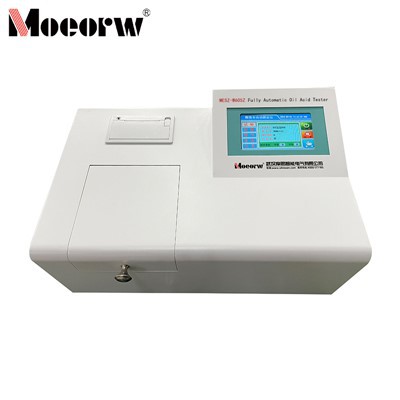
First, let’s get the basics straight: DC Hipot stands for Direct Current High Potential testing, and what it does is simple in concept, life-saving in practice. The test set applies a high-voltage DC current (way higher than the product is ever designed to operate at) between two isolated parts of a device—for example, between the live circuit of a laptop charger and its metal outer casing. If there’s even a tiny defect, like a micro-crack in insulation, a loose wire that’s supposed to be tucked away, or improperly applied varnish on a circuit board, that high voltage will push current through the fault, and the test set will instantly trigger an alarm, marking the product as defective. A lot of people mix this up with AC Hipot testing, but DC has huge advantages for quality control: it can detect tiny insulation defects that AC might miss, it puts less stress on good insulation, and it’s faster to run at scale for high-volume production lines.
Now, why is this a core part of quality control, not just a random test? Let’s talk about the real-world costs of skipping or cutting corners here. A few years back, we had a client making entry-level power tools for a major home improvement retailer. They’d switched to a cheaper test set from an unvetted supplier to save 15% on costs, and a batch of 20,000 drills slipped through with tiny insulation flaws in the trigger wiring. Within six months, there were 120 reported incidents of electrical shocks, and the retailer had to issue a full recall that cost them over $20 million, plus irreversible damage to their brand. That’s not a number on a spreadsheet—that’s families being hurt, and a business collapsing part of its reputation. DC Hipot test sets catch those flaws before a product leaves the factory, and for manufacturers, that’s the difference between a manageable defect correction and a catastrophic recall.
But it’s not just about catching bad products—it’s about establishing consistent quality across every unit. Modern manufacturing uses automated lines with pick-and-place machines, wave soldering, and robotic assembly, but even the most precise equipment makes small errors: a component shifted just a fraction of a millimeter during soldering, a batch of insulation material that’s slightly thinner than specifications, a wire that’s nicked during packaging. A DC Hipot test set runs the same test, exactly the same way, on every single product. That consistency eliminates human error—something manual inspections can never do. I’ve seen factories where a human tester might misread a meter, get distracted, or cut a test short to meet a line’s target, but a good DC Hipot set has built-in timers, voltage regulators, and fail-safes that run every test to the exact standard. That level of repeatability is non-negotiable for ISO 9001 certification, UL listings, IEC standards, and all the other quality marks that customers demand.
What really sets our DC Hipot test sets apart from the cheap models that flood the market is how they integrate directly into a manufacturer’s quality control workflow. A lot of suppliers see these test sets as just a box that outputs voltage, but we design ours to be line-friendly for high-volume production. For example, our latest models run a complete test on a circuit board or wiring harness in 0.8 seconds—fast enough to keep a line running at 1,000 units an hour without slowing down. They also have automatic pass/fail sorting, so bad products are diverted off the line immediately, and they log every test result with a unique serial number for each unit. That’s game-changing for quality control teams: if later a customer reports a fault, you can pull that serial number and see exactly when it was tested, what voltage it was exposed to, and if it passed. No guesswork, no lost data, no pointing fingers at a production shift. That level of traceability is not just nice to have—it’s required for most large original equipment manufacturers (OEMs) that sell their products to global markets.
Wait, let’s get specific about what a DC Hipot test actually measures, because that’s where its value in quality control shines. Insulation resistance is a key metric for electrical products. When a product is new, its insulation should be near perfect—meaning almost no current flows between isolated parts. But over time, insulation can degrade: heat from use, moisture, vibration, even just age can cause tiny breaks. DC Hipot testing puts a much higher voltage across the insulation than the product will ever see during normal operation, which accelerates that weakness. If the insulation is good, it will hold up; if it’s bad, it will break down, and the test will catch it. For quality control, this means you’re not just testing for immediate defects—you’re testing for latent defects that would cause failure years down the line. A customer might not return a product that fails after two years, but if thousands of them do, that’s a brand-killer.
I’ve had countless conversations with quality control managers who think, “Our incoming parts testing checks insulation, so we don’t need to do Hipot testing on the finished product.” That’s a dangerous mistake. Incoming parts might be perfect when they leave the supplier, but during assembly, they get stressed: wires get pulled, circuit boards get dropped, adhesives are applied unevenly, or parts that were fine individually become faulty when combined. A few months ago, a client making medical devices told us they skipped Hipot testing for three months because their parts supplier guaranteed 100% quality. They ended up with 80 defective devices made with correctly manufactured wires that had been nicked during assembly. Those were implanted in patients—thankfully, they caught them during a random audit, but it could have been a tragedy. DC Hipot testing on the finished product is the only way to catch those assembly-specific flaws.
Another big role of DC Hipot test sets in quality control is reducing scrap and rework. At first, it might seem like a bad thing to reject products that don’t pass, but think about this: if you don’t test, you might have to scrap or rework every product that gets returned by customers, which is way more expensive than testing a unit at the end of the line. Reworking a faulty power supply might cost $50; a customer return costs $500 in shipping, restocking, and potential brand damage. Our test sets also have adjustable test parameters, so you can fine-tune the voltage and time for your specific product. For example, a small sensor might only need 500V for 1 second, while a large industrial motor might need 5,000V for 5 seconds. That customization means you’re not wasting good products as “false failures” — a common problem with cheap, one-size-fits-all test sets that either apply too much voltage and damage good insulation or too little and miss defects.
Let’s talk about compliance, because that’s a huge part of modern quality control. Every region has strict safety standards for electrical products: UL in the US, CE in the EU, VDE in Germany, CCC in China. To get that mark, you have to pass independent testing, but more and more, regulators and customers require manufacturers to prove that they’re testing every unit as part of their in-house quality control. A few years ago, the EU updated its low-voltage directive to require that for any product sold in the bloc, all electrical components are tested for high potential. We had a client making smart thermostats who had to upgrade their entire test line because their old test sets didn’t have the data logging required to meet the new directive. Without that, they would have lost access to a 2-billion-euro market. That’s not a trivial thing—DC Hipot testing isn’t just a quality step, it’s a compliance step that can make or break your ability to sell globally.
I want to be honest here: not all DC Hipot test sets are equal, and choosing the wrong one can do more harm than good. We’ve had clients come to us after buying cheap test sets from online marketplaces that output inconsistent voltage, lose data, or have no safety features. One client told us their cheap test set would output 2,000V one minute and 1,500V the next, so they were missing defects, or even damaging good insulation. Safety is another key part: high voltage is dangerous, so a good test set has safety interlocks, so if the test fixture is open, it won’t output voltage, and it has overvoltage protection to prevent harm to the operator and the product. The test sets we supply are designed with quality control teams in mind, with easy-to-use interfaces that don’t require a PhD to operate, automatic calibration reminders, and integration with line monitoring software so you can track test rates and failure rates in real time.
So, to wrap this up: the role of a DC Hipot test set in quality control is far more than just a test. It’s the final safety gate that catches latent and assembly-specific defects before they reach customers, it ensures consistent, repeatable testing across every unit, it provides traceability for compliance and defect investigations, it reduces long-term costs from recalls and rework, and it upholds the safety standards that build customer trust. For manufacturers, cutting corners on this piece of equipment isn’t a way to save money—it’s a risk to their brand, their customers, and their bottom line.
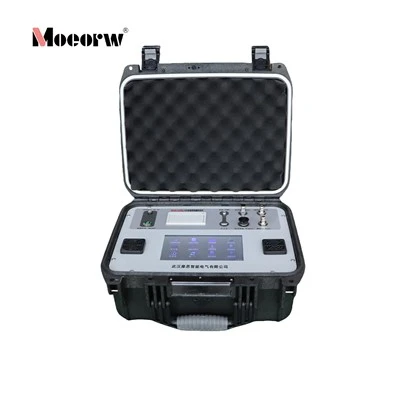
If you’re in quality control or production, and you’re looking to upgrade your test line, or if you’re just looking for a reliable partner to help you find the right DC Hipot test set for your specific products, I’d love to hear from you. We work with manufacturers of all sizes, from small startups making consumer electronics to large OEMs making industrial equipment, and we tailor our test sets to fit your line, your compliance needs, and your production volume. Don’t leave safety and quality to chance—reach out today to discuss your requirements and find the right solution for your business.
Cable Fault Locating System References
Underwriters Laboratories. (2020). Standard for Safety for Information Technology Equipment, UL 60950-1.
International Electrotechnical Commission. (2019). Low-voltage directive (2014/35/EU) harmonized standard IEC 60335-1.
Federal Emergency Management Agency. (2021). Electrical Fire Prevention and Safety in Residential Products.
American National Standards Institute. (2022). Quality Management Systems – Requirements, ANSI/ISO 9001:2015.
Wuhan Moen Intelligent Electric Co., Ltd.
As one of the most professional dc hipot test set manufacturers in China, we’re featured by quality products and good price. Please rest assured to buy high quality dc hipot test set in stock here and get quotation from our factory. Customized orders are welcome.
Address: Building A, No.1, Fenghuangyuan 2nd Road, Donghu New Technology Development Zone, Wuhan, Hubei, China
E-mail: info@hvhipotsystem.com
WebSite: https://www.hvhipotsystem.com/
