Hey everyone, thanks for swinging by my little corner of the internet. For anyone who doesn’t know me, I run a UPE hose supply business—we get tons of questions every week, but one I get way more than others is: “What’s the burst pressure of UPE hose?” It’s such a solid question, and I swear half the time people ask it, they’re scrambling to pick the right hose for a job where a leak or a blowout would be a total disaster—like chemical processing, mining slurry lines, or even big fleet fuel transfers. I’m gonna break this down like I talk to my regulars at trade shows, no stuffy lab jargon that doesn’t matter to real people. UPE Hose
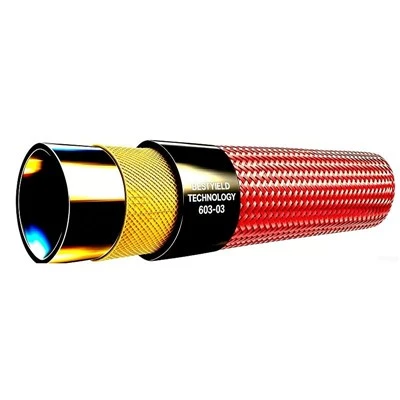
First, let’s get one thing straight: UPE hose isn’t a one-size-fits-all product. If someone tells you every UPE hose on the market has the same burst pressure, they’re either lying or just plain lazy. Burst pressure depends on three big factors—your hose’s wall thickness, what size it is (diameter, that’s the part you measure across the opening), and the specific grade of UPE it’s made from. I’ve seen people mix up burst pressure with working pressure, and that’s a huge mistake. Working pressure is what you can run it at every single day without ruining it; burst pressure is the maximum pressure it can take before it splits open. That’s like the difference between driving your car at 60 mph every day and flooring it at 120 mph until the engine blows. You never want to operate anywhere close to burst pressure—we always hammer that into every customer.
Let’s start with wall thickness because that’s the easiest one to wrap your head around. For our standard industrial UPE hoses, like the ones we use for general water and mild chemical transfers, thin-wall hoses (usually 1/8 inch thick for sizes from ½ inch to 2 inches) have a burst pressure of roughly 400 psi. But wait, before you go “wow, that’s high!”—that’s for a 1-inch thin-wall hose. If you go bigger, say a 4-inch thin-wall hose, that drops to around 220 psi. Why? Thicker walls mean more material holding the pressure in. For medium-wall hoses, which are 3/16 inch thick, we’re talking 550 psi for a 1-inch hose, 320 psi for 4-inch. And our heavy-wall hoses—used for harsh stuff like abrasive mining slurries or strong acids—those are ¼ inch thick, so burst pressure jumps to 700 psi for 1-inch, 400 psi for 4-inch. That’s a big range, right? I’ve seen customers grab a thin-wall hose for a 3-inch slurry line and wonder why it blew out after a week—they didn’t check the wall thickness first.
Next, UPE grade. Not all UPE is created equal. There’s standard UPE, which is the cheapest, but it’s also the least tough. Then there’s high-density UPE, cross-linked UPE, and even ultra-high-molecular-weight UPE (UHMWPE)—that’s the workhorse for heavy-duty jobs. Standard UPE hoses have a burst pressure about 10-15% lower than UHMWPE, even with the same wall thickness and diameter. Cross-linked UPE is even stiffer and more resistant to stress, so burst pressure goes up another 10% on top of that. I remember a customer last year who bought a cheap generic UPE hose for a chemical transfer line, and it burst at 320 psi—way below what he thought he was getting. Turns out it was standard UPE, not UHMWPE like he asked for. That’s why we always specify the grade when we quote hoses; it’s not just marketing, it’s the difference between a hose that lasts 6 months and one that lasts 5 years.
Diameter is another trick people miss. It makes total sense if you think about it: a wider hose has to hold back more pressure over a larger area, right? Pressure is force per square inch, so the bigger the cross-section, the more total force pushing on the hose walls. That’s why a ½-inch heavy-wall hose can handle almost 700 psi burst, while a 10-inch heavy-wall hose only does about 180 psi. I’ve had customers come to me with a 12-inch hose project, super worried about burst pressure, and I have to explain that even the best heavy-wall UPE hose for that size tops out around 150 psi. That’s not a flaw in UPE—it’s basic physics. You can’t have a 12-inch hose thick enough to handle 500 psi; it’d be so heavy and stiff you couldn’t move it or lay it out for your job.
Wait, let’s also talk about temperature, because that’s a hidden variable that messes with burst pressure. Most people don’t consider that if you’re running hose in hot climates, like 120°F summer in the desert, or even hot water transfers, the plastic softens. UPE gets more flexible but less strong when it’s warm. So a hose that bursts at 700 psi at 70°F might only burst at 550 psi at 150°F. Conversely, cold makes UPE stiffer, so burst pressure goes up a little—like 10% lower temps. That’s another thing we always mention to customers: if your job is in extreme heat or cold, we can adjust the grade or wall thickness to compensate. I had a mining client in Arizona last year whose hoses kept blowing in the summer; we switched them to a thicker wall and a heat-stabilized UPE grade, and their failure rate dropped 90%. That’s the kind of small detail that makes a big difference.
Now, let’s get to real-world examples, not just numbers. A food processing client needs hoses for transferring fruit juices and mild acids. They usually go with our medium-wall UHMWPE hoses, 3/16 inch thick, 2 inches in diameter. Their working pressure is 100 psi, and burst pressure is around 420 psi. That’s perfect—they’re operating at less than a quarter of burst pressure, so their hoses last 2-3 years before needing replacement. Compare that to a construction company that uses UPE hoses for concrete slurry. They use our heavy-wall, cross-linked UPE hoses, ¼ inch thick, 6 inches in diameter. Their working pressure is 80 psi, burst pressure is around 380 psi. Again, way below burst, so those hoses handle the rough handling, abrasive slurry, and constant bending without blowing. The mistake here would be if the construction company tried to cut costs by using thin-wall hoses—their working pressure would be 120 psi, and burst pressure only 220, so they’d blow every couple of weeks. That’s false economy, right?
I also get asked a lot: “Can I test the burst pressure myself?” Yeah, you can, but it’s not for casual use. To do a proper burst test, you need a pressure tester that can slowly increase pressure in the hose until it fails—you can’t just hook up a water pump and crank it, that’ll cause a sudden spike and give you a wrong number. But unless you’re a lab or a big operation testing a batch of hoses, you don’t need to do that. The burst pressure numbers we give are from standardized tests—we follow ASTM D1598, that’s the standard for plastic pipe and hose burst tests—so those numbers are reliable. Just make sure you’re comparing apples to apples: same UPE grade, wall thickness, diameter, temperature. A cheap no-name hose might list a burst pressure, but it’s probably tested in ideal conditions with perfect material, not the stuff they actually ship.
Here’s a common myth I want to bust: UPE hoses aren’t as strong as rubber hoses, so they burst easier. That’s total nonsense for the right application. Rubber hoses are great for high flexibility and some pressure, but UPE is way more resistant to chemicals and abrasion, which means you can use a thinner wall UPE hose that handles the same working pressure as a thicker rubber hose. Plus, UPE burst pressure is consistent over time—rubber hoses degrade, so their burst pressure drops 20% or more after a year of use. I’ve seen a customer switch from rubber hoses to UPE hoses for their chemical line, and they went from replacing hoses every 6 months to every 3 years, even though the UPE hoses had a slightly lower burst pressure. That’s because the rubber hoses were failing from chemical breakdown, not burst.
So, putting it all together: the burst pressure of UPE hose isn’t a single number. It ranges from around 180 psi for large-diameter, thin-wall standard UPE hoses up to 700 psi for small-diameter, heavy-wall UHMWPE or cross-linked UPE hoses, at room temperature. But the most important number is the working pressure, and you should always pick a hose with a burst pressure at least 4-5 times your required working pressure. That’s the industry rule of thumb, and it’s there for a reason—pressure spikes, temperature changes, rough handling, all that stuff will eat into your hose’s strength. If you stick to that rule, you won’t have to deal with a hose blowing mid-job, which saves you downtime, money, and a lot of stress.
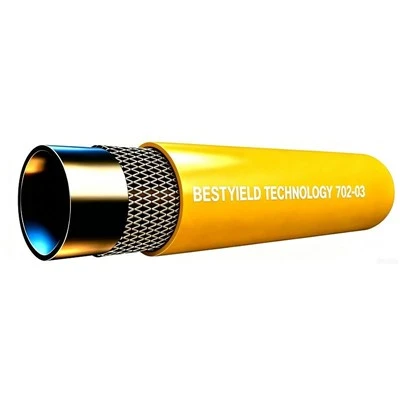
Now, I know this stuff can feel overwhelming, especially if you’re not a hose expert. That’s why we’re here. We don’t just sell hoses—we help you pick the right one for your job, no hidden fees, no jargon, no pressure. If you’re not sure what burst pressure you need, or you just want to compare options, hit us up for a consultation. We can send you sample hoses, walk through your project specs, and make sure you get something that works for you, not just the cheapest thing on the market. At the end of the day, a good hose is an investment that keeps your operation running smoothly, and we’re here to make that investment count.
NBR Hose References
ASTM D1598 Standard Test Method for Time-to-Failure of Plastic Pipe Under Constant Internal Pressure
Ultra-High Molecular Weight Polyethylene (UHMWPE) Properties and Applications, Modern Plastics Encyclopedia, 2022
Industrial Hose Selection Guide, Hose & Accessories Manufacturers Association, 2023
BESTYIELD Technology (Huizhou) Co., Ltd.
BESTYIELD Technology (Huizhou) Co., Ltd. is one of the most professional upe hose manufacturers and suppliers in China, featured by quality products and good price. Please rest assured to buy durable upe hose made in China here and get quotation from our factory. Customized orders are welcome.
Address: Yinshan Industrial Zone, Liangjing Town, Huiyang District, Huizhou City, Guangdong Province
E-mail: rick@bestyield.net
WebSite: https://www.bestyield.org/
