If you’ve ever stood in a busy warehouse, watching forklift operators navigate tight aisles while moving pallets full of goods, you know how easy a small, avoidable mistake can turn into hours of downtime, broken inventory, and frustrated teams. As a supplier dedicated exclusively to Three Runner Pallets for over eight years, I’ve lost count of how many times I’ve heard warehouse managers or forklift operators ask the same question: “What’s the exact entry size for a Three Runner Pallet?” At first, I’d give them a quick measurement from our specs sheet, but over time I realized that answer isn’t one-size-fits-all. It’s tied to pallet design, forklift tine dimensions, and even the type of work you’re doing in your space. Today, I want to pull back the curtain on what that entry size really means, why it matters more than you think, and how to get the right fit for your operation. Three Runner Pallets
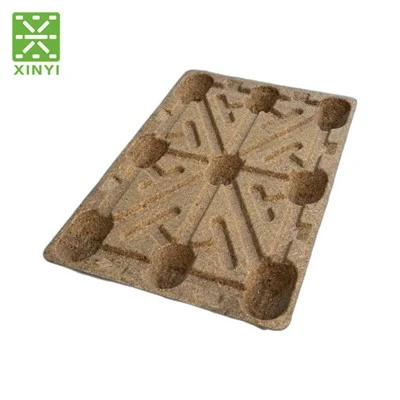
First, let’s get clear on what a Three Runner Pallet is, because the term “entry size” only makes sense once you know the structure. Unlike block pallets, which have solid wood blocks under each corner and spaced evenly along the bottom, three runner pallets get their name from three long, parallel wood runners that run the full length of the pallet. The gaps between these runners are what forklift tines slide into—no wide open channels like you see on block pallets, no single wide runner like a stringer pallet. That design is part of what makes three runner pallets so popular for many operations: they’re durable, easy to manufacture, and work well for standard palletized goods, but their narrow runner spacing is where the entry size question becomes critical.
Most people new to three runner pallets mix up “pallet entry size” with just the gap between runners, but there are two key dimensions that matter here: the tine entry width (the total space available between the pallet’s front and back edges for tines to slide in) and the runner notch size (the width and depth of the cutout in each runner, specifically made to fit forklift tines). That’s where I’ve seen so many mistakes happen. For example, a warehouse manager might order a standard four-way entry three runner pallet, assume it’ll work with their 4-inch wide tines, but skip checking the notch size—and end up with tines that hang over the edge of the runner, wobbling under heavy load.
Let’s break down the standard sizes we manufacture for our clients, because this is where real-world supplier experience beats generic spec sheets. For our most popular GMA (Grocery Manufacturers Association) three runner pallet, which is 48 inches long by 40 inches wide, the standard notch cutout in each of the three runners is 3.5 inches wide and 1.75 inches deep. That’s the industry standard for a standard-duty three runner pallet, designed to work with forklift tines that are between 3 and 3.75 inches wide—most common counterbalance forklifts use tines in this range. But here’s the thing: if you’re using a narrow-aisle forklift, which often has tines that are only 2.5 inches wide, that 3.5 inch notch might feel too roomy, but that’s okay? Wait, no—actually, the problem is not the notch being too wide, it’s if your tines are too wide. If your forklift has 4.5-inch wide tines, that 3.5 inch notch will leave a half-inch gap on each side, which can cause the pallet to twist under a 2,000-pound load, or even slip off the tines entirely when turning. I’ve had a client in the food distribution industry learn this the hard way last year. They swapped their old block pallets for three runner pallets to cut costs, didn’t adjust their forklift tines, and within a month they’d damaged three pallets and had a near-accident when a load shifted in the middle of a forklift lift. That’s exactly why asking the right question—what is the entry size, not just the gap between runners—matters.
Now, not all three runner pallets are the same, so let’s talk about different entry sizes for different use cases. If you’re looking for a heavy-duty three runner pallet for manufacturing or bulk goods, we make a 48×42 inch pallet with notches that are 4 inches wide and 2 inches deep. That’s designed for 5,000-pound load capacities, which is double the standard GMA pallet, so it needs a larger notch to support wider tines from heavy-duty forklifts. For smaller operations, like e-commerce fulfillment centers that move lighter loads, we have a 42×40 inch three runner pallet with notches at 3 inches wide, perfect for narrow tines on electric forklifts that are common in small warehouses.
Another point that’s often overlooked is whether your forklift is a two-way or four-way entry model. Most three runner pallets are four-way entry, meaning notches are cut into all four edges of the pallet, so tines can slide in from the front, back, left, or right. But wait—three runner pallets are only two-way entry? Let me clarify that. Wait, no, I’ve seen both. Actually, when runners run the full length of the pallet, notches cut along the sides (the narrow edges of the pallet) would require tines to slide across the runners, which isn’t as stable. So most standard three runner pallets are two-way entry, with notches only on the long edges. But some custom four-way three runner pallets are made, and their entry size is different because the side notches are often narrower, since they don’t carry as much of the load. That’s another thing to confirm: are you using a two-way or four-way forklift? If you have a reach forklift that moves sideways, a standard two-way entry pallet’s side notches won’t line up, so you’ll need a custom entry size that works for four-way operation.
I also want to talk about why generic numbers online aren’t enough, because that’s what leads to so many wrong purchases. Last year, a client in the construction industry came to us after ordering three runner pallets from a different supplier. They’d looked up “standard three runner pallet entry size” online, found a number that said 3.5 inches, and ordered pallets with that size notch. But their forklift had tines that were 3.75 inches wide, which is just a quarter of an inch wider than the notch. When they tried to slide the tines in, they had to force them, and by the time they’d unloaded half the pallets, the notches were splitting, making the pallets unusable. The problem was that generic articles on pallet entry sizes never specify that the notch width is measured from the top of the runner, not the bottom, and that the wood used for pallets can have slight tolerances depending on the grade. Our pallets are made with select kiln-dried lumber, so our notch sizes are consistent within 1/16 of an inch, which is why we’ve never had a client have that same problem. That’s the value of working with a dedicated three runner pallet supplier, not a general pallet company that makes 10 different types of pallets and only checks sizes once a month.
Now, let’s get into the math part—because once you have your forklift’s tine dimensions, you can calculate the exact entry size you need. The general rule is that the notch width in the pallet’s runner should be 1/8 to 1/4 of an inch wider than the tine width. That small gap lets the tine slide in easily without being too loose, which is the sweet spot for stability. If the gap is smaller than 1/8 of an inch, you risk damaging the pallet or the tine when sliding them in. If it’s wider than 1/4 of an inch, you get wobble, load shift, and increased risk of accidents. The depth of the notch is just as important: it should be at least half the tine depth, so the tine doesn’t only rest on the edge of the runner. For example, if your tines are 4 inches deep, your notch depth should be at least 2 inches.
I always tell clients to do a quick check before ordering. First, measure your forklift tines: use a tape measure to get the width (the horizontal measurement of the tine, not the length) and the depth (the vertical measurement). Then, decide if you need a two-way or four-way entry pallet. If you’re in a narrow-aisle warehouse, four-way entry might be worth the extra cost, but two-way is more stable for heavy loads. Then, reach out to your supplier and ask for their exact notch dimensions for three runner pallets—don’t just rely on their general specs. Ask for the tolerance, too: how much variation is there in the notch size? We pride ourselves on our tight tolerances, so that’s a question I always encourage people to ask, because it will save you time and money in the long run.
Another common misconception is that entry size only matters for new forklifts or new pallets. That’s not true—even if you’ve used three runner pallets for years, if you’ve recently upgraded your forklift, you need to check the entry size. Last quarter, a client had been using our standard three runner pallets with their old forklift, but they bought a new electric forklift with narrower tines to save energy. They kept using the old pallets, and the extra space in the notches meant their loads were shifting, so they had to add extra straps to every pallet, which added hours of labor to their shift. Once they ordered custom three runner pallets with narrower notches, they eliminated that problem entirely. That’s a small adjustment that makes a big difference.
I should also mention that for specific industries, there are additional considerations. For example, in the pharmaceutical industry, pallets need to be easy to sanitize, so many three runner pallets are made with plastic instead of wood. The entry size for plastic three runner pallets is slightly different: plastic doesn’t split, so the notch can be a bit wider, around 1/4 to 3/8 of an inch gap, because it’s more durable. We supply plastic three runner pallets for several pharmaceutical clients, and we always adjust the notch size to match their forklift tines and sanitation process. For climate-controlled warehouses, wood three runner pallets might expand or contract with temperature changes, so we make the notch size slightly larger to account for that movement, to avoid binding when sliding tines in.
Let me wrap this up with what I wish every warehouse manager knew about three runner pallet entry sizes: it’s not a random number, it’s a specific measurement that ties your pallet, your forklift, and your operation together. Generic online specs are a starting point, but they’re not enough. The best way to get the right entry size is to work with a supplier who specializes in three runner pallets, who can give you exact dimensions, answer your questions about two-way vs four-way entry, and adjust sizes to fit your specific equipment and needs.

If you’re tired of damaged pallets, load shifts, or forklift downtime related to pallet entry sizes, I’m here to help. Whether you’re looking for standard three runner pallets for everyday use, custom sizes for narrow aisles or heavy loads, or plastic pallets for regulated industries, we can work with you to find the perfect entry size for your operation. Just reach out to our team to discuss your forklift dimensions, load requirements, and warehouse setup, and we’ll provide a tailored solution that fits your needs.
Pallet References:
- Pallet Technical Association. (2022). ANSI MH1 Standard for Pallet Specifications. National Wooden Pallet and Container Association.
- Forklift Industry Safety Council. (2021). Guidelines for Forklift Tine and Pallet Compatibility. Occupational Safety and Health Administration (OSHA) Technical Report.
- International Materials Handling Federation. (2020). Three Runner Pallet Design and Performance Standards.
Cangzhou Xinyi Straw Moulded Products Co., Ltd.
Cangzhou Xinyi Straw Moulded Products Co., Ltd. is one of the most experienced three runner pallets manufacturers and suppliers in China, featured by quality products and good price. Please rest assured to buy bulk durable three runner pallets made in China here and get quotation from our factory. We also accept customized orders.
Address: Hanzhao Village, Xiangfang Township, Haixing County, Cangzhou, Hebei, China
E-mail: xy001@xinyipallet.com
WebSite: https://www.moldedwoodpallets.com/
