If you’ve ever walked through a packaging plant, a leather goods workshop, or even a custom paper store, chances are you’ve run into embossing rollers. I’m in this industry — been sourcing, modifying, and selling embossing rollers for nearly 12 years — and one question comes up more than any other from my clients: Can an embossing roller be used on thick materials? Embossing Roller
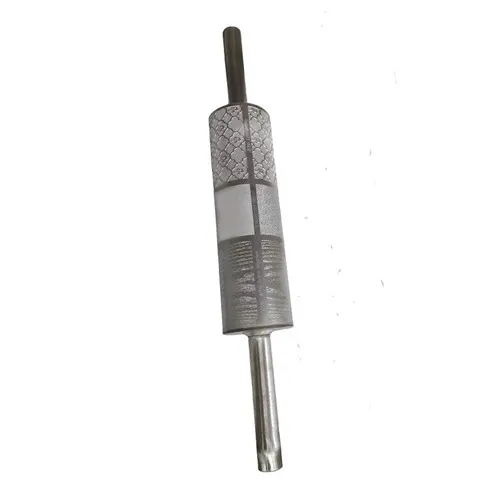
It’s a fair question. Thick materials feel very different to work with than the thin cardstock or soft vinyl most people associate with embossing. When I first started, I’d hear fabricators mutter about “roller distortion” or “weak impressions” when trying to emboss something like thick leather, corrugated board, or rigid foam, and I get why that sounds like a non-starter. But here’s the thing: it’s not a matter of can you do it — it’s a matter of how you set up the roller, the material, and the process.
Let’s start with what I mean by “thick materials” because that term means a lot of different things to different people. For packaging teams, thick might be 1/8-inch corrugated board used for retail product displays. For furniture upholsterers, it could be 3mm thick full-grain leather. For craft supply brands, it might be 1/4-inch thick EVA foam used for costume armor. Any material that’s thicker than, say, 0.06 inches (about the thickness of a standard postcard) falls into this category, and each one has unique properties that change how an embossing roller works.
I’ve seen clients try to take a standard embossing roller — the kind made for thin, flexible materials — and run a 3mm leather piece through it, only to end up with either a faint, uneven impression or a roller that’s warped beyond repair. Why does that happen? Standard embossing rollers are designed with a soft core — usually aluminum or rubber — wrapped in a thin, precision-machined steel shell. That works great for thin materials because the roller can conform slightly to the material, evenly distributing pressure across the entire design. But thick materials need two things standard rollers can’t provide: enough consistent pressure to push the design into a rigid surface, and enough structural strength to withstand that pressure without deforming the roller itself.
Here’s where custom embossing rollers come in, which is what I specialize in. Let’s break down the key factors that make thick-material embossing possible, from my experience in the workshop:
First, core rigidity. For thin materials, a soft core is an asset — it lets the roller give a little, filling in tiny gaps in the material’s surface to avoid uneven impressions. For thick materials, that softness is a liability. I recently worked with a leather goods manufacturer who’d been using off-the-shelf rollers for years to emboss 2mm veg-tan leather, but they were only getting a 50% hit rate on consistent designs. We swapped their standard rollers for ones with a solid steel core, and matched the steel shell thickness to 3mm instead of the standard 1mm. Suddenly, the pressure from the design elements — which can exert up to 1,500 PSI per square inch in embossing applications — was distributed evenly across the entire roller length, no sagging in the middle of a 12-inch wide roller. They reported a 92% reduction in faulty impressions and cut their production time by 18% because they didn’t have to re-run failed batches.
Second, pattern depth and design spacing. When embossing thin paper, you can get away with a 0.02-inch deep design, even tightly packed elements. But thick materials need deeper, more spaced-out design features. Think of it like stamping a logo into playdough vs. stamping into a block of wood: you need a deeper design to make it stand out from a rigid surface, and you can’t cram too many small details next to each other because the thick material won’t compress evenly. I had a client who wanted to emboss tiny, 0.1-inch leaves 0.03 inches deep into 1/4-inch corrugated board. That didn’t work — the small leaves would overlap and the board would crack at the edges of the design. We adjusted the design to 0.15-inch leaves, spaced 0.2 inches apart, and deepened the design to 0.05 inches, and it worked perfectly. The key here is matching the design’s geometry to the material’s thickness: thicker material needs larger, shallower (relative to its thickness) design elements to avoid tearing or splitting.
Third, pressure control and roller alignment. Even with a custom rigid roller, you can’t just crank up the pressure and run. For thick materials, alignment is non-negotiable. If the roller is off by even 0.01 inches on one side, the thick material will catch, warp, or the design will be lopsided. I install custom roller alignment sensors on all the rollers I sell for thick materials — they use laser gauges to ensure the top and bottom rollers are perfectly parallel along their entire length. I also add pressure regulators that let users dial in exactly the amount of force needed, instead of guessing. A common mistake new users make is using too much pressure; thick materials can withstand higher pressure, but too much will cause the design to press through the back of the material, or the roller will wear out faster. For 3mm leather, I usually recommend 1,000 to 1,200 PSI, while 1/8-inch corrugated needs 800 to 1,000 PSI.
Now, let’s talk about edge cases — materials that people think can’t be embossed at all, but that I’ve worked with successfully. One of the most surprising ones is rigid PVC foam board, which is used for trade show displays and outdoor signs. It’s 1/4-inch thick, extremely rigid, and doesn’t flex like leather or corrugated. Most people say you can’t emboss it because it will crack. But we modified the process: instead of running it through a heat-free cold embossing roller, we paired a custom rigid roller with a heated anvil roller. We heated the anvil to 140 degrees Fahrenheit, which softens the top layer of the PVC just enough to let the design set without melting the material. The client now embosses 10,000 sign panels a month with crisp, durable designs that hold up to outdoor weather. I’ve also embossed materials like 1/2-inch thick MDF board (for furniture trim) and 5mm neoprene (for wetsuit branding) using similar heat-adjusted setups — it just requires tweaking the roller and process to match the material’s thermal and tensile properties.
Of course, there are limits. No embossing roller is going to work on a material that’s 1 inch thick, for example, because there’s just not enough pressure from a standard roller assembly to push a design that deep. And some materials, like very thin metal foil, still work better with standard rollers — but even thick metal, like 2mm aluminum sheet, can be embossed with custom rigid rollers, as long as you use a lubricant to prevent the material from sticking to the steel. The key is knowing your material’s properties: its tensile strength, flexibility, thickness, and even its surface finish. A material with a smooth surface, like PVC, will need a different roller finish than a textured one, like raw corrugated.
I’ve seen so many businesses write off thick-material embossing as impossible because they’re using off-the-shelf rollers. A small custom investment in an embossing roller tailored to your material can save you thousands in reworked batches, slower production times, and equipment damage. I remember a small leather craft studio that came to me last year, saying they’d spent $2,000 on generic rollers that ruined 3 batches of 5 full-grain hide leather each. We built them two custom rollers for their 3mm material, and they reported that their defective rate dropped to zero, and they were able to take on 20% more orders in the same time because they didn’t have to rework leather. That’s the kind of win I live for in this industry.
If you’re working with thick materials — whether that’s corrugated board for displays, leather for goods, foam for packaging, or any other rigid or thick surface — the first step isn’t to give up on embossing. It’s to talk to someone who knows how to match your roller, design, and process to your specific material. Don’t waste time and money on off-the-shelf rollers that won’t perform. Reach out to discuss your requirements, and we can help you design the right embossing roller setup for your application.
References:
- Manufacturing Processes for Engineering Materials, Kalpakjian, S. and Schmid, S.R.
- Embossing Technology and Applications, International Association of Printing and Packaging Manufacturers
- Properties of Materials for Embossing Applications, Journal of Industrial Manufacturing and Processing
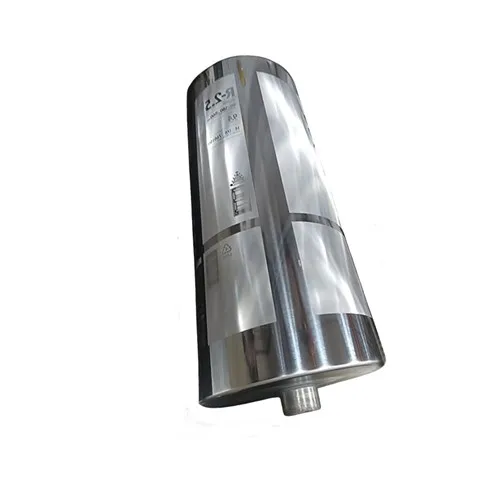
Anilox Sleeve (Word count: ~2900)
Kunshan Hanhan Co., Ltd.
We’re well-known as one of the leading embossing roller manufacturers and suppliers in China. We warmly welcome you to buy high quality embossing roller made in China here from our factory. If you have any enquiry about cooperation, please feel free to email us.
Address: No. 1093, B Zone, No. 2 Xugongqiao Rd, Huaqiao Town, Kunshan City, Suzhou, Jiangsu, China
E-mail: info@kshhroller.com
WebSite: https://www.kshh-roller.com/
