If you’ve ever worked in industries like petrochemicals, power generation, or laboratory temperature monitoring, you’ve probably relied on thermocouples—those workhorses that translate extreme, hard-to-measure heat into readable electrical signals. But thermocouples don’t work alone. Their accuracy depends almost entirely on a little-known component: compensating cable (also called extension cable). As someone who’s supplied this critical gear for over a decade, I hear the same question from new engineers, plant managers, and even seasoned technicians every single day: What’s the price range of compensating cables? It’s a fair question—cost matters, but so does compatibility, durability, and performance. Too often, buyers make the mistake of shopping solely on price, only to end up with a cable that ruins a $10,000 temperature monitoring system or fails prematurely in a harsh environment. Let’s break down the factors that shape compensating cable prices, the typical ranges you can expect, and what you should prioritize over just a low number. Compensating Cable
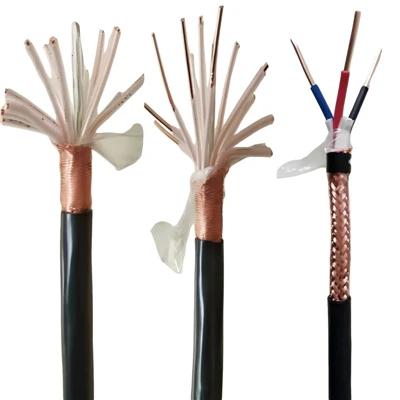
First, let’s get clear on what compensating cable actually is. Unlike standard copper wiring, which is just designed to carry electricity, compensating cable is manufactured to match the thermoelectric properties of the thermocouple wires it’s paired with. That means if you have a Type K thermocouple (the most common, used for oxidizing environments up to 1,260°C / 2,300°F), its compensating cable will be made of special alloys that generate the same voltage as the thermocouple at the reference junction. Skimp on that compatibility, and your temperature readings will be off—sometimes by dozens of degrees, which can be catastrophic in processes like furnace control, pharmaceutical manufacturing, or food processing.
So what drives price? The biggest factor is the thermocouple type it’s made for. Different thermocouples use drastically different materials, and some are way more expensive to produce. Let’s start with the most common types, since they make up 80% of the compensating cable we supply: Type K, Type J, and Type T. Type K is nickel-chromium and nickel-aluminum, two alloys that are relatively abundant and easy to work with. Type J is iron and constantan, even cheaper. Type T is copper and constantan, the least expensive of the three. For these standard types, pricing is pretty straightforward. If you’re buying unjacketed, bulk cable (for runs you’ll install and jacket yourself), you’ll pay roughly $0.50 to $1.20 per linear foot. If you want a pre-jacketed cable—protected from moisture, oil, and abrasion with a flexible PVC or polyurethane outer sheath—add $0.20 to $0.50 per foot, bringing that range to $0.70 to $1.70 per foot for standard types.
Now, jump to less common but high-demand types: Type S, Type R, and Type B. These are noble metal thermocouples, designed for ultra-high temperatures (up to 1,700°C / 3,092°F) and extreme accuracy in environments like aerospace testing, glass manufacturing, and steel production. Their compensating cables use platinum and rhodium alloys, which are rare, mined in very specific locations, and command a premium price. For Type S compensating cable, you’ll pay $5 to $12 per linear foot for bulk, unjacketed, and $7 to $18 per foot for pre-jacketed. Type R is similar—rhodium content is slightly higher than Type S, so it’s a bit more, typically $6 to $14 per foot bulk, $8 to $20 jacketed. Type B is the priciest of these three; its rhodium content is 30%, and it’s designed for the harshest high-heat applications, so pricing runs $10 to $22 per foot bulk, $13 to $28 per foot jacketed. That’s a big jump from Type K, but when you’re monitoring a 1,500°C furnace where a 10°C error can ruin a batch of specialty steel, that premium is non-negotiable.
Another big factor in price is construction and environmental rating. Not all compensating cables are the same—some are built to work in 100% humidity, others in direct sunlight, chemical spills, or even outdoor burial. Let’s break down the jacket options, because that’s where most of the extra cost comes from. The basic PVC jacket we mentioned earlier is cheap, flexible, and works for indoor, low-humidity applications (like a lab instrument’s internal wiring) but breaks down in UV light, oil, or temperatures above 105°C / 221°F. That’s why for industrial outdoor or process applications, people opt for polyurethane (PUR) jacketed cable. PUR is oil-resistant, UV-stabilized, and can handle temperatures from -40°C / -40°F to 105°C / 221°F, so it’s ideal for plant floor wiring or outdoor runs. PUR adds roughly $0.30 to $0.60 per foot over PVC, so a Type K PUR-jacketed cable runs $0.90 to $1.80 per foot, which is a small premium for a much more durable product.
Then there’s fluoropolymer jackets, like FEP or PTFE. These are the heavy hitters for chemical exposure: they resist acids, solvents, and high temperatures up to 200°C / 392°F, but they’re stiffer, more expensive to manufacture, and harder to terminate than PVC or PUR. For Type K FEP-jacketed compensating cable, you’re looking at $1.50 to $2.50 per foot for bulk, $1.80 to $3.00 per foot pre-jacketed. We see this a lot in chemical plants where cables are run near acid tanks or in food processing plants where easy cleaning with harsh detergents is required. For even more extreme environments, there’s metal armor (like stainless steel braid or rigid conduit) to protect the cable from physical damage, rodent chews, or high-pressure steam. Armor adds a huge premium—for Type K steel-braid armored cable, you’ll pay $2.50 to $4.00 per foot, and for noble metal cables with armor, it jumps to $15 to $30 per foot. It’s not cheap, but if a single broken cable can shut down a $1 million production line for 3 days, the armor pays for itself.
Wire gauge also plays a role. Thicker wires carry electrical signals more reliably over long runs, especially in noisy industrial environments where electromagnetic interference (EMI) from motors and transformers can skew readings. The standard gauge for compensating cable is 20 AWG, which works for runs up to 100 feet. For runs longer than 100 feet, or in high-EMI areas, 18 AWG or even 16 AWG is better. Each gauge increment adds roughly 15% to 20% to the price, because you’re using more raw material (copper or alloy) per foot. A Type K 20 AWG PVC-jacketed cable might be $1.00 per foot, while a 16 AWG version is closer to $1.20 per foot.
Now, let’s talk about volume and supplier markups. If you’re buying a single 10-foot run to replace a broken cable in your lab, you’ll pay retail pricing, which is 10% to 20% higher than bulk. But if you’re buying 1,000 feet or more for a plant-wide installation, you’ll get a bulk discount, which can bring the price down by 15% to 30%. That’s why it’s always better to buy in bulk for industrial applications—we regularly give our repeat customers 25% off their orders when they’re placing a large, planned buy. Be wary of suppliers that offer rock-bottom prices, though. There are a lot of fly-by-night companies selling “compensating cable” that’s actually just standard copper wire, or thermocouple-type cables with wrong alloy ratios. We’ve had customers come to us after buying a $0.30 per foot cable from a discount supplier, only to find their temperature readings were off by 50 degrees because the alloy composition didn’t match their Type J thermocouple. That’s a cost that far outweighs the initial 70 cents per foot savings.
So to sum up the price ranges, here’s a quick, easy reference for common applications:
- Standard low-temperature/low-use (Type K, J, T, PVC jacket, 20 AWG): $0.50–$1.50 per foot bulk, $0.70–$2.00 per foot retail
- Industrial general use (same types, PUR jacket): $0.80–$2.00 per foot bulk, $1.00–$2.50 per foot retail
- Extreme chemical/heat use (same types, FEP jacket): $1.40–$3.00 per foot bulk, $1.70–$3.50 per foot retail
- Noble metal high-temperature (Type S, R, B, bulk unjacketed): $5.00–$25.00 per foot bulk, $7.00–$30.00 per foot retail
- Armored/rugged industrial use (any type, steel braid): $2.20–$35.00 per foot bulk, $2.50–$40.00 per foot retail
Now, as someone who’s supplied compensating cable for over a decade, I can tell you that the best price isn’t always the lowest price. The right cable for your job is one that matches your thermocouple type, your environment, and your run length. If you’re a small lab, a small run of standard Type T cable will work for $0.70 per foot. If you’re a steel mill monitoring a 1,600°C furnace, you need Type B cable with FEP or armor, even if it’s $20 per foot. The worst thing you can do is cut corners on a component that’s critical to your process.

I’ve seen so many avoidable mistakes. A food processing plant we worked with a couple years ago bought cheap PVC-jacketed Type K cable to run near their pasteurization tanks. Within a month, the PVC melted in the high-temperature, high-moisture environment, and their temperature monitoring went off. They had to shut down production for 2 days, costing them over $50,000 in lost output, just to save $300 on the cable. That’s why we always tell customers: ask us about your application, tell us your thermocouple type, where the cable will run, how long the runs are, and if there’s any special environmental stress, and we’ll recommend the right cable at the right price. No upselling, no cutting corners, just the product that will work for your needs.
If you’re currently planning a thermocouple upgrade, replacing old cables, or just have questions about what type of compensating cable is right for your project, I’m here to help. We work with everyone from small research labs to large industrial plants, and we can provide samples, technical datasheets, and bulk pricing for any order size. Don’t risk inaccurate temperature readings or premature cable failure because you’re not sure about the price or the right product. Reach out to our team today to discuss your requirements, and we’ll get you a customized quote that fits your budget and your needs.
Control Cable References
- International Electrotechnical Commission (IEC) Standard 60584-3: Thermocouples – Part 3: Extension and compensating cables – General requirements and test methods
- Omega Engineering, Inc. (2023). Compensating Cable Selection Guide
- National Institute of Standards and Technology (NIST) (2022). Thermoelectric Properties of Metal Alloys for Industrial Temperature Measurement
- ASM International (2021). Environmental Resistance of Fluoropolymer and Polyurethane Jackets for Industrial Wiring Applications
Anhui Huawang Cable Co., Ltd.
As one of the most professional compensating cable manufacturers and suppliers in China, we also support customized service. If you’re going to buy discount compensating cable, welcome to get pricelist from our factory. Quality products and reasonable price are available.
Address: No. 32, East Street, Batian Street, Datong Town, Tianchang City, Anhui Province
E-mail: Linda@huawangcable.com
WebSite: https://www.huawang-cable.com/
