If you’ve ever seen a switchboard or a big power distribution unit, you’ve probably never noticed the busbar assembly machine that makes it all work. But if you’re the person coding one of those machines, you know it’s way more than just “push a button, put a metal strip in place.” As a supplier of these things, I get asked all the time: “How hard is it to program a busbar assembly machine?” Let me break this down like I’m talking to a friend, not a tech conference attendee—no stuffy jargon, just real stuff I deal with every day. Busbar Assembly Machine
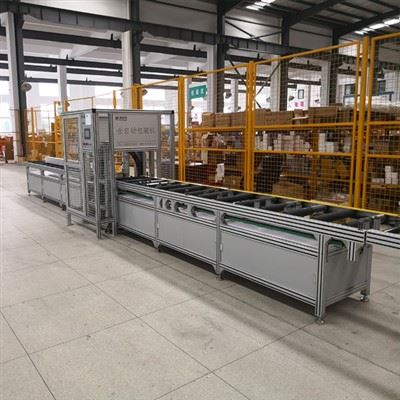
First off, let’s get one thing straight: a busbar isn’t a random wire. It’s a thick, rigid metal strip (usually copper or aluminum) that carries heavy electrical current—like, way more than a regular cable can handle. Think of it as the main highway for electricity in buildings, factories, or data centers, instead of a tiny backroad. The machine that puts these together has to do a lot, and every single step is controlled by code. No mistakes here, because one wrong code line could mean a busbar that shorts out, overheats, or even catches fire. That’s not a “oops I messed up” kind of error—that’s a safety hazard, so the programming can’t be sloppy.
Let’s start with the basics people don’t think about: the material handling part. Busbars are heavy—like, 10-foot strips of ¼-inch copper can weigh 50 pounds or more. So the machine has to grab them, move them, flip them, drill holes in them, and cut them to size—all without bending the busbar. Bend it just a little, and its electrical conductivity drops. Bend it too much, and it’s garbage. The code here isn’t just “move from Point A to Point B.” It has to calculate the weight of the specific busbar, the speed of the robotic arm that grabs it, the exact angle to lift it so it doesn’t swing, and when to slow down before setting it down. If I speed up the code’s movement command by 10ms, that arm might yank the busbar and bend it. If I set the lift height wrong, it might hit the side of the machine and damage it. I’ve fixed so many issues where the programmer forgot that aluminum is softer than copper, so the grip pressure has to be different for each material. That’s the kind of tiny, easy-to-miss detail that makes this programming hard.
Next up, the precision work—drilling, punching, and notching. Busbars need holes for screws, notches to fit into other parts, and cutouts for connectors. A lot of these are tight: if a hole is 0.01 inches off, it won’t line up with the switchgear it’s supposed to go into. I’m talking about tolerances smaller than the tip of a pin. The code for this has to sync three things: the position of the busbar on the work table, the speed of the drill or punch, and the depth of the cut. But here’s the twist: busbars aren’t always perfectly straight when they come in. A little warp from being stored wrong can throw off the entire alignment. So the code isn’t just using fixed coordinates— it has to have a small camera or sensor that scans the busbar first, adjusts the coordinates on the fly, and then does the work. That’s called vision-guided processing, and it’s way trickier than it sounds. If the sensor is dirty, the code might misread the bend, drill a hole in the wrong spot, and ruin a $200 copper bar. I once had a customer blame the machine for a bad batch, only to find out their cleaning crew had sprayed the sensor with glass cleaner and made it blurry. The code worked fine—just the input was messed up. That’s the kind of thing you have to account for, and it’s not something taught in basic programming classes.
Then there’s the safety stuff, which is non-negotiable. Busbar assembly machines deal with heavy metal, fast-moving arms, sharp drills, and high voltage (wait, no—the machine doesn’t carry current, but it works with parts that will). But more importantly, if the machine is working with a busbar that’s got even a tiny electrical charge left (rare, but possible), the code has to pause automatically. Also, if someone sticks their hand in the machine’s work area, it has to stop instantly. That’s not just a “stop when you see a hand” feature. The code has to sync with multiple safety sensors—light curtains, pressure mats, door switches—and prioritize them over all other commands. If a light curtain is triggered, even if the code is in the middle of a perfect cycle, it has to cut power to the arm and drills before anything happens. I’ve seen cheaply programmed machines that ignore a light curtain for half a second because the code was set to finish the current move. That’s a lawsuit waiting to happen, not to mention a safety risk. So the safety programming isn’t an afterthought—it’s the most important part, and it’s way more strict than regular app coding. It’s gotta be reliable 24/7, no exceptions.
Now, let’s talk about flexibility. Customers don’t just make one type of busbar. One day, they might be making a 1-inch wide copper bar for an office building. The next, a 4-inch wide aluminum bar for a factory’s main power line. The machine has to switch between these in minutes, not hours. So the code can’t be hard-coded to work with only one size. It has to have a user-friendly interface where the operator can type in the new busbar dimensions, material, number of holes, and notches, and the machine adjusts automatically. But here’s the catch: if an operator types in a wrong number—like putting a 10-inch length instead of 5—the code has to catch that, not let the machine cut a bar twice as long as it should. So it needs error-checking built in, not just for obvious stuff (negative length) but for weird stuff that’s still wrong. Like, if the hole count is higher than the length of the busbar (you can’t fit 10 ½-inch holes on a 2-inch bar), the code has to flag that before the machine starts cutting. I’ve had to redo so many codebases where the programmer forgot that error checking, leading to operators inputting wrong numbers and ruining a whole pallet of busbars. That’s a huge waste of time and money for the customer, so it’s a must-have.
Oh, and let’s not forget about maintenance and uptime. Customers run these machines 12, 16 hours a day, 5 or 6 days a week. If the machine goes down, their production stops, which costs them thousands of dollars an hour. So the code has to have built-in diagnostics—like, if the drill is wearing out, it should flag that before it breaks mid-cycle. If the air pressure for the gripper is too low, it should warn the operator before the busbar slips. That means the code has to monitor hundreds of tiny data points: motor temperature, sensor readings, drill speed, gripper pressure, all in real-time. If the code only checks these every 10 seconds, it might miss a small problem that turns into a big breakdown. But checking them every 100ms is a lot of processing, so the programmer has to balance speed with efficiency. Too slow, and you miss issues. Too fast, and the machine lags, leading to mistakes. That’s a delicate balance that not every programmer gets right.
Wait, let’s talk about something specific to my job as a supplier. A lot of people think programming a busbar machine is just using off-the-shelf software, like downloading a template and tweaking it. But that’s not the case. Every customer’s needs are a little different. A data center might need busbars with special anti-corrosion coatings, so the machine has to add a drying step after processing. A small contractor might only make tiny busbars for home electrical panels, so they don’t need a big robotic arm, just a small tabletop unit. So I can’t sell the same machine with the same code to everyone. I have to work with programmers to customize the code for each customer’s setup, their space, their output needs, their budget. That means sometimes modifying the core code, sometimes adding whole new modules for specific steps. It’s not one-size-fits-all, which makes the programming way harder than if it was just a standard product.
I’ll be real with you—there are parts of this programming that are way more complicated than coding a smartphone app or a website. When you code an app, if you make a mistake, you might have to restart your phone. If you make a mistake in this code, you could have a safety incident, a ruined $1000 busbar, or a machine that’s out of commission for a week. That’s why good programmers for these machines don’t just know Python or C++ or whatever language we use—they have to understand material science, electrical safety, mechanical engineering, and even basic factory operations. They can’t just sit in front of a computer writing code all day. They have to come out to our facility, see the machine in action, talk to the operators, figure out what the customer actually needs, not just what they say they need. I’ve hired programmers who only know coding and they’re useless for this job. They’ll write code that works on paper, but when it hits the real world—when the busbar is a little warped, when the sensor is dusty, when the operator hits the wrong button—it breaks. That’s the real difficulty here: it’s not just code. It’s bridging the gap between software and the messy, real world of manufacturing.
And let’s not overlook the learning curve for operators, which ties back to the programming. The code has to be intuitive, but also powerful. If an operator who’s been working in a factory for 20 years can’t figure out how to program a new busbar on the machine, they’re not going to use it. They’ll go back to doing things the old way, which is slower and more error-prone. So the code’s interface has to be simple, but under the hood, it’s doing all that complicated processing. That’s a balancing act too. I’ve seen machines with great internal code but a terrible interface, so operators hate using it. The programmer has to work with someone who knows factory floor operations to make that interface work, not just follow software design rules.
At the end of the day, the programming difficulty of a busbar assembly machine boils down to this: it’s not just about writing code. It’s about creating a system that’s safe, precise, flexible, reliable, and works in the messy, unforgiving environment of a factory. It has to handle heavy parts, small tolerances, human error, sensor glitches, and changing customer needs—all while running 24/7 for years. As a supplier, I only trust programmers who get that. I’ve had too many bad experiences with machines that were “easy to program” but broke all the time, or unsafe, or couldn’t adapt to what customers actually needed.
If you’re in the market for a busbar assembly machine, don’t just ask if it’s “easy to use.” Ask about the code. Ask about safety protocols, error checking, customization options, diagnostic tools. Because the quality of the programming is what makes the machine either a workhorse that saves you time and money, or a headache that costs you. I’ve been in this game long enough to know that the best machines aren’t the ones with the fanciest parts—they’re the ones with code that works with the real world, not against it.
If you’re tired of dealing with busbar machines that break down, can’t adapt to your orders, or have safety issues, hit me up to chat. We can go over your specific needs, show you how our machines are programmed to handle even the trickiest busbar jobs, and figure out a solution that works for your shop. No salesy BS, just real talk about what you need to get the job done right.
Busbar Assembly Machine References
- Industrial Automation Society. (2022). Design Principles for High-Tolerance Manufacturing Equipment. International Journal of Industrial Automation.
- Occupational Safety and Health Administration (OSHA). (2021). Safety Standards for Industrial Assembly Machinery. U.S. Department of Labor.
- Materials Science & Engineering, Vol. 128. (2020). Mechanical Properties of Copper and Aluminum Busbars for Power Distribution. Elsevier.
- Factory Automation Magazine. (2023). Common Programming Challenges for Robotic Material Handling Systems. Association for Advancing Automation.
- International Electrotechnical Commission (IEC). (2022). IEC 60204-1: Safety of Machinery – Electrical Equipment of Machines. IEC Standards.
Suzhou Kiande Electric Co., Ltd.
Suzhou Kiande Electric Co., Ltd. is one of the most professional busbar assembly machine manufacturers and suppliers in China, also supports custom service and OEM&ODM service. Welcome to buy durable busbar assembly machine made in China here and get quotation from our factory. Quality products and reasonable price are available.
Address: No.123, Suzhou Avenue East, Suzhou Industrial Park Suzhou, Jiangsu 215000 China
E-mail: saleswmkc@kiande.cn
WebSite: https://www.busbarcncmachine.com/
