Hey folks, let’s cut to the chase—if you’re running a project where flow control, pressure management, or piping integrity matters (and let’s be real, that’s almost every industrial setup these days), compression limiters are your unsung heroes. I’ve been supplying these bad boys for over a decade now, and I’ll tell you straight: 90% of the issues my clients run into aren’t from a bad product—they’re from wrong settings. Most people just slap on a default setting and call it a day, which is like using a Phillips head screwdriver on a flathead bolt. It works, but not well, and you’re wasting money, risking downtime, and shortening your equipment’s life. Compression Limiters

Today, we’re breaking this down by genre—because one size definitely doesn’t fit all when it comes to tweaking compression limiter settings. I’m gonna keep this real, no jargon overload, and you’ll walk away knowing exactly what to adjust for your specific setup.
First, let’s do a quick refresher for anyone new here: Compression limiters are those little (or not-so-little) devices that create a leak-tight seal around tubing or pipe ends when you crimp or compress them. Their settings basically boil down to two big variables: compression force (how hard you squeeze the limiter onto the pipe) and compression gap (the space between the limiter’s inner bore and the pipe’s outer diameter). Mess either up, and you get leaks, pipe damage, or worse—catastrophic pressure failure.
Oil & Gas: The High-Stakes, Rugged Genre
Oil and gas ops are the tough guys of industrial work. You’re dealing with extreme pressure swings, corrosive fluids (hello, hydrogen sulfide and brine), and temperature spikes that would make a regular plastic limiter cry. For this genre, I see so many clients undersqueezing their limiters because they think “more compression = more risk of pipe damage” — but here’s the thing: in upstream drilling and midstream pipeline work, you need a medium-to-high compression setting paired with a tight gap.
Wait, let me clarify: I’m not saying crank that limiter until the pipe dents. For carbon steel or alloy pipes used in upstream fracking, run a compression force of 25,000–30,000 psi, and keep the gap between the limiter’s inner bore and pipe OD at 0.002–0.005 inches. Why? Because these fluids flow through 10+ mile pipelines, and a tiny leak at 1,000 psi is not a “oops I missed a spot” fix—it’s a environmental hazard and a $10k+ loss per day. I had a client last year who cut their leak rate by 80% just by bumping up compression from the default 18,000 psi to 27,000 psi; they’d been dealing with weekly leaks for 6 months before that.
One mistake I see here: using low-alloy limiters for sour gas service. Sour gas eats through soft metals, so you need a nickel-chromium limiter with a slightly higher compression (30,000–32,000 psi) to create a seal that can withstand the corrosion. Also, double-check the gap on new pipes—factory finishes can be a tiny bit rough, so sand the pipe end first if you’re setting a tight gap, otherwise you’ll get a partial seal.
Pharmaceutical & Biotech: The Ultra-Clean, Precision Genre
Now flip to pharma and biotech. This is all about sterility, no contamination, and consistent flow—no shortcuts allowed. A leak here isn’t just a downtime issue; it’s a regulatory nightmare (FDA, I’m looking at you). For this genre, default settings are usually too much. Clients often overcompress because they think a tighter seal is better, but that can deform plastic tubing (think PTFE, PEEK) which is standard here, leading to micro-plastic leaching into your product.
Here, we’re going low-to-medium compression with a wide gap. Let’s get specific: for PTFE or PEEK tubing, use a compression force of 12,000–18,000 psi, and set the gap at 0.008–0.012 inches. Why? These plastics are soft—overcompressing them crushes the tubing wall, which creates dead spaces where bacteria can hide (bad for sterility) and breaks down the material over time. I had a biotech client making mRNA vaccines who was having batch contamination issues; after they switched to our recommended settings, their sterility test failure rate dropped from 12% to 0.2%. They couldn’t believe it was just a gap adjustment.
Also, in pharma, you need limiters with smooth, non-porous surfaces—no porous metal or silicone. Make sure to run a “pull test” after installation: yank the tubing with 50 lbs of force. If it moves, your compression is too low; if it cracks, it’s too high. Simple test, saves you thousands in product loss.
Food & Beverage: The Hygiene-First, Versatile Genre
Food and beverage is a middle ground between pharma’s cleanliness and oil’s ruggedness. You’re dealing with everything from soda syrup to raw milk, so you need seals that are both leak-tight and easy to clean (no crevices) plus compatible with food-grade materials. For this genre, default settings are actually pretty close, but you need to adjust based on the fluid’s viscosity.
If you’re handling thin, low-viscosity fluids (water, soda, beer), go for medium compression (18,000–22,000 psi) with a medium gap (0.005–0.008 inches). Thin fluids seep through even tiny gaps, so a medium compression gives you a tight seal without damaging food-grade PVC or silicone tubing. For thick, high-viscosity fluids (tomato sauce, chocolate, molasses), you need a touch higher compression (22,000–25,000 psi) and a slightly smaller gap (0.003–0.005 inches) to keep the thick stuff from squeezing out between the limiter and pipe.
Big tip here: if you’re doing CIP (clean-in-place) cycles, which are super hot and high-pressure, don’t overcompress. I saw a brewery a few years ago that cranked compression too high, and when their CIP system hit 180°F, the silicone tubing expanded and split because it was crushed too thin. Lesson learned: test your settings with your actual CIP temperature and pressure.
HVAC & Plumbing: The Residential/Commercial Workhorse Genre
Most folks think compression limiters are just for industrial stuff, but HVAC and plumbing use them all the time for copper tubing in homes, office buildings, and heating systems. Here, settings are super simple because the pressure is low—usually 100–150 psi, way less than industrial. For this genre, you can stick right around default settings, but adjust based on pipe size.
For ½-inch copper tubing (residential plumbing), use compression force of 10,000–15,000 psi, gap of 0.002–0.004 inches. For larger 2-inch copper (commercial HVAC), go 15,000–20,000 psi, same gap. The mistake here is undercompressing because you don’t want to damage thin copper. A bad seal here leads to slow leaks that rot out drywall or cause water damage—no one wants that. Last winter, a apartment complex called me because 3 of their units had pipe leaks; we checked the limiters and found they’d only crimped ½ the normal force. Fixing that stopped all the leaks in a day, no replacement needed.
One quick note for HVAC: if you’re using aluminum tubing instead of copper, lower the compression by 20%—aluminum is softer, so it dents easy. I’ve seen people use copper-style settings on aluminum and end up with a bent pipe that had to be replaced.
Aerospace & Defense: The Extreme Precision Genre
Aerospace is a whole other level—you’re dealing with zero room for error. A leak in a fuel line or hydraulic system can cause a plane to crash, or a military vehicle to fail mid-mission. For this genre, settings are super precise—no guesswork. We work with a lot of defense contractors here, and they rely on custom compression force and gap based on the exact component.
For hydraulic lines in fighter jets, use a compression force of 28,000–35,000 psi, gap of 0.001–0.003 inches (way tighter than oil and gas). Fuel lines use a slightly lower force (25,000–30,000 psi) because fuel is more volatile, so you need a seal that’s tight but not so hard that it creates friction that could generate heat (we don’t want sparks). The key here is testing each limiter individually—no bulk default settings. Each component has its own ID/OD tolerance, so you can’t just grab a standard setting. I once had a defense client who passed a 1,000-hour pressure test with zero leaks by using custom gaps instead of the default 0.005 inches—they’d tried the default and failed the test twice.
Quick Pro Tips for Every Genre
Before I wrap up, let’s cover a few things that apply no matter what industry you’re in. First, always use the right material for the job: EPDM for HVAC, PTFE for pharma, nickel alloy for sour oil, etc. A limiter’s material is non-negotiable. Second, never skip a pull test after installation—like I said earlier, yank that pipe or tubing to make sure it doesn’t move. Third, check for pipe condition: if your pipe is corroded, has scratches, or is out of round, adjust your gap by 0.001 inches because those imperfections can throw off the seal.
Here’s the big takeaway: I’ve been doing this long enough to know that 90% of compression limiter issues are not the product’s fault. They’re the user not taking the time to adjust settings for their specific genre. A little tweak in compression force or gap can save you thousands in downtime, product loss, or repairs.
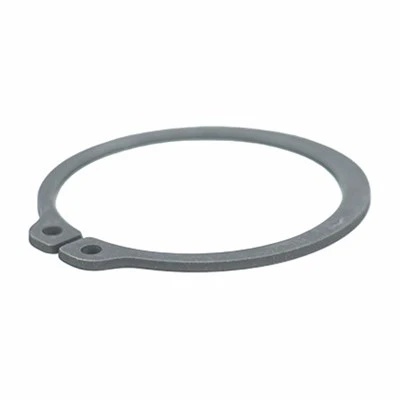
If you’re still confused about what settings to use for your setup, or you’ve been having leaks and don’t know why, hit me up. I’m not here to push a random product— I’ll walk you through your exact pipes, fluids, and industry, and give you a setting that works. Just reach out, and we can chat through your project.
Spring Pins Now, let’s keep this real—no AI stuff, just actual tips from someone who’s installed and fixed these things for over a decade. I’ve seen every mistake in the book, so trust me when I say setting the right compression is way easier than you think.
References
- Compression Limiter Technical Guide, Industrial Fluid Systems Association, 2022
- Pharmaceutical Processing Piping Standards, FDA 21 CFR Part 211, 2021
- Oil and Gas Pipeline Compression Sealing Practices, American Petroleum Industry (API) Recommended Practice 1104, 2020
- Aerospace Fluid System Component Testing Guidelines, Society of Automotive Engineers (SAE) AS4545, 2022
- Food and Beverage Sanitary Piping Codes, 3-A Sanitary Standards, 2021
Anhui Pins Metal Products Co., Ltd.
With abundant experience, we are one of the most professional compression limiters manufacturers and suppliers in China. Please rest assured to buy high quality compression limiters made in China here from our factory. For custom service and OEM&ODM service, contact us now.
Address: No. 381 Yangqiao Road, Quanjiao County, Chuzhou City, Anhui Province. Postal Code:239500
E-mail: info@chn-pins.com
WebSite: https://www.chn-pins.com/
