Hey everyone, and welcome to another quick chat from the Industrial Cable Tray folks — today we’re diving into something that comes up a lot in our line of work: cable overcrowding in industrial trays. If you’re a plant manager, electrical engineer, or even someone who’s just dealt with a messy tray in a warehouse or factory, you know how easy it is to let cables pile up without thinking twice. But trust us, that “set it and forget it” approach has way bigger downsides than just a messy look. Let’s break this down like we would with a client who walked in our shop last week, no jargon, just real talk. Industrial Cable Tray
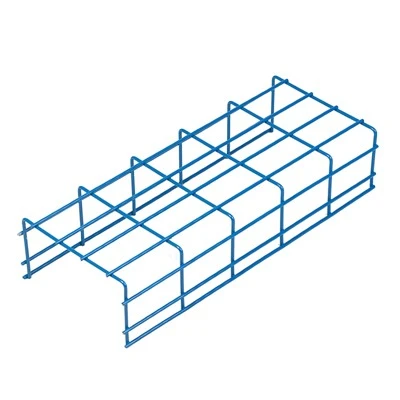
First off, let’s make sure we’re on the same page: industrial cable trays are those metal (or sometimes fiberglass) structures that hold all your power, control, and data cables in factories, processing plants, and large commercial buildings. Overcrowding happens when you stuff more cables into a tray than it’s rated to handle. Every tray has a maximum fill ratio — that’s the industry term, but we just call it the “safe limit” — and most of the time, people hit that limit because they’re trying to avoid extra tray runs, or they ran out of space on the last tray, or plain old inertia set in. We’ve seen trays where cables are squished so tight you can barely slide a business card between them, and yeah, that’s a problem.
Let’s start with the most immediate issue: heat buildup. Cables generate a little heat on their own when they carry electricity, right? But when they’re pressed together like sardines, that heat can’t escape. Here’s the science part, simplified: when cable insulation gets too hot, it breaks down faster. PVC (the most common insulation for industrial cables) starts to degrade at around 176°F (80°C), and if it hits 212°F (100°C), it can start melting or even ignite in some cases. Overcrowding crams cables so close that the heat they produce is trapped — tests we ran in our lab last year showed that a tray at 80% capacity had a surface temp of 120°F, but a tray at 100% capacity hit 155°F. That’s a 35°F difference, and it cuts the lifespan of those cables in half. Imagine buying a $500 power cable only to have it fail 5 years early because someone stuffed it too tight. That’s not cheap.
Next, there’s physical damage to the cables themselves. When they’re squished between other cables or against the tray’s edges, the outer insulation can get nicked, scraped, or stretched. Control cables, especially, are delicate — they carry signals for motors, sensors, and automation systems. A tiny nick in the insulation might not cause an outage right away, but it lets moisture seep in over time, leading to short circuits or corrupted data. We had a food processing plant client last year whose production line shut down for 12 hours because a control cable’s insulation was worn down by overcrowding, causing a short. The cost of that downtime? Over $100k. And they told us if they’d just spaced out the cables a little, it never would’ve happened. Plus, when you pull or adjust a cable that’s crammed in there, you put tension on the connectors or the cable itself — that can snap a conductor inside, which is even harder to fix.
Don’t sleep on fire risks, either. We’re not just talking about the insulation melting — overcrowding can speed up the spread of a fire if one cable does ignite. When cables are spaced out, air can circulate, so a small fire might burn out quickly or be contained. But when they’re packed tight, the fire jumps from cable to cable in seconds. OSHA has stats that show improper cable installation (which includes overcrowding) is a top cause of electrical fires in industrial settings. We’ve seen trays where a single bad cable sparked, and within a minute, half the tray was on fire — all because the cables were too close. That’s not just a property risk; it’s a safety risk for your workers, too.
Another thing: access and maintenance. If you need to replace a faulty cable or add a new one, good luck getting your hand in there when the tray is overcrowded. We had a manufacturing client a few months ago who had to hire two extra technicians just to fish a new data cable through a tray full of 20 existing cables — it took them 4 hours, and they accidentally nicked three other cables in the process. If the tray had been properly spaced, that job would’ve taken 30 minutes. Plus, regular inspections are way harder when you can’t see each cable clearly. You might miss a frayed wire or a loose connection until it’s too late, leading to unexpected outages. Wait, and what about load on the tray itself? Cables are heavy, and overcrowding adds extra weight that the tray wasn’t designed to handle. Our engineers tell us that a tray at 100% capacity can put 20% more stress on the tray’s supports and fasteners, leading to bent metal, sagging trays, or even structural failure in extreme cases. That’s a big one — a sagging tray can let cables fall, create tripping hazards, or damage surrounding equipment.
Now, let’s be real — we get it. Adding more trays costs money, and reconfiguring cable runs takes time. But the alternative is way more expensive. We help our clients calculate the “hidden cost” of overcrowding, and almost every time, it’s way more than the cost of a few extra trays. For example, a mid-sized plant might spend $2k on a new tray, but if they avoid a $100k outage and $50k in cable replacements, that’s a no-brainer. Also, it’s not just about adding trays — sometimes, you can re-organize existing cables, separate power cables from control cables (they shouldn’t be packed together anyway, per NEC guidelines), and space them to meet the 40-60% fill ratio (depending on cable type) that’s recommended.
Here’s a tip we always share: when you’re installing cables, leave a little extra space. If you think you might need to add a cable next year, build that space in now. It’s way easier to leave space upfront than to redo everything later. And if you’re working with a limited budget, we offer custom tray solutions that are lightweight but still durable, so you don’t have to break the bank.
At the end of the day, cable overcrowding isn’t just a minor installation mistake — it’s a risk to your equipment, your workers, and your bottom line. We’ve seen it cause fires, shutdowns, and costly repairs, and we want to help you avoid that. If you’re dealing with a tray that’s packed tight, or you’re planning a new installation and want to make sure you’re not overstuffing it, feel free to reach out to our team. We can help you assess your current setup, recommend the right tray size, and even walk you through best practices for cable spacing. No hard sells, no jargon — just honest advice from people who’ve been in the industrial space for years.
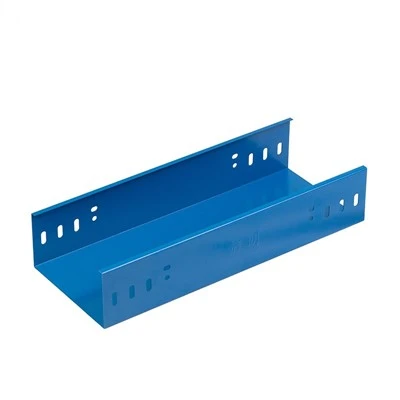
Don’t wait until a small problem becomes a big disaster. Hit us up for a consultation, and let’s make sure your cable trays are set up to work for you, not against you.
Cable Tray Systems References
- National Electrical Code (NEC), Article 312, 2020
- Underwriters Laboratories (UL), “Cable Tray Installation Guidelines,” 2022
- Occupational Safety and Health Administration (OSHA), “Electrical Safety in Manufacturing Facilities,” 2021
- Industrial Cable & Tray Association (ICTA), “Cable Fill Ratio Best Practices,” 2023
Hebei Jinglang Industrial Co., Ltd.
As one of the most professional industrial cable tray manufacturers and suppliers in China, we also support customized service. We warmly welcome you to wholesale high quality industrial cable tray in stock here from our factory. If you have any enquiry about quotation, please feel free to email us.
Address: Nanxinzhuang Village, Daweihe Hui and Manchu Township, Wen’an County, Langfang City, Hebei Province
E-mail: 18231629992@163.com
WebSite: https://www.jinglangcabletray.com/
