If you’ve ever stood in a countertop showroom, squinting at a dozen nearly identical white quartz slabs under different lights, trying to pick the one that looks like it will fit your kitchen’s vibe—you’re not alone. For years, I’ve helped homeowners, interior designers, and even small contractors navigate the wild, often confusing world of quartz slab colors, and the question I get asked more than any other is: “Do quartz slab colors really vary by brand?” Quartz Slab Colors and Patterns

The short answer is yes, but not for the reason most people think. It’s not that one brand is using “better pigments” or another is cutting corners (though that does happen). The variation boils down to three core things: raw material sourcing, formula recipes, and manufacturing processes. And as a supplier who works directly with quartz producers across the globe, I’ve seen firsthand how these small, brand-specific choices turn a generic “calacatta white” into a slab that makes a living room, kitchen, or bathroom feel intentional.
Let’s start with the raw materials, because that’s the foundation of every quartz slab. Quartz countertops are made from 90-93% ground quartz (a natural mineral mined from the earth), 7-10% polymer resins that bind everything together, and a tiny percentage of pigments, binders, and additives. The natural quartz aggregate isn’t uniform across mines. A mine in Brazil, for example, produces quartz with subtle iron deposits that give the white stones a faint warm, creamy undertone, while a mine in Norway yields a purer, brighter white quartz that leans slightly cool. One brand might exclusively source from Brazilian mines for their warmer, more natural-feeling slabs, while another partners with Norwegian mines for bright, modern designs. Even if two brands label their top-selling slab “Calacatta Gold,” the base quartz’s undertone will pull one toward honeyed cream and the other toward pale, icy gold. I see this every week when I pull slabs from inventory: the same name, but look under natural light vs. LED light, and you can spot the difference instantly.
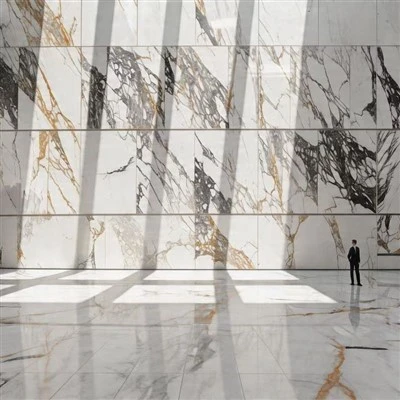
Next up are the formula recipes, and this is where the brand’s creativity (and variation) really shines. Pigment blends are the secret sauce here. For a gray quartz, one brand might mix a small amount of warm brown pigment with a cool blue to make a soft, taupe-gray that works with wood finishes. Another brand might skip the brown entirely, using only cool blue and black pigments to make a sharp, industrial gray that pairs best with stainless steel. It’s not just about hue—it’s about the “movement,” too. The white veining that’s so popular in calacatta-style slabs isn’t a natural feature of quartz (it’s not marble, after all). Brands add veining pigments in different widths, densities, and patterns. One brand might create thin, delicate veins that are spaced far apart for a subtle, elegant look, while another uses thick, clustered veins that mimic the dramatic marble of old European villas. I recently had a designer client who needed a slab for a custom kitchen: they wanted “calacatta” but didn’t want veins so thick they would look busy in a small space. When I pulled slabs from three different brands, even the ones labeled with identical descriptions, only one had the vein density they were looking for. That’s not a coincidence—that’s the brand’s formula team making intentional choices for their target market.
Then there’s manufacturing, and two key processes here create even more color variation: vibration during compaction and curing time. Quartz slabs are made by pouring the quartz-resin mix into a mold, then vibrating it at high speeds to compress the material and eliminate air bubbles. The length and intensity of that vibration can change how the pigments distribute. A brand that vibrates for a longer time might mix their pigments more evenly, resulting in a uniform, solid color. A brand that uses shorter, more targeted vibration might clump veins or spot pigments in specific areas, creating a more organic, natural-looking stone. Curing is the other big one: after compaction, slabs are cured in ovens to set the resin. A brand that uses lower, slower curing might get a more consistent color across the entire slab, while a brand that uses higher heat for faster curing might get subtle color shifts at the edges of the slab, which can look more like natural stone. I’ve had installers tell me that some brands have slabs where the edge is a completely different shade than the center, which is a direct result of their curing process. That’s not a flaw—it’s just a brand-specific trade-off for speed and production cost.
Now, you might be wondering: if all these variations are intentional, why do so many brands sell slabs with nearly identical names? That’s a good question, and it comes down to marketing and market competition. The quartz industry is massive, and new brands pop up every year, especially in regions with lower manufacturing costs. They’ll copy the popular “Calacatta” or “Himalayan Gray” names because they know those terms sell, but their raw materials, formulas, and processes aren’t the same as the established brands that invented those looks. That’s why as a supplier, I always tell clients not to rely on the name alone. Always ask for a physical sample, and look at it in the space where it will be installed—under the room’s natural light, not just the showroom’s LED lights that are set to make all quartz look bright and uniform.
I’ve also noticed that brand variation is more pronounced in certain color families than others. Solid, neutral colors—like basic white, gray, or black—tend to be more consistent across brands, because they use fewer pigments and simpler formulas. But the more complex, natural-looking patterns: calacatta, statuario, even the soft earth tones like taupe and terracotta quartz, that’s where the biggest differences pop up. One brand’s “warm taupe” might feel like a soft beige, while another’s feels like a muted gray-brown. A recent survey I helped conduct with interior designers found that 68% of designers they work with have specific brand preferences for their signature color palettes, because they know that brand’s slabs will deliver the exact tone and pattern their designs call for.
Of course, there are also factors that create variation within a single brand’s line, not just between brands. Even the same brand will have slight shade variations between different batches of the same slab—this is called “batch-to-batch variation,” and it’s a normal part of manufacturing quartz. That’s why most brands recommend purchasing all the slabs needed for a project at the same time, from the same batch, to ensure consistency. But even with that, the brand’s core formula and sourcing will mean that their batches are more consistent than mixing slabs from two different brands.
So, what does this mean for someone shopping for quartz slabs? If you’re working with a designer or a supplier like me, we can help you narrow down which brands align with your vision. If you’re shopping on your own, don’t be afraid to ask questions: Where do you source your quartz from? Can I see the formula for this slab pattern? Do you have samples from the same batch I would be getting? Most importantly, don’t just look at the slab in the showroom. If possible, take a sample home and set it next to your cabinetry, flooring, and paint color for at least a day—natural light changes everything.
At the end of the day, quartz slab colors vary by brand because every brand is trying to create something unique for their customers. Some brands focus on affordability, so they use standard raw materials and simple formulas. Others focus on luxury, investing in rare quartz aggregates and custom pigment blends to create slabs that mimic the nuance of natural stone, without the maintenance. As a supplier, I work with a range of brands, from high-end luxury producers to mid-tier and value options, because I know that every project has different needs and budgets.
If you’re planning a kitchen remodel, a bathroom update, or any project that uses quartz slabs, don’t settle for a slab that looks “close enough.” The right color and pattern can make a space feel warm, modern, timeless, or bold—and a small difference in brand can make all the difference. I’ve seen clients walk in thinking they wanted a “calacatta white” and leave with a completely different slab that perfectly complemented their dark wood floors, all because we matched them to the brand that sources warm, creamy undertones.
If you’re ready to source quartz slabs for your next project, or you have questions about how brand variation might impact your design, I’m here to help. We work with clients of all sizes, from small residential renovations to large commercial builds, and we can help you find the perfect slabs that fit your vision and your budget.
Kitchen Quartz Countertop References
- Quartz Countertop Manufacturing: Raw Materials and Process. Natural Stone Institute.
- Pigment Formulation in Engineered Quartz: Color Consistency and Variability. Journal of Surface Coatings Technology.
- 2024 Quartz Design Trends: Brand Preferences in Residential and Commercial Spaces. Interior Designers Association.
- Quartz Slab Batch Variation: Best Practices for Consistent Installation. National Kitchen and Bath Association.
Wuhu Junde New Material Technology Co., Ltd.
As one of the most experienced quartz slab colors and patterns manufacturers and suppliers in China since 1998, we warmly welcome you to wholesale top-quality quartz slab colors and patterns made in China here from our factory. If you have any enquiry about cooperation, please feel free to email us.
Address: No.8 Yulin Road, Xinwu Economic Development Zone, Anhui Province, China
E-mail: 1127319898@qq.com
WebSite: https://www.jundequartz.com/
