If you’ve ever stood near a commercial building’s electrical room, watching a row of high and low voltage switchgear hum quietly while powering everything from office lights to industrial equipment, you’ve seen the unsung heroes of modern infrastructure. But what you might not realize is that these systems can easily become a source of disruption—or a victim of it—if their electromagnetic compatibility (EMC) isn’t prioritized. As a supplier that’s spent 12 years designing, manufacturing, and delivering switchgear to facilities across North America, I’ve seen firsthand how cutting corners on EMC leads to costly downtime, failed inspections, and even safety hazards. Today, I want to pull back the curtain on how we ensure our switchgear meets strict EMC standards, and why this step isn’t just a box to check—it’s what keeps your operations running smoothly. High and Low Voltage Switchgear
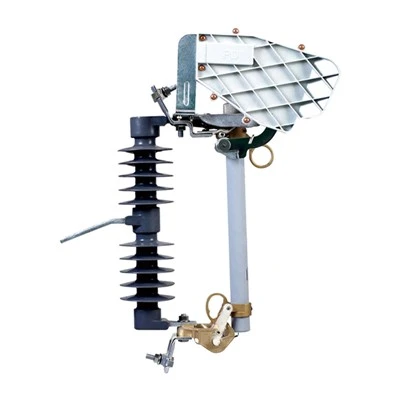
Let’s start with a quick EMC 101, because I’ve learned over the years that not every client is an electrical engineer. EMC means two things: first, your switchgear doesn’t emit harmful electromagnetic interference (EMI) that can mess up nearby sensitive equipment—think of a hospital’s MRI machine, a data center’s servers, or a manufacturing plant’s programmable logic controllers (PLCs). Second, that same switchgear is immune to EMI from external sources, like lightning strikes, nearby radio towers, or even a neighboring building’s faulty electrical system. For high and low voltage switchgear, this balance is non-negotiable. A high voltage arc flash that emits unregulated EMI can take down an entire factory’s SCADA system in seconds, while low voltage control circuits failing because they pick up stray signals from nearby power lines can halt production for days.
When a client first comes to us for switchgear, the first thing we do isn’t jump into a design—it’s walk through their specific site and application details. No two facilities are the same: a downtown data center in Chicago has different EMC needs than a rural agricultural processing plant in Iowa, right? That’s why we never use a one-size-fits-all approach. For example, when we worked with a major East Coast data center two years ago, their team was dealing with frequent glitches in their server racks caused by EMI from the existing old switchgear. We conducted a full site audit, mapping out the proximity of our future switchgear to sensitive IT equipment, measuring ambient EMI levels from other building systems, and even noting the facility’s lightning protection system specifications. That data let us tailor our design specifically for their environment, rather than shipping a generic unit that might not hold up.
The core of EMC in switchgear starts with component selection, and this is where we refuse to compromise. Every part, from the circuit breakers to the control relays, the cables, and even the enclosure gaskets, is tested for EMI performance. I’ve seen other suppliers save money by using generic low voltage control cables that aren’t shielded, only to find out later that those cables act like antennas, picking up stray EMI and causing control circuits to trip unexpectedly. At our facility, we only use shielded cables that meet IEC 61386 standards—specifically, double-shielded twisted-pair cables for control signals, which block both radiated and conducted EMI. For components like transformers, we specify models with integrated Faraday shields between primary and secondary windings, which prevent high voltage EMI from leaching into low voltage control circuits. We also test every batch of components in-house before they even reach our assembly line, because catching a faulty shielded relay early is way cheaper than fixing a full switchgear unit after it’s installed.
Next up is enclosure design, which is the first line of defense against both emitting and receiving EMI. A lot of suppliers use thin sheet metal enclosures that are cheap to produce but have gaps around doors, cable entry points, and ventilation grills that let EMI escape or get in. For our switchgear, we build enclosures from 12-gauge cold-rolled steel (or thicker for high voltage units) and use continuous conductive gaskets around all doors and access panels. We only use cable glands that have integrated EMI shielding, instead of standard rubber glands, to seal gaps where cables enter the enclosure. Even ventilation grills aren’t just random holes—we fit them with perforated metal mesh that’s sized to block EMI frequencies while still allowing airflow to keep components cool. We also test the enclosure’s shielding effectiveness using a near-field scanner during the prototype phase, making sure it meets the required attenuation levels for both radiated emissions and immunity.
Wiring and installation practices are another make-or-break factor for EMC, and this is an area where even the best design can fail if it’s not executed right. I’ll be honest: a few years ago, we had a client call us panicking because their new switchgear was causing interference with a nearby radio communications system. When we sent our team out to investigate, we found that the contractor we’d recommended for installation had run all the low voltage control cables right next to the high voltage power cables, in the same cable tray. That’s a classic mistake—power cables generate electromagnetic fields, so running control signals parallel to them for even 10 feet is enough to pick up noise. Now, we include detailed EMC-specific installation guidelines with every unit we ship, and our in-house field service team works with clients during installation to verify wiring practices. We require that power and control cables are separated by at least 30 centimeters, that shielded cables have their shields grounded at only one end (a trick we’ve learned prevents ground loops, which are a major source of stray EMI), and that all cable trays are bonded to the switchgear enclosure with conductive jumpers to maintain a continuous ground path.
Testing is where we prove our EMC design works, and we don’t rely on third-party testing alone—we have an in-house EMC lab on our manufacturing floor for prototype and pre-delivery testing. Every switchgear unit we build goes through two key tests: radiated emissions testing, where we measure the electromagnetic field emitted by the unit at various frequencies to make sure it’s below regulatory limits, and radiated immunity testing, where we expose the unit to controlled levels of external EMI to make sure it doesn’t malfunction. We also do conducted emissions and immunity testing for power and control circuits, which checks for EMI that travels through cables instead of the air. For critical applications like data centers or pharmaceutical manufacturing facilities, we even perform on-site testing after installation, because site-specific factors like nearby metal structures or other equipment can affect EMC performance. Last year, we delivered a set of switchgear to a biotech facility that needed strict EMC compliance to protect their lab’s analytical instruments; we did on-site testing and had to adjust the grounding of one enclosure by 6 inches to fix a minor EMI issue before the facility began operations. No job is complete until that test report shows EMC meets or exceeds all required standards—period.
Regulatory compliance is non-negotiable for us, because EMC isn’t just a technical requirement—it’s a legal one. We build all our switchgear to meet IEC 62271 (the international standard for high voltage switchgear) and IEC 61439 (for low voltage switchgear), which include specific EMC requirements. We also ensure our units meet region-specific standards, like FCC Part 15 for installations in the U.S. and CE marking requirements for the EU. Keeping up with these standards is a full-time job—our EMC engineer attends annual workshops and reviews updates from standardization bodies, because new technologies like IoT-enabled switchgear bring new EMC challenges. For example, as more clients want smart switchgear with remote monitoring capabilities, we’ve had to adjust our design to make sure the Wi-Fi and Bluetooth modules in the switchgear don’t emit EMI that interferes with power circuits, while also making sure those wireless signals aren’t blocked by the enclosure.
Now, I know some of you might be thinking: “This all sounds good, but what if something goes wrong after installation?” We don’t just build switchgear and walk away. Our post-installation support includes annual EMC checks for clients who want to maintain performance over time. Over the years, I’ve seen that dust, corrosion, or modifications to nearby equipment can erode EMC performance. For example, a manufacturing client in Ohio added a new piece of heavy machinery three years after our switchgear was installed, and that machine’s large motor was generating stray EMI that started interfering with their production control system. Our team was able to come out, run a quick EMI scan, adjust the grounding of our switchgear enclosure, and add a small shielded cable between the two systems to fix the issue—no need to replace the entire switchgear, just a small adjustment that kept their operations running. That’s the value of working with a supplier that cares about long-term performance, not just a one-time sale.
At the end of the day, ensuring EMC for high and low voltage switchgear is about attention to detail at every step of the process. It’s not just about buying expensive components or running tests—it’s about understanding your client’s unique needs, designing solutions that fit, executing installation correctly, and standing behind that performance long after the unit is in place. Whether you’re building a new data center, upgrading a manufacturing facility, or replacing aging switchgear in a hospital, EMC shouldn’t be an afterthought. It’s what keeps your power system reliable, protects your sensitive equipment, and avoids the costly downtime that can eat into your profits (or worse, put people at risk).
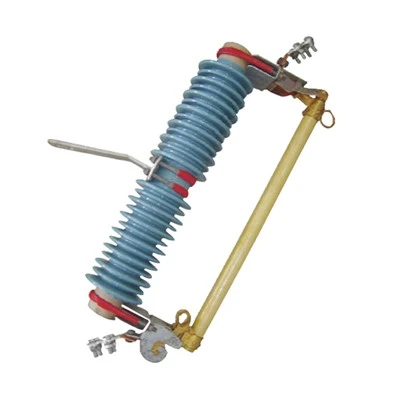
If you’re in the market for high or low voltage switchgear that meets strict EMC standards, I’d love to talk through your project with you. We’ve worked with facilities of all sizes, from small commercial buildings to large industrial plants, and we can tailor a solution to fit your specific needs and budget. Reach out to our team to learn more about our EMC testing processes and how our switchgear can keep your operations safe and reliable.
Load Switch References
- International Electrotechnical Commission, IEC 62271-1:2017, High-voltage switchgear and controlgear – Part 1: Common specifications
- International Electrotechnical Commission, IEC 61439-1:2020, Low-voltage switchgear and controlgear assemblies – Part 1: General rules
- American National Standards Institute, ANSI C37.90.1-2014, IEEE Standard for Surge Withstand Capability (SWC) Tests for Relays and Relay Systems Associated with Electric Power Apparatus
- Federal Communications Commission, FCC Part 15: Radio Frequency Devices, Subpart B – Unintentional Radiators
Zhongtai Electric Power Technology Co., Ltd.
With abundant experience, we are one of the most professional high and low voltage switchgear manufacturers and suppliers in China. We warmly welcome you to wholesale bulk customized high and low voltage switchgear from our factory. If you have any enquiry about quotation, please feel free to email us.
Address: High-tech Industrial Park, Chongren County, Fuzhou City, Jiangxi Province (No. 261 Yingbin Avenue)
E-mail: info@zhongtaielectric.com
WebSite: https://www.zhongtaipower.com/
