The range of motion of a grasper is a critical factor that significantly impacts its performance and applicability in various fields. As a professional grasper supplier, I am deeply involved in understanding and optimizing this aspect to provide high – quality products to our customers. Grasper

1. Understanding the Basics of Grasper Range of Motion
The range of motion of a grasper refers to the extent and limitations of its movement. It encompasses several key parameters, including opening and closing angles, lateral displacement, and rotational capabilities. For a typical grasper, the opening and closing motion is the most fundamental. This range is measured in degrees, representing how wide the jaws of the grasper can open and how tightly they can close.
In surgical applications, for example, a large opening angle allows the grasper to hold relatively large tissue specimens or surgical instruments. In precise tasks like microsurgery, a smaller yet well – controlled opening and closing motion is required to manipulate delicate nerves and blood vessels. The lateral displacement of a grasper determines its ability to move from side to side. This is essential in scenarios where the target object is not directly in front of the grasper but is slightly off – center. Rotational motion adds another dimension to the grasper’s versatility, enabling it to access objects from different orientations. A grasper with a wide range of rotational motion can reach targets that are located at various angles without the need to reposition the entire device.
2. Factors Affecting the Range of Motion
Several factors influence the range of motion of a grasper. One of the primary factors is the mechanical design of the grasper. The type of joints used, such as hinge joints or ball – and – socket joints, affects the freedom of movement. Hinge joints typically offer a more limited range of motion compared to ball – and – socket joints, which provide multi – axial movement.
The materials used in the construction of the grasper also play a crucial role. High – strength and flexible materials can withstand larger forces during movement and allow for a greater range of motion without deformation. For example, certain advanced polymers and lightweight metals are often used to ensure both durability and flexibility.
The actuation mechanism of the grasper is another significant factor. Whether it is a manual, electric, or pneumatic actuation system, each has its own characteristics that impact the range of motion. Manual actuators rely on the user’s hand strength to control the movement, which may limit the speed and precision of the range of motion. Electric actuators, on the other hand, offer more precise control and can potentially provide a wider range of motion through programmable settings. Pneumatic actuators are known for their high – speed operation and can produce a large amount of force, but their range of motion may be restricted by the air supply system and the design of the pneumatic cylinders.
3. Range of Motion in Different Applications
Surgical Applications
In the medical field, especially in minimally invasive surgery, the range of motion of a surgical grasper is of utmost importance. Surgeons need to be able to access different parts of the body through small incisions. A grasper with a wide range of motion can reach deep – seated organs and perform complex maneuvers such as tissue dissection, vessel ligation, and specimen retrieval. For laparoscopic surgeries, a grasper with a high degree of lateral and rotational movement is essential to navigate the abdominal cavity and perform procedures with minimal disruption to surrounding tissues.
Industrial Applications
In industrial settings, graspers are used for tasks such as picking and placing objects on assembly lines. The range of motion requirements in industrial applications depend on the size and shape of the objects being handled. For small and intricate components, a grasper with a fine – tuned range of motion is needed to ensure precise gripping and placement. In contrast, for larger and heavier objects, a grasper with a wider opening angle and greater force – exerting ability is required.
Robotics
In robotics, graspers are an integral part of the robot’s end – effector. The range of motion of the grasper determines the robot’s ability to interact with its environment. A robotic grasper with a wide range of motion can perform tasks such as grasping objects in cluttered spaces, handling objects of various shapes and sizes, and collaborating with human operators. The development of multi – fingered robotic graspers has further enhanced the range of motion, allowing robots to mimic the dexterity of human hands.
4. Measuring and Optimizing the Range of Motion
Measuring the range of motion of a grasper is a complex process that requires precise testing equipment. Optical motion capture systems, force sensors, and angle measuring devices are commonly used to accurately measure the opening and closing angles, lateral displacement, and rotational movement of the grasper.
To optimize the range of motion, we, as a grasper supplier, conduct extensive research and development. We continuously experiment with new mechanical designs, materials, and actuation systems. For example, by using advanced 3D printing techniques, we can create customized joints that offer a greater range of motion. We also work closely with our customers in different industries to understand their specific requirements and tailor the range of motion of our graspers accordingly.
5. Customization and Innovation in Grasper Range of Motion
One of the key advantages we offer as a grasper supplier is the ability to customize the range of motion of our products. Different customers have different needs, and we are committed to providing solutions that meet those unique requirements. For example, a customer in the aerospace industry may need a grasper with a very high – precision and limited – range motion for handling small electronic components during satellite assembly. On the other hand, a customer in the food processing industry may require a grasper with a large opening angle and a wide range of lateral movement for picking and packing fruits and vegetables.
We are also at the forefront of innovation in grasper technology. Our R & D team is constantly exploring new ways to improve the range of motion. For instance, we are researching the use of smart materials that can change their shape in response to external stimuli, such as heat or electricity. These smart materials could potentially enable graspers to have self – adjusting range of motion based on the task at hand.
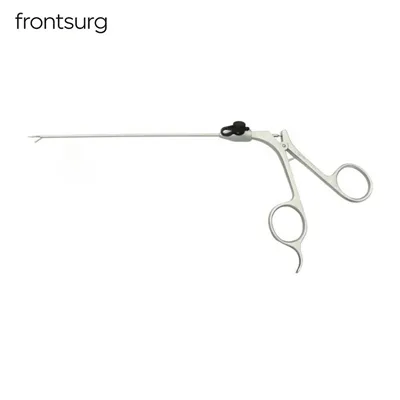
In conclusion, the range of motion of a grasper is a complex and multi – faceted characteristic that has a profound impact on its performance in various applications. As a leading grasper supplier, we take great pride in our ability to understand, measure, and optimize this crucial parameter. Our commitment to providing high – quality, customized graspers with an excellent range of motion sets us apart in the market.
Trocar Sealing Cap If you are in need of a grasper with a specific range of motion for your application, we would be delighted to discuss your requirements. Contact us to start a fruitful procurement negotiation and let us work together to find the perfect grasper solution for you.
References
- Smith, J. D. (2018). Mechanical Design of Surgical Instruments. Wiley.
- Brown, A. B. (2019). Industrial Robotics: Applications and Technologies. Elsevier.
- Chen, L. (2020). Smart Materials in Biomedical Engineering. Springer.
Frontmed (Hangzhou) Trading Co., Ltd.
Frontmed (Hangzhou) Trading Co., Ltd. is one of the most experienced grasper manufacturers and suppliers in China, also supports custom service. Please rest assured to wholesale high quality grasper made in China here from our factory. Contact us for more details.
Address: Room 406, Building 6, No.1688 Chunjiang East Rd, Tonglu, 311500, Hangzhou
E-mail: alex@frontsurg.com
WebSite: https://www.frontsurg.com/
